
How Tsehaitu Abye is building civic power for Black immigrants in Philadelphia
The second-generation Ethiopian American organizer is expanding voter access, advancing worker rights, and creating spaces for Black immigrant communities to engage and lead.
By Tiffany Rivera. On April 29, 2026. Edited by Nigel Thompson.
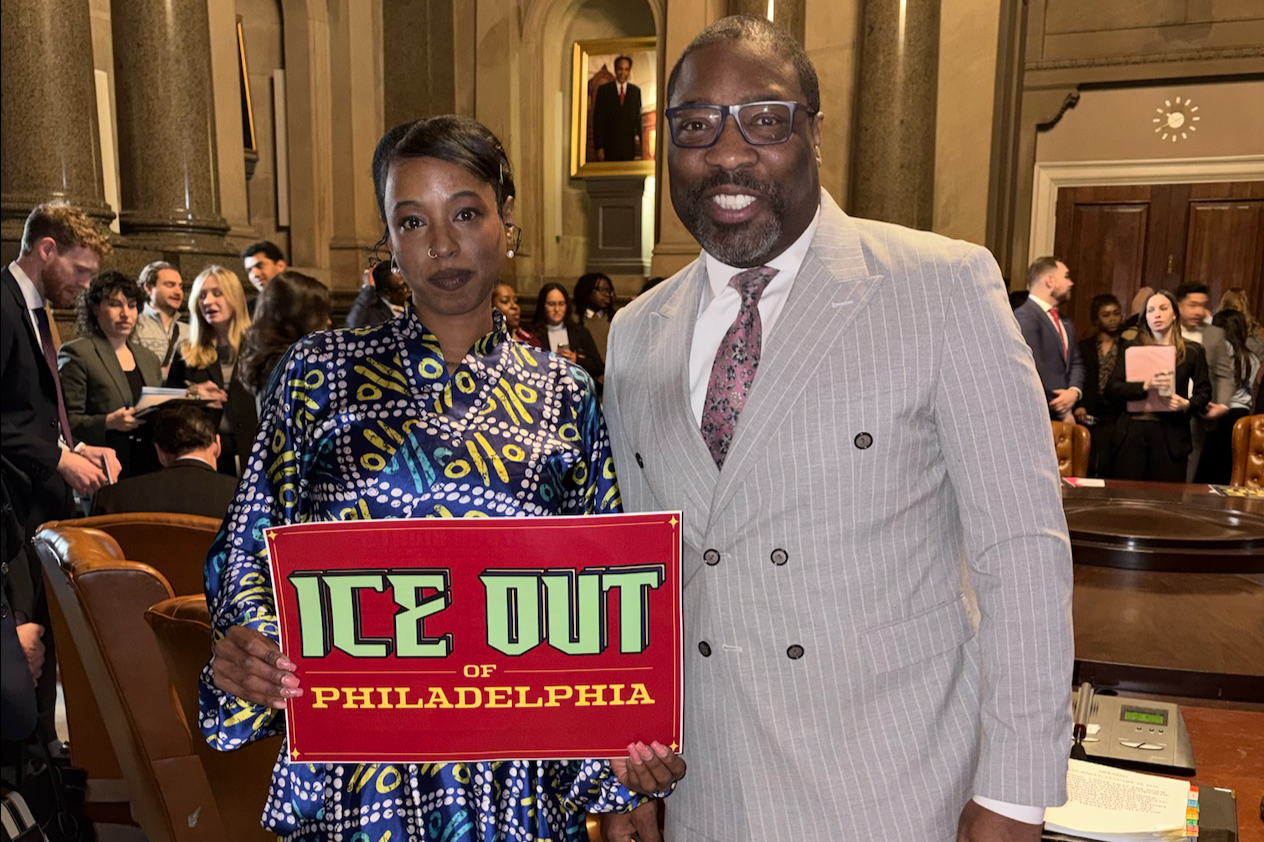
Aybe photographed with Council President Kenyatta Johnson. (Courtesy of Tsehaitu Abye)
Tsehaitu Abye knows that access to voting is not equal, and for many Black immigrant communities, it has never been. As a second-generation Ethiopian American organizer based in Philadelphia, she has spent over two decades working to close those gaps, helping communities not only show up at the polls but build lasting civic power.
While growing up, Abye saw the disparities within Black American neighborhoods and the lack of available opportunities. She vowed to help those communities succeed by creating platforms specifically for them. Since then, she has created over a dozen initiatives and been involved with many organizations, including African Communities Together (ACT), where she serves as the Pennsylvania Director.
“I have been working in the civic engagement space for 20 years professionally,” said Abye. “Once I entered that space, I saw the parallels and learned pretty quickly. I was able to shift and run nonprofit campaigns and voter registration campaigns.”
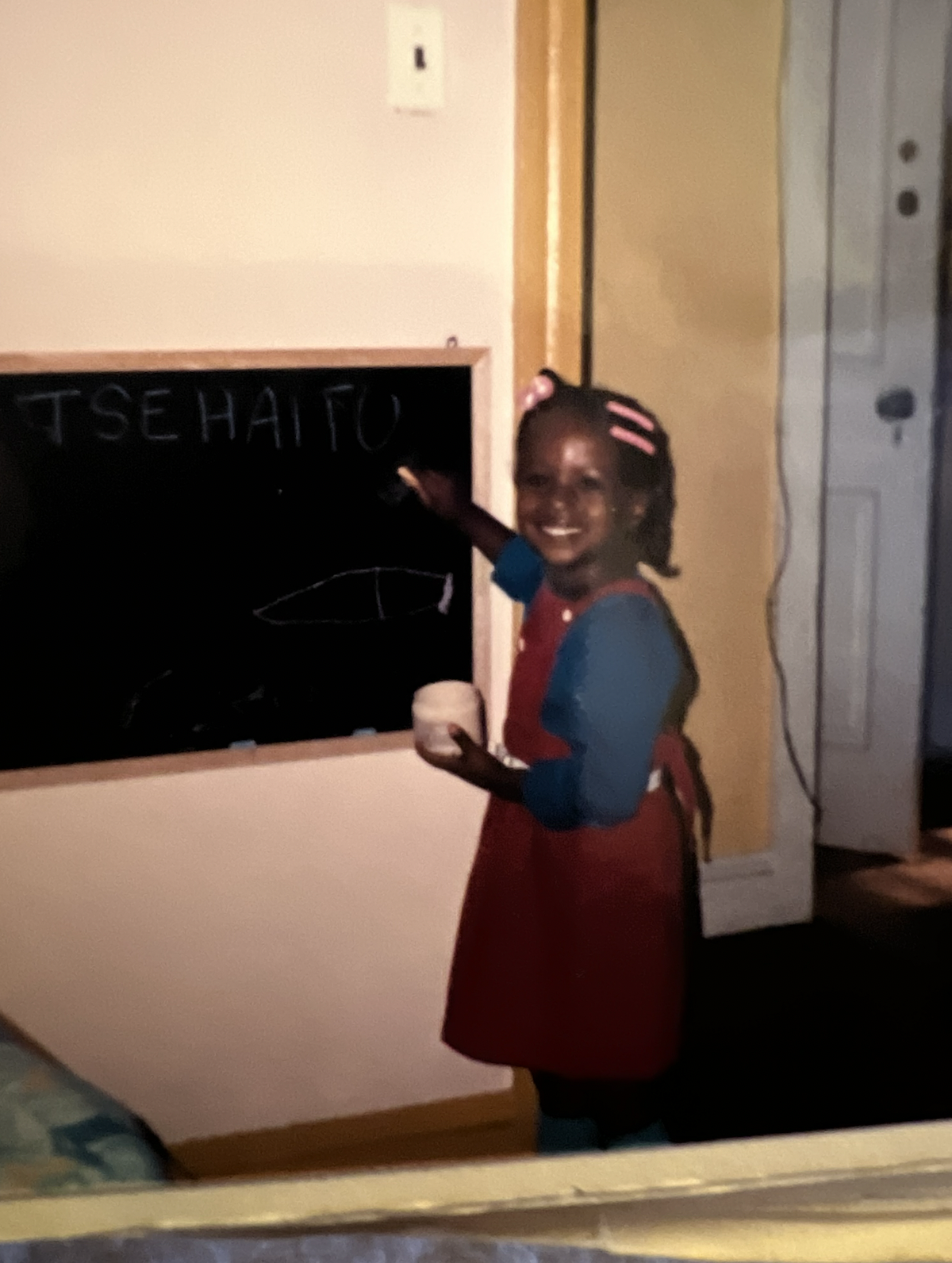
Tsehaitu via 1988. (Courtesy of Tsehaitu Abye)
Abye grew up in Mt. Airy, a neighborhood in Northwest Philadelphia. She said her parents were hippies who met in Hawaii. They returned to Philly when she was two, and then went back to Hawaii when she was a teenager.
”My mother is Black American, and my dad is Ethiopian. They had me during their Pan-African wave,” she said. “I feel like my personal life has prepared me for this work — all of the nuances and challenges. My goal is, I believe, if there are humans that exist, there are problems that exist.”
Her first hands-on experience with civic engagement was in Hawaii, where she lived and went to college at the University of Manoa, working towards a degree in Ethnic Studies. She volunteered as an organizer with Unite Here Local 5, and fought for hospitality workers at the Honolulu Airport.
After graduating from college, Abye moved back to the East Coast and worked to register voters as a canvasser in Philadelphia and Pittsburgh on several different campaigns.
“I learned that civic work is like the election process,” she said. “It’s very complicated and has a lot of gaps that need to be improved. More specifically, we need to see more people voting. I can’t tell people who to vote for. I just need them to have more curiosity and appetite to learn, and then show up and vote.”
When she was 29, Abye worked as an organizer for The Change to Win campaign in Washington D.C. There, she helped organize Ethiopians in Union Square and in the cafeteria of the Capitol Building as part of a campaign spearheaded by the Service Employees International Union (SEIU). The project focused on fighting for a $15/hour minimum wage and union rights for low-wage workers. This project was close to her heart because of her Ethiopian descent.
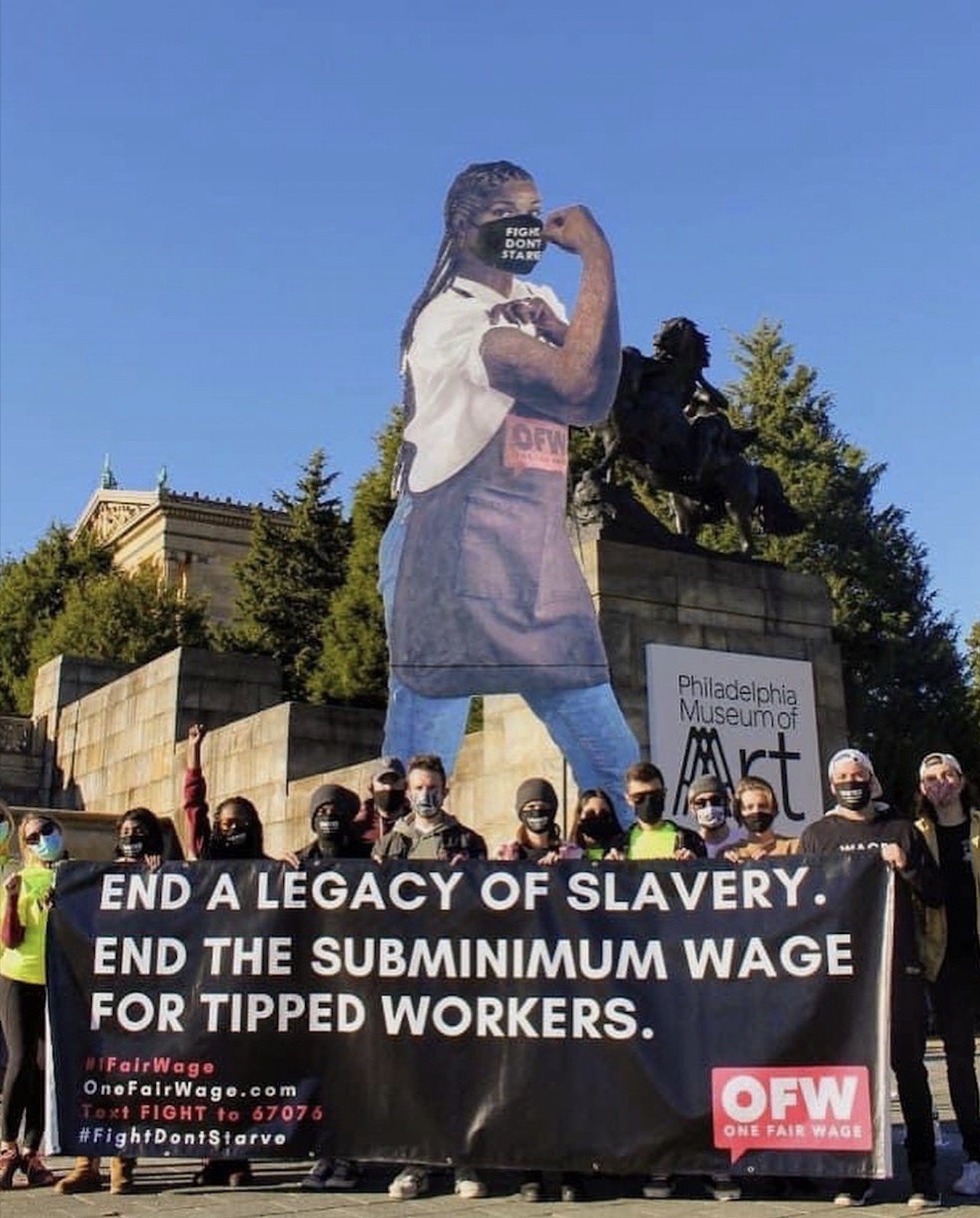
The One Fair Wage Protest at The Philadelphia Museum of Art. (Courtesy of Tsehaitu Abye)
“I spent much of my life being foreign with my Ethiopian side and learning how to bring it into my identity,” she said. “With community work, I started to feel more comfortable being Ethiopian and Black American and have a dad who is a part of that community and be a part of that community.”
She then got involved with One Fair Wage as an organizer in Pennsylvania, pushing for a higher minimum wage in the state. The organization is also against tipping, as it allows businesses to pay less than minimum wage. Her work there connected workers on the ground with decision-makers in Harrisburg, like State Senator Art Haywood.
“Tipping is a legacy of slavery,” said Abye.
In Pennsylvania, the current wage for tipped workers is $2.83 per hour. The minimum wage in Pennsylvania is $7.25. The last time it was increased was in 2009. Seventeen years later, the House and Senate still haven’t passed bills to increase the minimum wage in the state, making it one of the longest periods of time without an increase in Pennsylvania's history.
Abye is also a member of the Pennsylvania Immigration Coalition (PIC), which supports campaigns that champion immigrants’ rights at the local, state, and federal levels.
PIC supports local organizations through coalition building and training, while also aiding members and providing resources for immigrants. The coalition sparked an interest in Abye, specifically as an opportunity to give Black immigrants a voice through voter registration.
“It is important for me to support Black immigrants, honestly, out of my identity,” she said. “Being the daughter of an immigrant, my stepfather is Jamaican, and so are my sisters, and my father, from Ethiopia, was deported and now lives back at home in their country. We talk on WhatsApp, and I've seen him once in 30 years.”
By becoming a member of PIC, she hopes to represent the Black community within the coalition and help them access the existing resources.
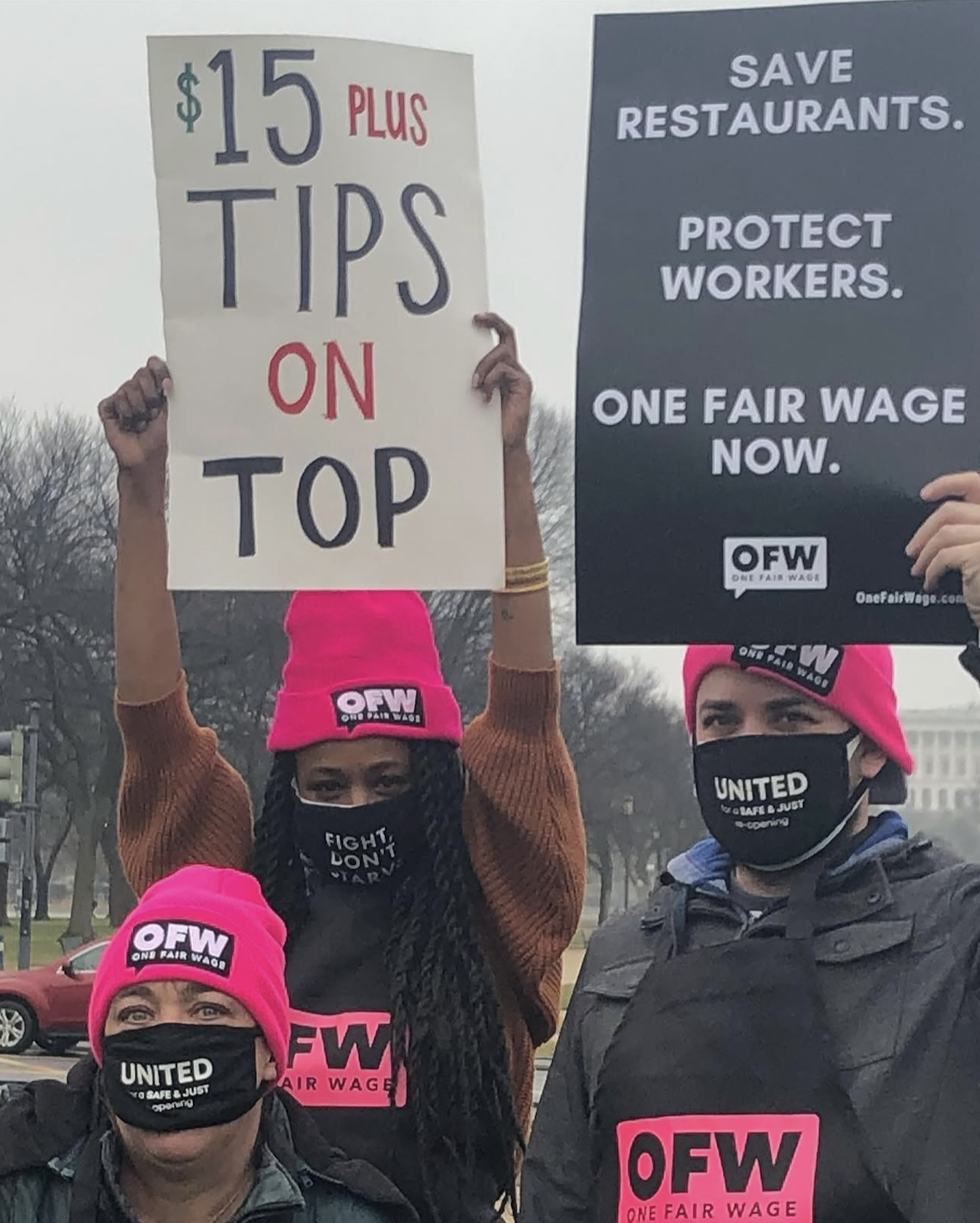
Signs at the Change to Win campaign in Washington DC/ (Courtesy of Tsehaitu Abye)
A major campaign Abye has been a part of with PIC is the push to pass the ICE Out legislation in the Philadelphia City Council. The legislation package was originally introduced by Minority Leader Kendra Brooks and Councilmember At-Large Rue Landau. The package makes it illegal for agents to wear face masks and restricts ICE activity in city-owned buildings and areas. It also prohibits the city from collaborating and sharing data with ICE, and expands anti-discrimination protections related to immigration status. The bill package passed on Thursday, April 23, and gives Philadelphia some of the most stringent regulations on ICE of any city in the country.
Another project Abye has in the works is a panel discussion she’s calling her Fireside Chats Series. The first will take place on May 9 at 12 p.m. at Dahlak Restaurant in West Philadelphia. State Representatives Jordan Harris and Rick Krajewski, City Councilmember Rue Landau, and Rishaun Hall, who works at The Pew Charitable Trusts in Philadelphia, will take part in the discussion, moderated by Abye.
The discussion is titled “Participation to Power,” and will explore how policy is connected to a wide array of topics, including immigration, civic engagement, and economic opportunity. Ephream Seyoum, the owner of Dahlak, said the FireSide Chat is the perfect way to bring people together and have an open discussion about what is going on in African immigrant communities, specifically in West Philadelphia.

Abye is continuing to raise awareness on multiple causes. (Photo by Dylan Morgan)
“I think it's critical to create spaces where people can actually sit down, listen to each other, and engage with real human issues, not just react to them,” said Seyoum. “These conversations give us a chance to raise awareness and talk honestly about how things can realistically change.”
He credits Abye for getting him on board with the discussion series.
“She’s an activist at heart, and she inspires me to show up in new ways,” he said. “Dahlak has always been a space for real dialogue."
As Abye continues to help immigrant and Black communities by providing resources and creating open spaces, she tells others to do the same if they want to see change. “Call the city office,” she said. “Go online and see who your local councilmember is. Once you find them, you can reach out for a meeting or ask questions. That is what they are there for. Share why you are doing this, what your plans are, be human with them”, concludes Abye.