
Beyond the Prison Walls: Voting rights and civic power after reentry in PA
Many Philadelphians are unaware of existing voting rights for formerly incarcerated people. A recent panel at Eastern Penitentiary answered questions to spread awareness.
By Jensen Toussaint.
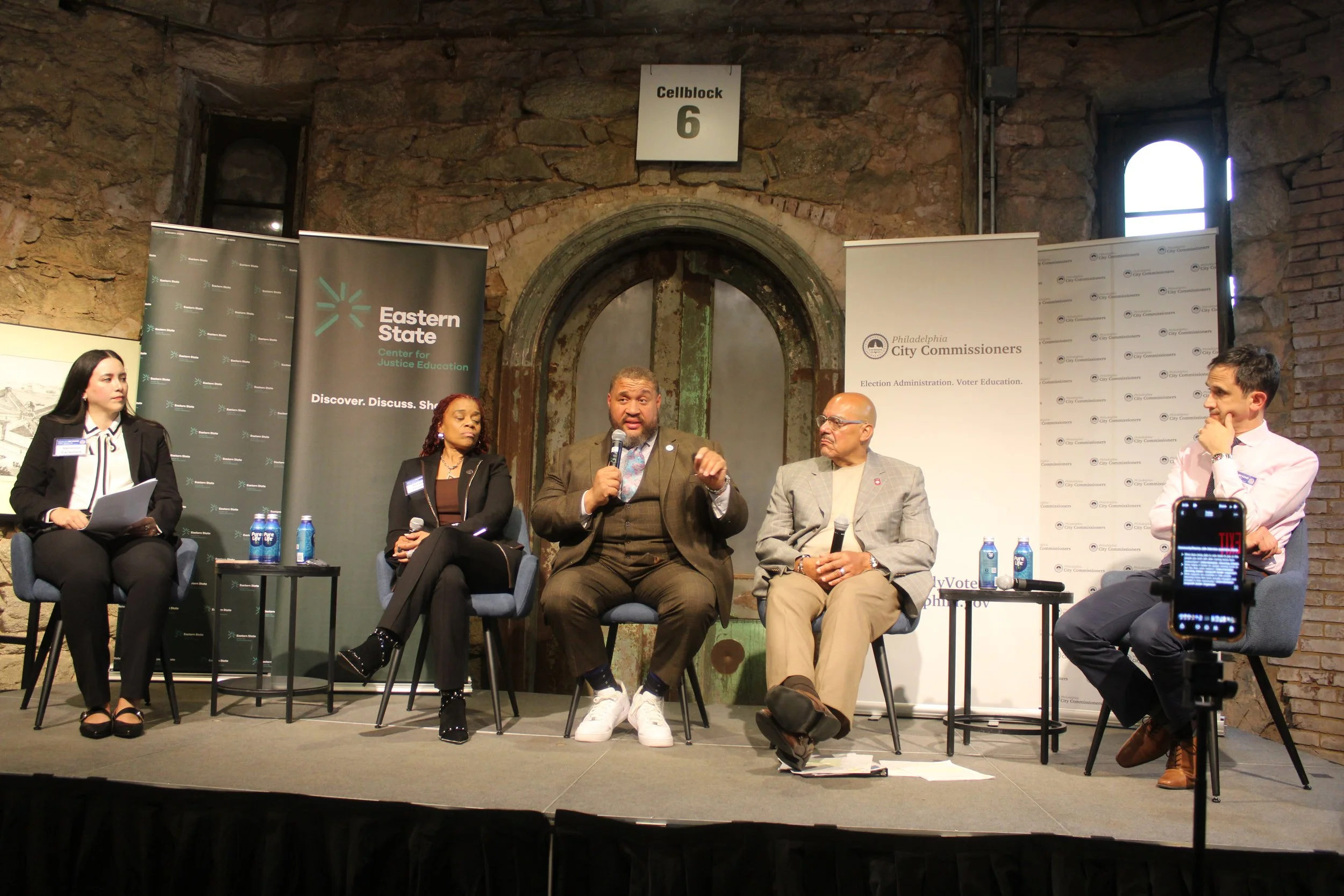
Inside Eastern Penitentiary, an important discussion unlocked the realities of voting rights for justice-involved individuals in Pennsylvania. (Photo: Jensen Toussaint/Inti Media).
As the nation marked National Voter Registration Day on Sept. 15, an important conversation took place within Eastern State Penitentiary.
Can someone with a felony on their record vote in Pennsylvania elections?
It’s a common misconception that the answer is an automatic “no,” but the reality is more nuanced than that. That nuance was a key theme of a discussion titled “Voices Beyond the Walls: Justice, Reentry & Civic Power,” hosted by the Philadelphia City Commissioners Office and Eastern State Penitentiary.
According to the Pennsylvania Department of State, someone currently incarcerated for a felony conviction cannot vote, but that eligibility is restored upon release. Pennsylvania residents can also register and vote if they are a pretrial detainee, serving a sentence for a misdemeanor, are on probation or parole, or under house arrest. That distinction is important for justice-involved individuals, said Philadelphia City Commissioner and Vice Chair Lisa Deeley.
“One of the biggest issues we see, especially when we talk about the folks in the reentry community coming back to voting, is that they don’t think that they can,” she said.
Addressing a voting myth
During the panel discussion moderated by Vanessa Caracoza, deputy executive director of the City Commissioners’ Office, four panelists took part in a conversation to discuss voting rights, common misconceptions, and the path toward reentry for justice-involved individuals. Among the biggest misconceptions is that someone with a felony has their ability to vote permanently revoked.
“You actually can go ahead and vote right when you come home,” said panelist Benjamin Geffen, a senior attorney with the Public Interest Law Center.

Senior attorney at the Public Law Center Benjamin Geffen makes it clear that an individual released from incarceration can vote immediately after coming home. (Photo: Jensen Toussaint/Inti Media).
The panelists agreed that the misinformation about voting rights after release negatively impacts democratic participation. They repeatedly stressed the role misinformation can play behind prison walls and after release, arguing that accurate and trustworthy information has to be readily available.
“It’s something that we need to continue advocating for to make sure that the right information is out there,” said Caracoza.
Eligibility doesn’t equal access
People who can legally vote from jail, such as pretrial detainees and those serving time for misdemeanors, still face some logistical barriers.
“Getting mail in and out of the jail takes longer than it does from home, and it’s hard for people in jail to get information about how to decide who to vote for," Geffen said.
One way to help address this gap would be to make voting information a mandatory part of the reentry process, said Assata Thomas, executive director of the Office of Public Safety’s Division of Reentry. “Reentry starts pre-release,” Thomas argued. If people learn about their voting eligibility and how to register or update their registration before release, that’s one less challenge to face once they’re home.
A vote equals a voice
For those returning home after incarceration, voting means more than casting a ballot.
“This is about identity,” said Thomas. She added that when people return from incarceration, they are often defined by what they were accused or convicted of doing. However, being civically engaged can help reshape that narrative.
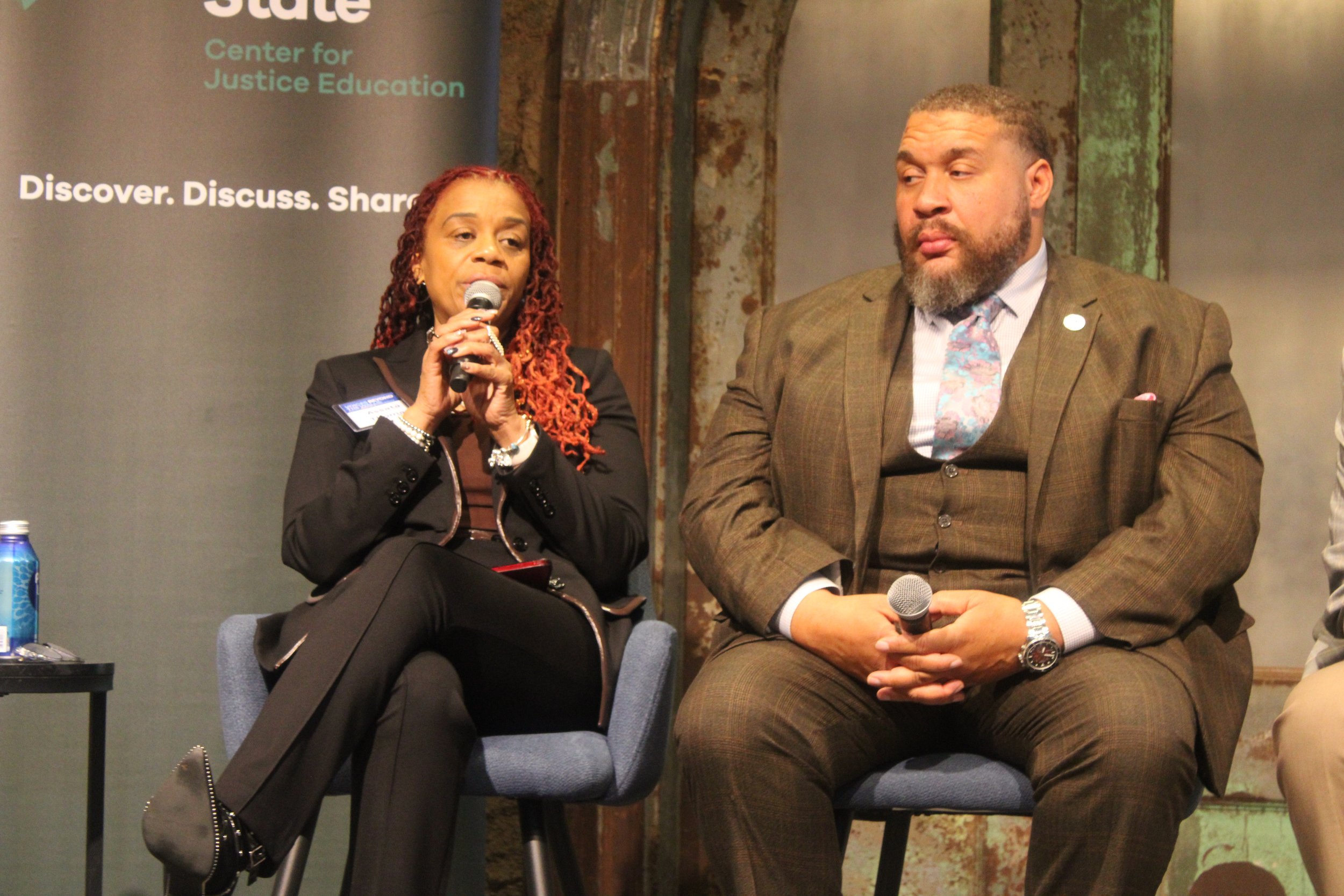
Assata Thomas, executive director of the Office of Public Safety’s Division of Reentry, aims to make the reentry process more seamlessly for those in the process because "reentry starts pre-release," she says. (Photo: Jensen Toussaint/Inti Media).
“What voting allows one to do is [say], ‘I still have a voice. I still have a stake in my community,’” Thomas said.
Panelist William “Bill” Hart, associate director of community affairs at Temple University, has a personal connection to the incarceration-to-reentry process. After walking out of federal detention in 1986, he has not looked back. In the 40 years since that moment, he’s shared the same simple-yet-prominent piece of advice to others.
“The one thing that we have to master about reentry,” he said, “We just don’t break the law anymore.”
As the language used to describe the formerly incarcerated has evolved, one label in particular has stood out to Hart: “returning citizen.” It’s a term he has often pushed back on.
“I push back on the term ‘returning citizen’ simply because citizenship comes with certain responsibilities,” Hart said.
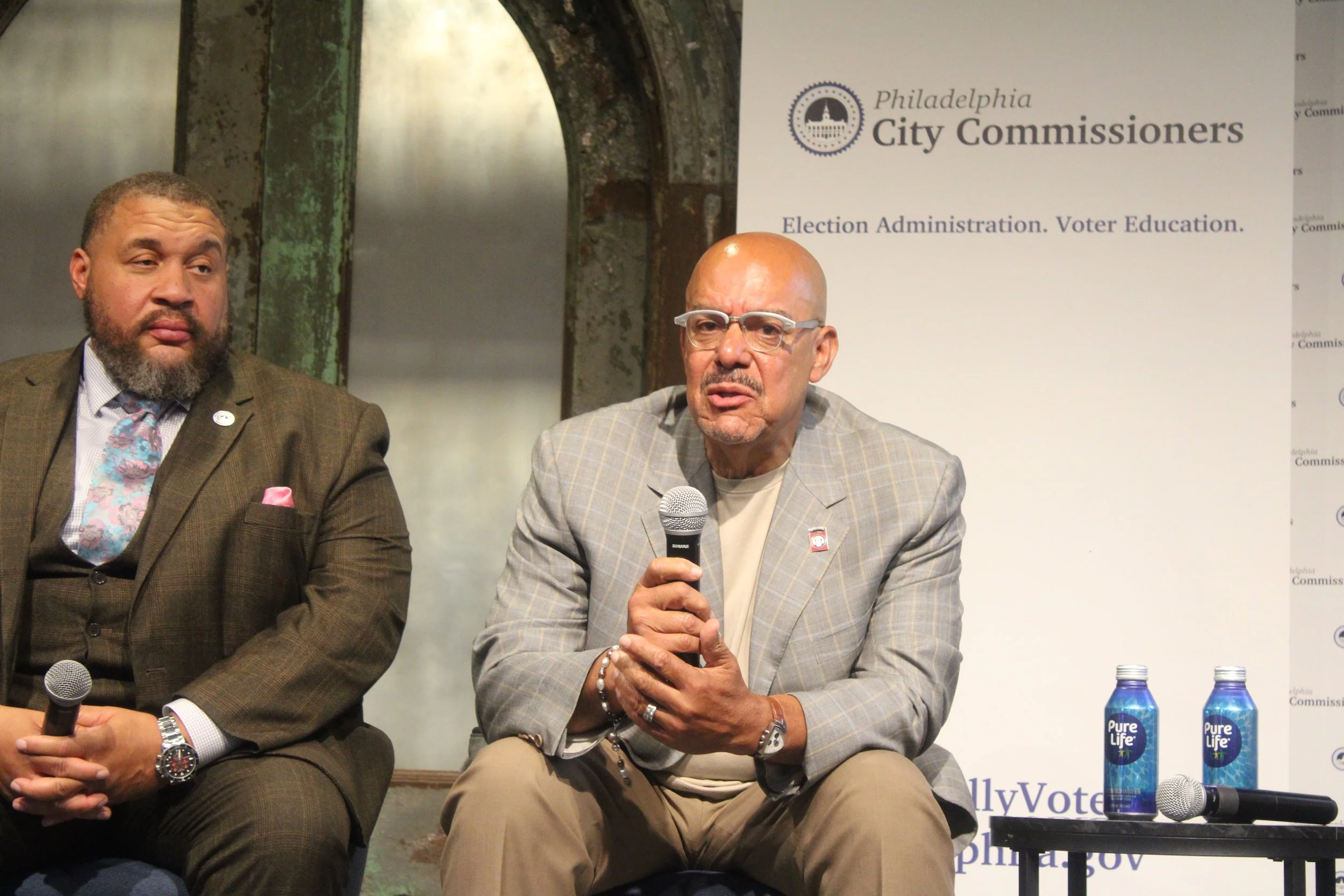
Bill Hart, associate director of community affairs at Temple University, has been out of prison for four decades, and has promised to never walk that path again. (Photo: Jensen Toussaint/Inti Media).
For Hart, one of those responsibilities is taking part in the voting process. Tens of thousands of people return to Philadelphia from incarceration in any given year, Hart estimated, adding that they make up a powerful voting bloc that can make a real difference in elections. However, without access to credible information, that impact is severely reduced.
Exercising your civic power
While voting is a big part of being civically engaged, there is more that goes into the concept of exercising one’s civic duty. Chairman of the Philadelphia City Commissioners’ Office Omar Sabir commented, “It also means you’re attending jury duty, you’re cleaning up your neighborhoods. This overall thing … you have to love being part of your city.”
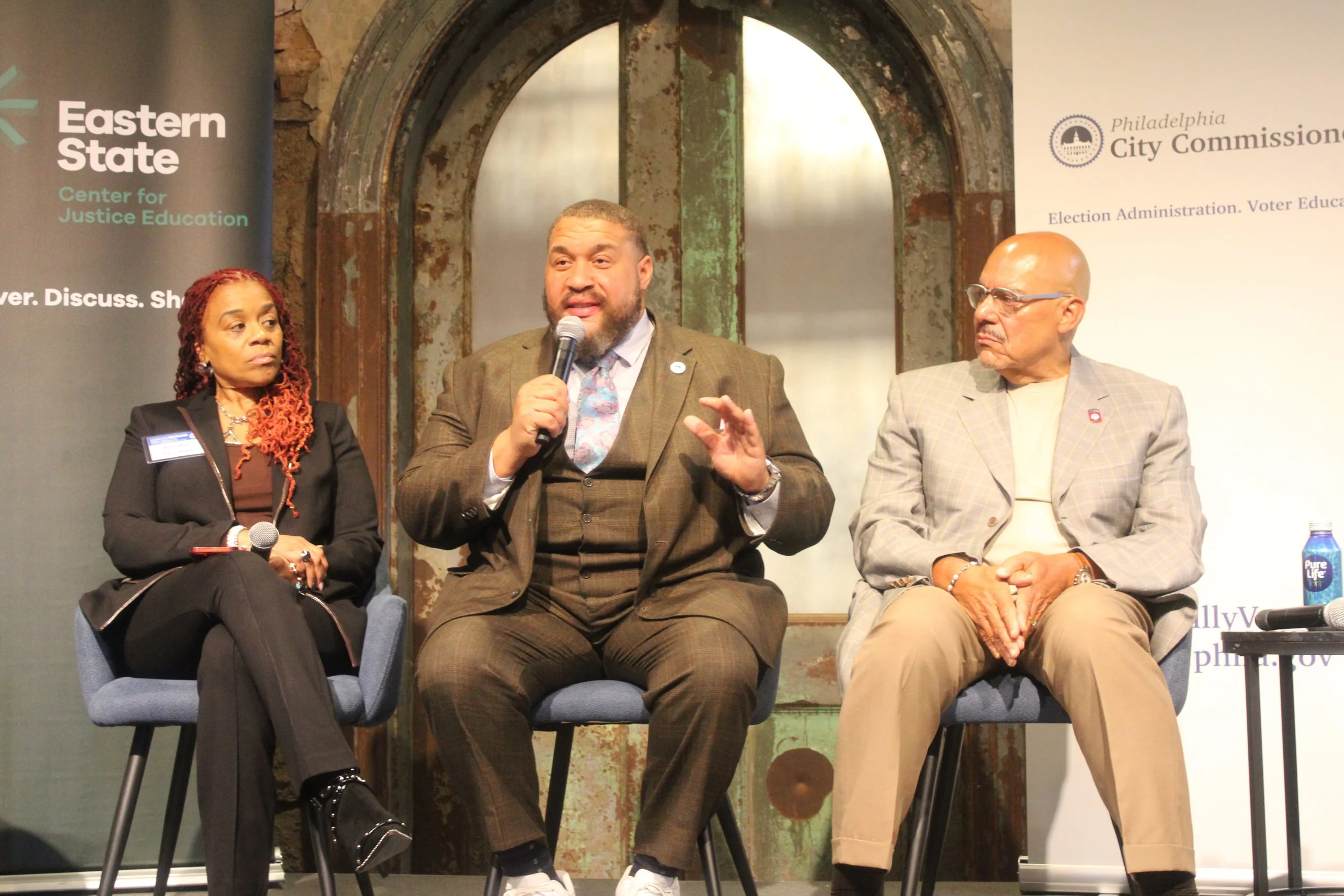
Chairman Omar Sabir often stresses that civic engagement and being involved in the democratic process is a year-round ordeal toward obligating your civic duty. (Photo: Jensen Toussaint/Inti Media).
It’s more about what you do year-round, rather than just on Election Day.
However, voting also has a long-term impact on communities, Hart noted. He added that neighborhoods with higher voter turnout and participation tend to get more attention and resources. “Issues get changed once you engage in the voting process,” Hart said. He also stressed the importance of a support system for people returning home, which he said helps reduce recidivism. It’s especially personal for Hart, as the second generation in his family to have been convicted, incarcerated, and successfully reintegrated back home. In his view, what happens after release matters more than the events that led to the family’s respective time in prison.
“We all made the commitment that we were going to break that chain of generational incarceration,” he said.
Building trust
Mistrust is as big a challenge as misinformation. “For persons who are returning home, there is an inherent distrust of institutions, and so that is a big mountain to cross,” said Thomas. Returning citizens may also deal with a number of other challenges, such as employment, housing instability, health concerns, family responsibilities, and the long-term effects of incarceration. “People don’t care how much you know until they know how much you care,” Thomas added.
The discussion closed with a call to action to not only share accurate information about who has voting eligibility, but also to be more understanding and empathetic towards those navigating the reentry process.
“Just treat people the way you want to be treated, and try to put yourself in these shoes as much as possible,” Sabir said.

Sharing accurate information, being supportive, and showing sympathy, are all among the pieces of the puzzle towards helping justice-involved individuals through the reentry process. (Photo: Jensen Toussaint/Inti Media).
The deadline to register to vote for the upcoming election is Tuesday, Oct. 19. Election Day is Tuesday, Nov. 3, 2026.
Access more resources such as locating your nearest polling place or requesting a mail-in ballot, at Inti Media’s Voting Resource Guide, here.