
Northeast Philly residents raise concerns over school closures and small business taxes
Community members gathered in Mayfair to discuss Philadelphia school closures, BIRT tax changes, and civic engagement ahead of ongoing city budget debates.
By Celia Alves. On May 18, 2026. Edited by Nigel Thompson.
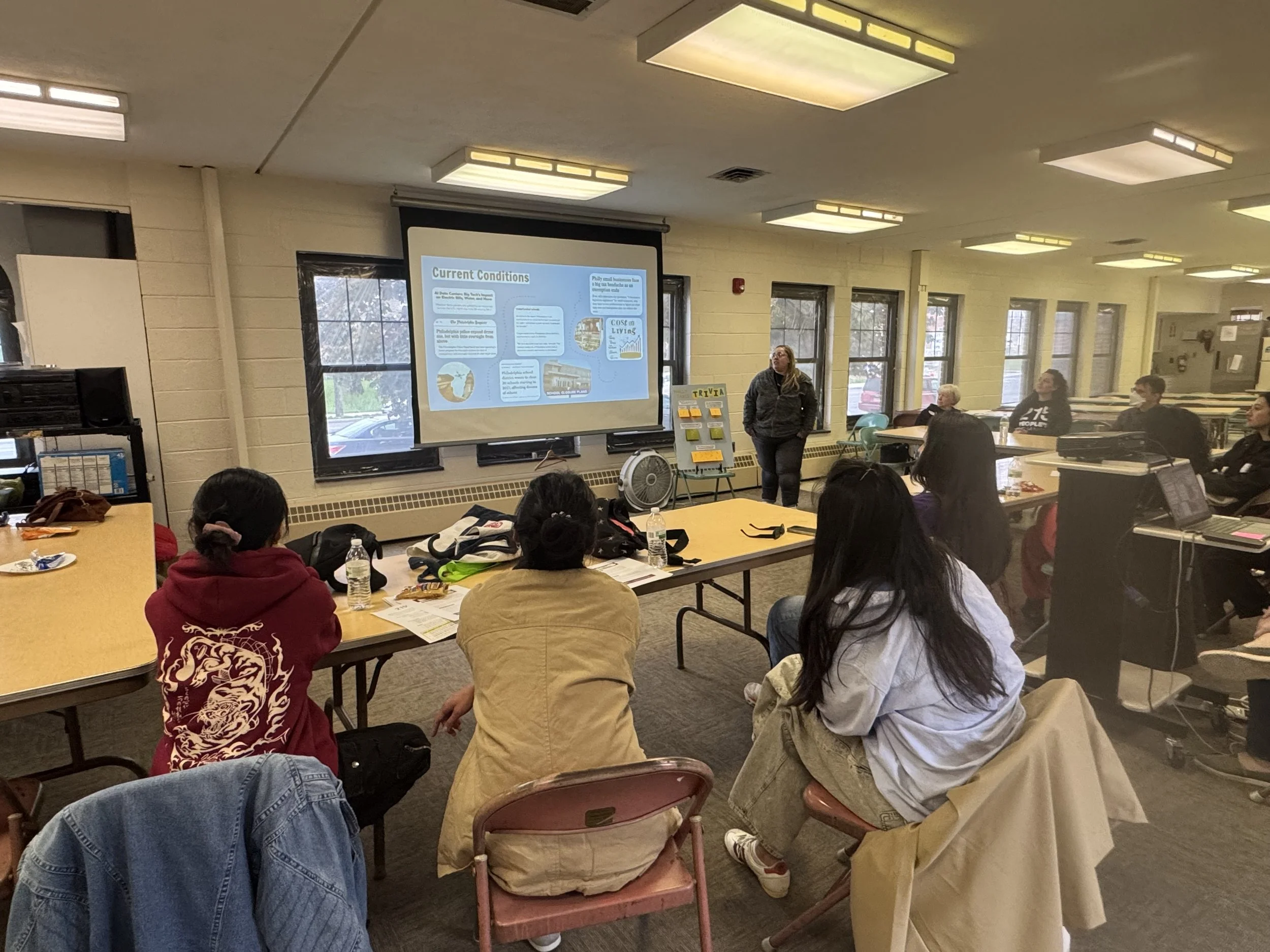
Community members gathered to discuss issues and find solutions for problems faced by Mayfair and the region. Photo by Célia Alves.
On April 25, residents in Philadelphia’s Mayfair neighborhood gathered at Saint John’s Lutheran Church on Tyson Avenue to discuss how recent city decisions — including Philadelphia school closures and changes to the city’s Business Income and Receipts Tax (BIRT) — could impact families, teachers, and small businesses across Northeast Philadelphia.
The meeting, convened by the 215 People’s Alliance (215 PA) and the Asian Pacific Islander Alliance (APIPA), fielded concerns about a wide array of issues, but changes to the city’s Business Income and Receipts Tax (BIRT) and the school board’s decision to close 17 schools across Philadelphia were the most frequently mentioned among the topics of discussion.
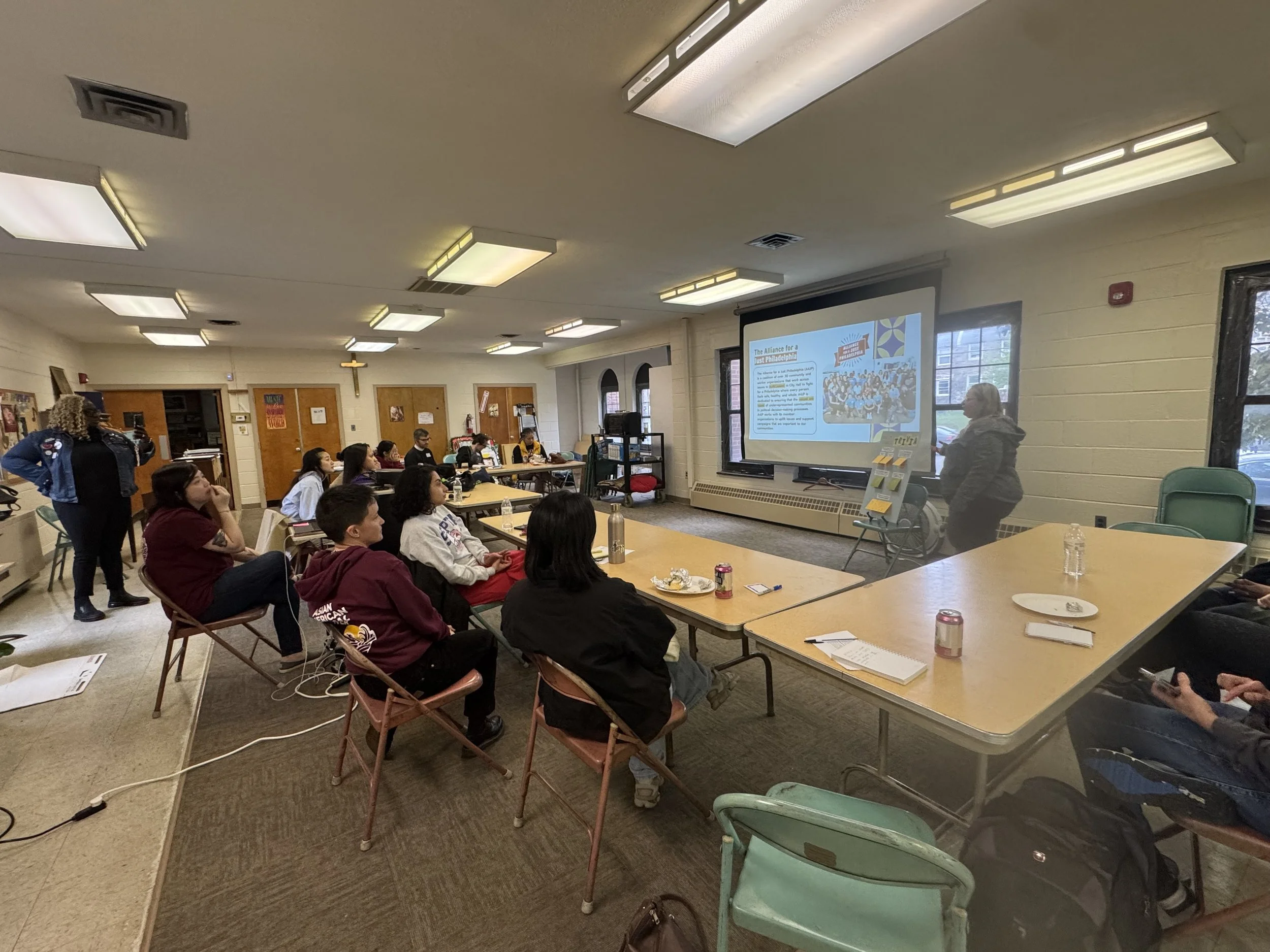
Teachers, students, neighbors and organizers gathered to present information and lived experience on the issue. (Photo by Célia Alves)
In a 6-3 vote on Thursday, April 30, the Philadelphia School Board ruled in favor of the School District of Philadelphia’s new facilities plan, which closes 17 schools across the city. It also co-locates 10 other schools. No schools within the Mayfair community are impacted by the plan, but the neighborhood sends students throughout the city to go to school, and many are still grappling with the impact of the closures and co-locations.
Daiane Payne, a former Philadelphia School District teacher and a current 215 PA leader, said the school closings and shuffling will create more overcrowding within the still-existing schools, putting further strain on teachers scared to speak up. She said speaking up can often lead to quiet retaliation from leaders within schools.
“For instance, I'm a kindergarten teacher. If I get a target on my back because I'm speaking out and I happen to have a principal that thinks I shouldn't, I can be moved to fourth grade,” said Payne. “That would be very traumatic for me because I'm steeped in kindergarten.”
Melanie Silva, member leader at 215 PA, raised concerns about the level of community involvement in the decisions behind the School District’s new facilities plan; according to her, residents were not genuinely heard.
“They didn’t have an authentic community engagement. It was only performative, just to say that they did it, but they didn’t really hear the community, principally the school board”
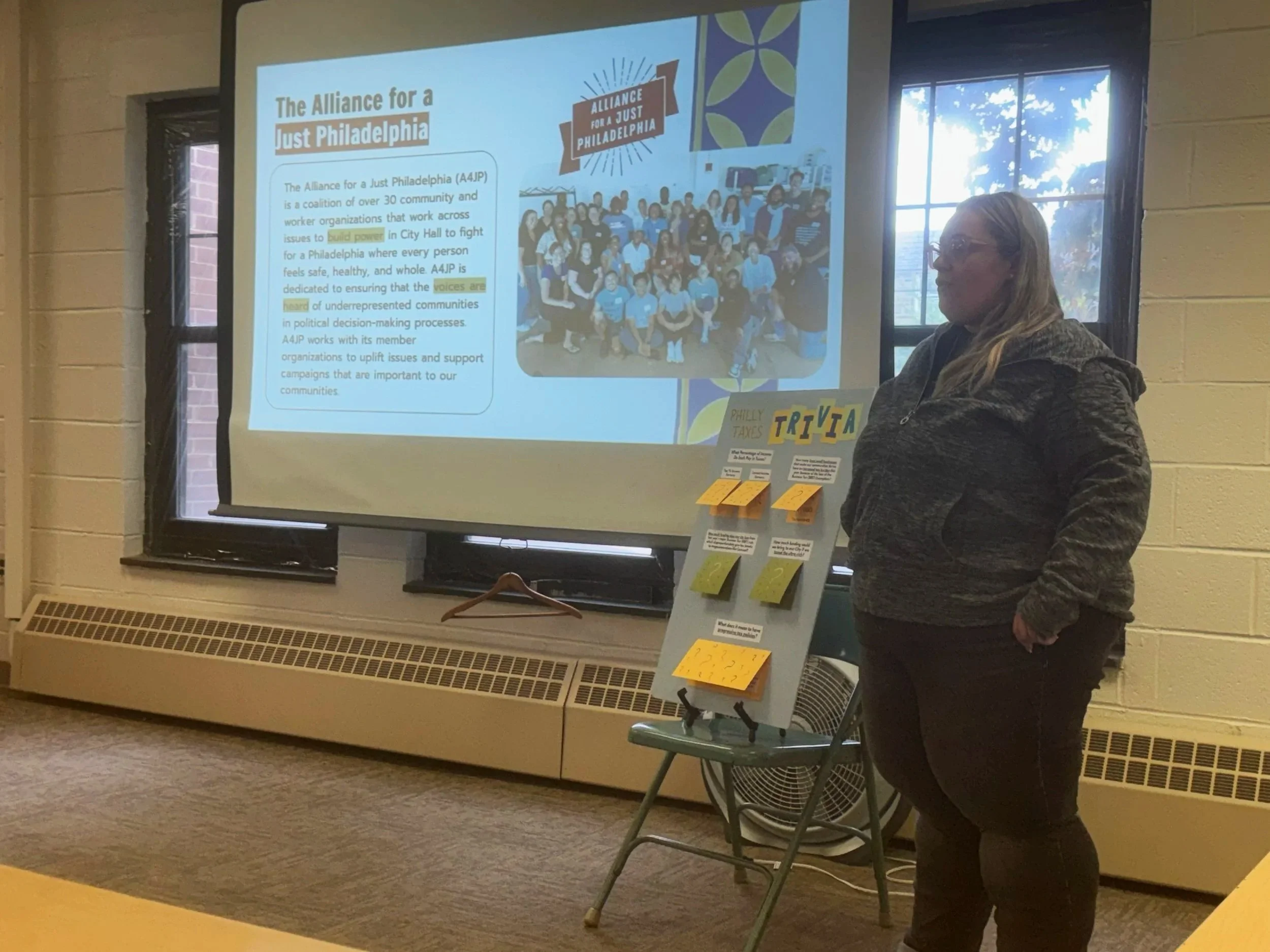
Madson Nardy, one of the facilitators talks about the work 215 Peoples Alliance does. (Photo by Célia Alves)
The school board’s inability to address community concerns about the closure of 17 schools has brought attention upon them, leading to a recent resolution supported by Councilmember Isaiah Thomas, which opened the door to changes in how school board members are selected. The resolution allows public hearings about, among other things, changes in how school board members are chosen. Instead of being appointed by the Mayor, some members could be elected by citizens.
Madison Nardy, director of 215 PA, said the drastic facilities plan comes as the district faces a budget shortfall. A tax on ride-share rides is proposed in Mayor Cherelle Parker’s current budget, but several City Councilmembers have taken issue with creating the additional tax during ongoing budget talks.
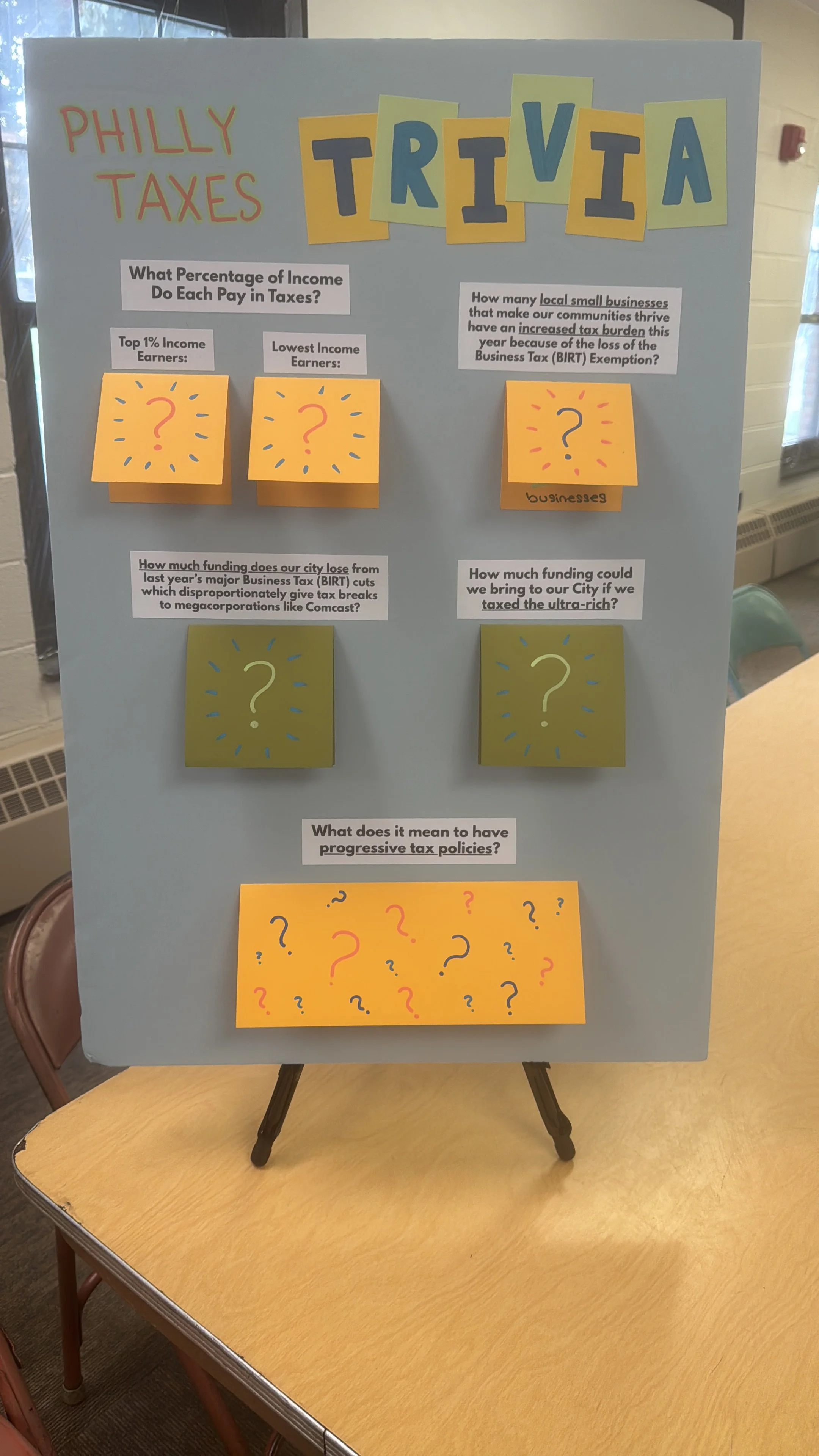
A trivia board demonstrates illuminating facts comparing the tax burden of Philadelphia small businesses to the top 1% of income earners. (Photo by Célia Alves)
“In response to the budget deficit, they're going to close 17 schools,” said Nardy.
Regarding the BIRT tax, small businesses of a certain size were once exempt from taxes on their first $100,000 earned in a year. That was suspended by the city last year, after a lawsuit brought by Zoll Medical Holdings challenged its legality. As a result, those once-exempt small businesses in the city have paid more taxes than in previous years.
Sunhee Volz, policy and organizing program manager at APIPA, said most of the entrepreneurs and small business owners in the community they encountered didn’t know about the changes to the BIRT tax and that they had to pay it this year. “
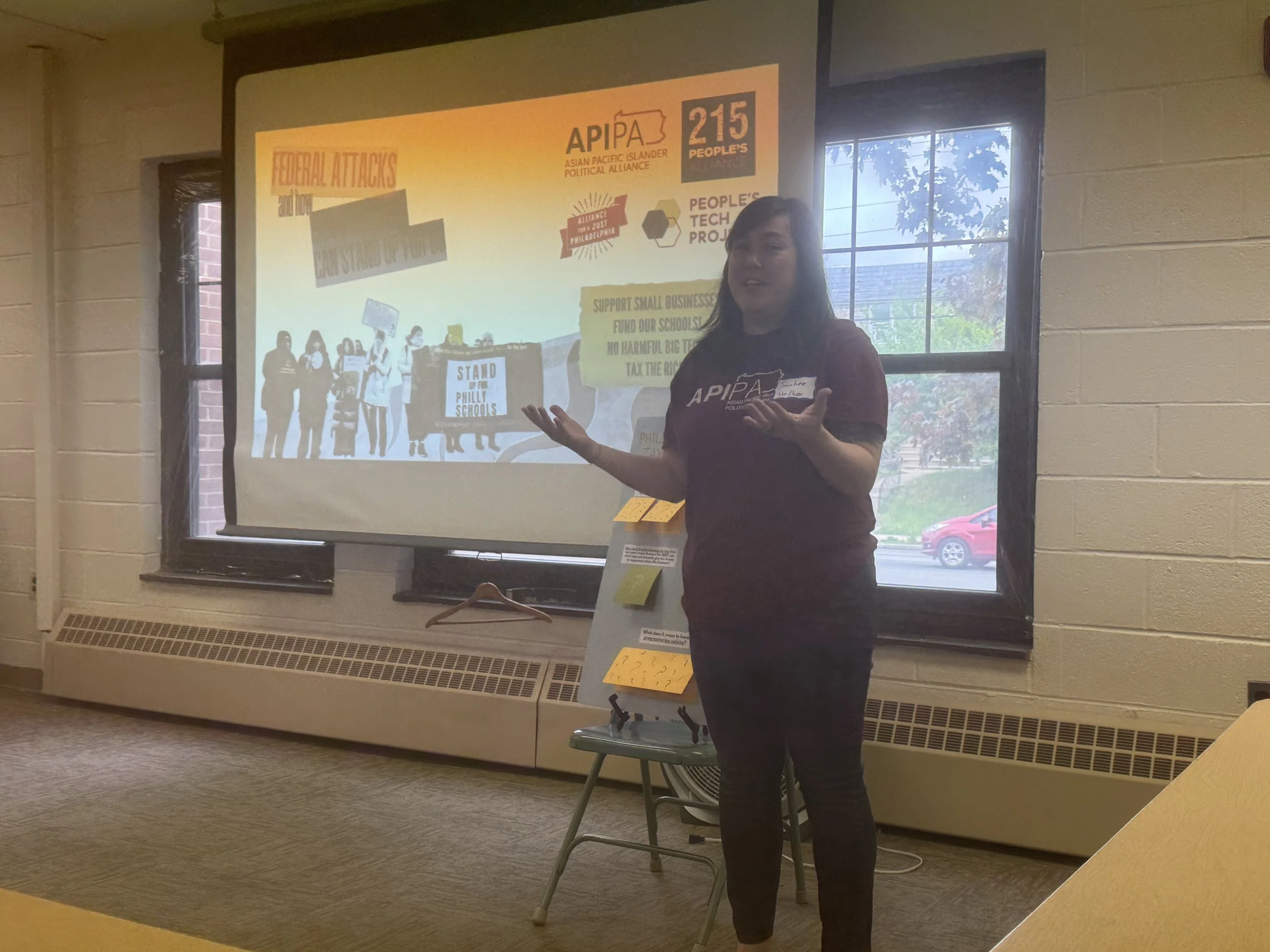
Sunhee Volz brought important information about the changes made in the BIRD tax and how it affects small business owners. (Photo by Célia Alves)
“These changes to the tax affect all of the businesses in the Northeast,” she said. “The little restaurants and corner stores and food trucks. Like, all of our community.”
She went on to say that communication between the city and local business owners was not adequately done, specifically regarding language access.
“Trying to get information in a language is really, really hard. So what kind of outreach was the city doing to these businesses in language? Imagine trying to figure it out in a second language, what kind of help was the city providing?” said Volz.
Volz also emphasized the importance of sustained civic engagement, arguing that voting and community participation are essential for residents who want to shape policies impacting their neighborhoods.
“We have elected representatives who aren't really representing the people. They're not looking out for us,” she said. “That’s why it’s really important to vote on representation and put pressure on elected officials so they know we’re here. They have to take us seriously.”
Organizers encouraged residents to stay involved through future community meetings, local advocacy efforts, and continued participation in city and neighborhood discussions around education, small businesses, and public policy.