
Frontline Dads: Cutting the supply to the school-to-prison pipeline
Through youth mentorship, re-entry support, violence prevention, and more, Frontline Dads advocates for community empowerment.
By Caroline Keane. Edited by Jensen Toussaint. On July 22, 2026.
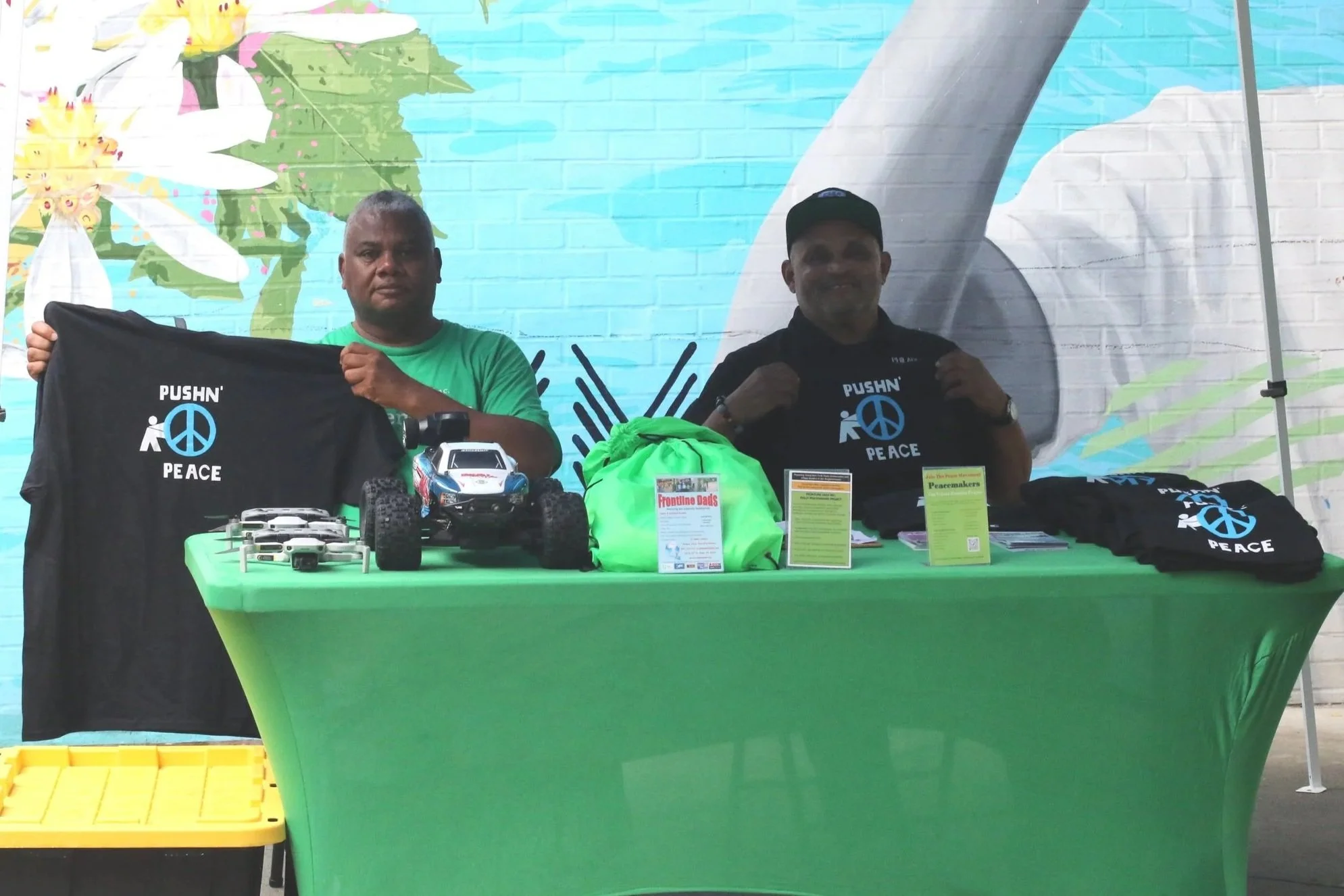
Reuben Jones and Wali Smith table outside the Penrose Recreation Center to draw people to Frontline Dads summer programming. (Photo by Caroline Keane for Inti Media)
Frontline Dads hosts a weekly program teaching peer mediation and social-emotional skills to justice-impacted youth. Many participants are court-ordered to be there mostly for non-violent crimes, one of the city’s strategies of diversion in violence prevention rather than more punitive measures.
The group is facilitated by Reuben Jones, founder of Frontline Dads and Wali Smith, both fathers who have served time in prison. While serving a 15-year sentence, Jones founded Frontline Dads to connect incarcerated parents to their children and earned a Master’s in Human Services after his release.
The weekly circle is one aspect of Frontline Dads’ approach to community empowerment.
“The holistic approach we use, that's what you have to do to stop that school-to-prison pipeline. You have to engage parents, because a lot of them need assistance...Our overall goal is eradicating the unjust criminal system. So we start with, if they don't have any supply, who can they do that inhumane treatment to?” Smith said.
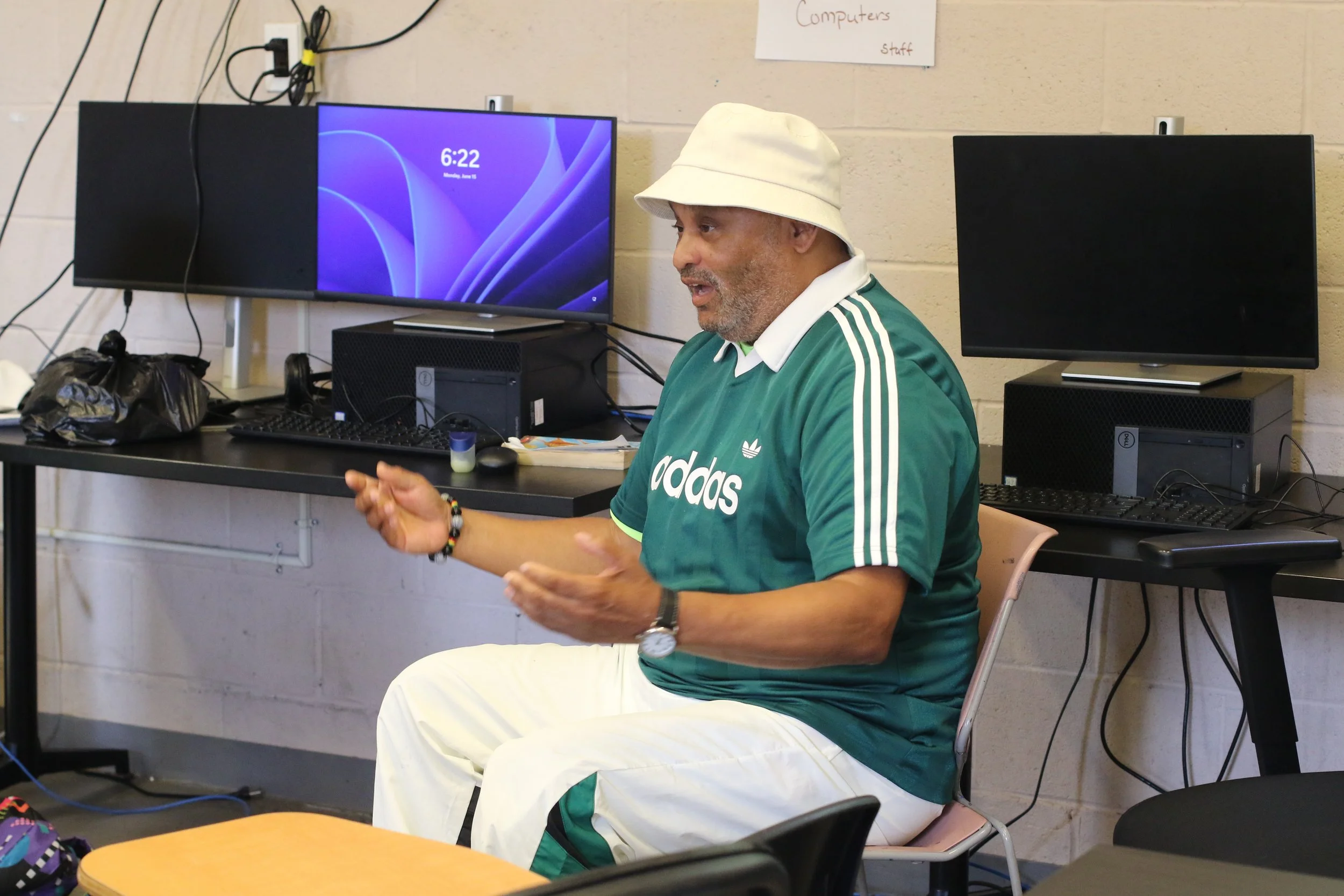
Wali Smith shares his story of being incarcerated with the circle. (Photo by Caroline Keane for Inti Media)
Thomas Fullman is an 18-year-old father who has been participating in the circle for the past five to six months. He described his day to day struggles trying to meet his probation requirements.
"It's just not right or fair. I'll be going through a lot. I got a baby at home. I gotta run around in the rain, travel to West Philly, all the way downtown, go back home,” he said, adding that all the while, he is missing out on precious time with his daughter.
Safety built by strong communities
Fullman’s cousin Justin Burton, who has also been impacted by the justice system, has strived to be a positive influence in his life and support him.
“Making myself available is one of the most important things that I can do for him. Not just as somebody who was impacted by the justice system, but also as a young father,” he said.
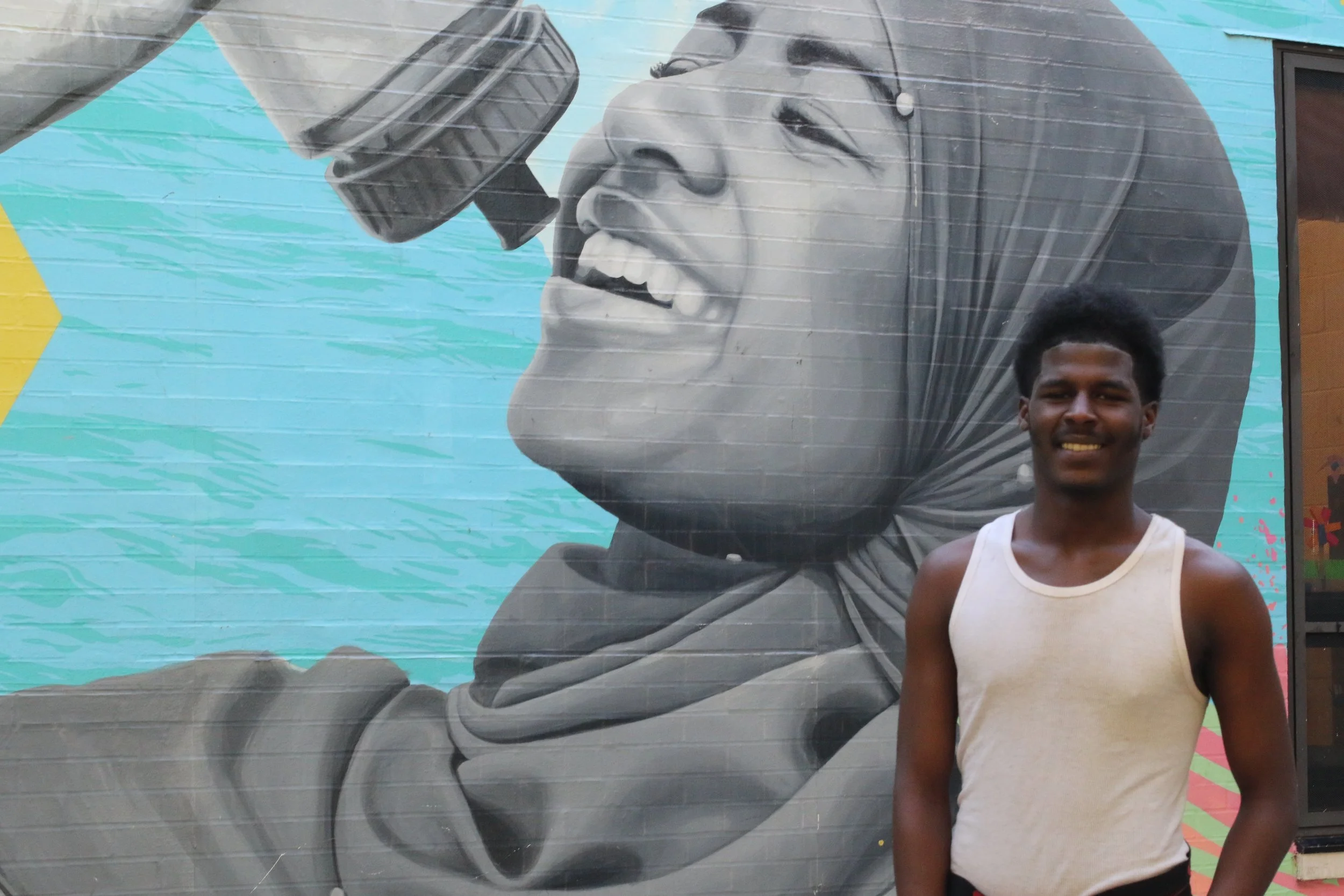
Thomas Fullman smiles outside of the recreation center where weekly circles are held. (Photo by Caroline Keane for Inti Media)
In response to the consistent decline of violent crime in the city, Smith and Jones cite community groups and the individuals that comprise them as key factors.
“Every time you hear a story like Frontline Dads, there's probably 100 or 1,000 people who are serving people in their community. You'll never know their name or hear them because they're not an organization or on social media talking about, ‘look what I did, right?’ They're just quietly going about doing the business of heroes. So I think that's my number one, the quiet heroes of the community.” Jones said.
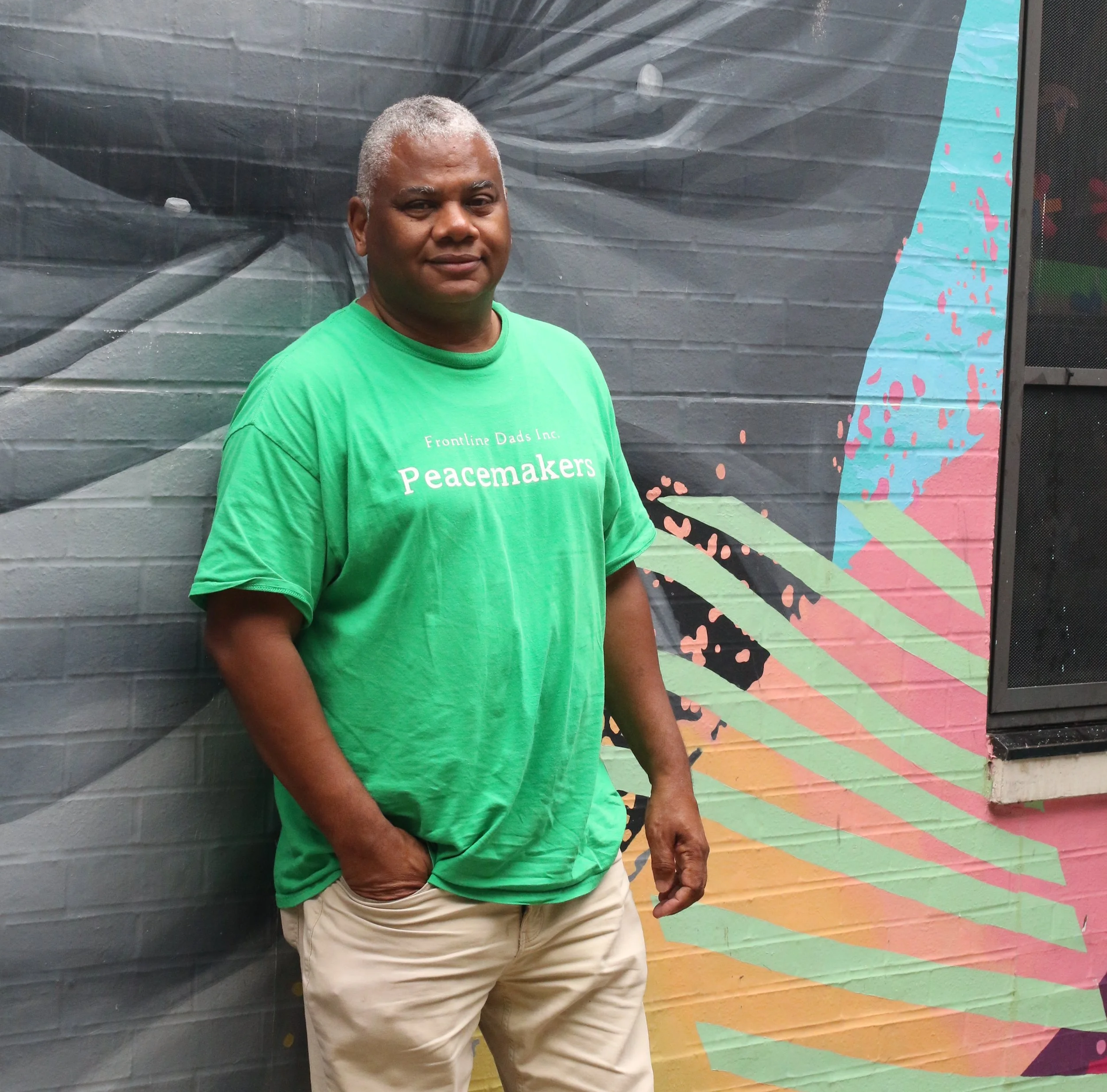
Jones stands outside of the recreation center hosting a cookout for the local community. (Photo by Caroline Keane for Inti Media)
Frontline Dads welcomes support through donations, collaboration with community groups and individuals and volunteer opportunities. Their work includes community building such as taking youth on trips like to the Poconos, Ghana and Birmingham, Al., teaching classes like how to use drones, and hosting cookouts. Violence prevention coming from within communities is one of the guiding beliefs in Frontline Dads’ work.
“One of the things that we pride ourselves on, is going to communities, letting them know we're here, what we can assist y'all with. We're not coming in saying we got the ground plan for y'all. No. We come in, meet the leadership, the mothers, the everyday grandmother that's been on this block for 50 years, say, ‘hey, we're here, what do you need us to do?’” Smith shared.
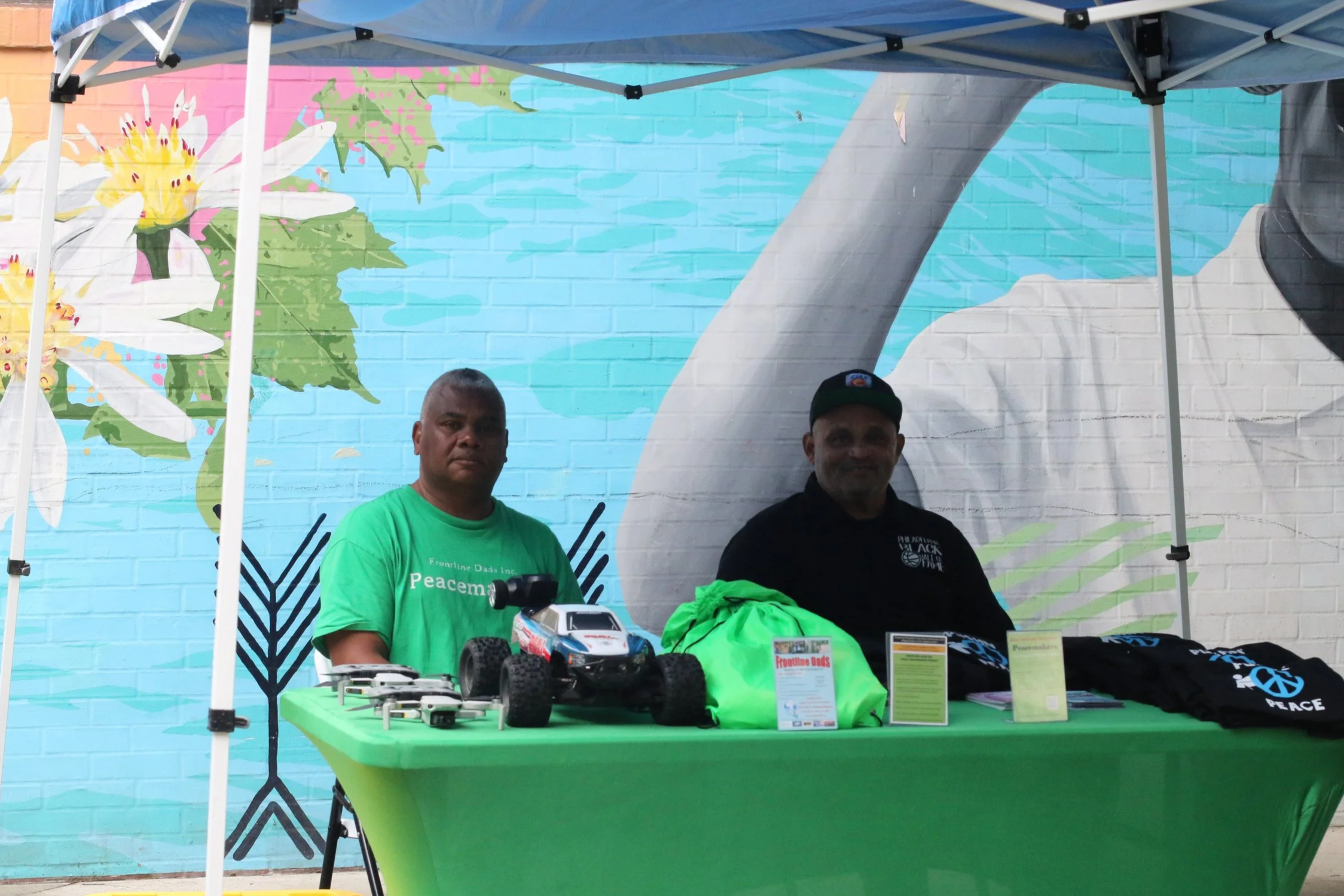
Jones and Smith table outside the recreation center to draw people to their summer programming. (Photo by Caroline Keane for Inti Media)
Developing paths forward
While Jones and Smith are pleased with the steps the city has taken to prevent violence, including shifts in how policing is done, Jones sees room for more investment.
“Number one, other than money, is housing access. You just heard the young man talk, sometimes you just need to get out of that neighborhood, you ain't got nowhere to go, so it's like you suffer the consequences, you deal with it, then these people still feel whatever they feel and you've got to retaliate. That's what keeps a lot of this stuff going, right?,” he said.
“So open up some of these PHA housing. The city has vacant properties that could be made available to support people in crisis, in transition. We're not just talking about homelessness, but addiction, transition from incarceration, women who've been subjected to domestic violence, creating a safe space for them,” Jones continued.
Fullman believes circles like these are necessary because of “the lack of opportunity and emotional intelligence. So being able to control situations with your mindset without having them take wild twists and turns that they didn't have to go to,” he added.
The skills taught in circle are especially needed among justice-impacted youth because, “it's already something that we all struggle with as human beings, especially a lot of kids who go back home when they don't have jobs, opportunities, people that's there for them to point them in the ways that they're supposed to be going. It just leaves them in a drifter, an empty gray area where it's like there's nobody there. You're not really thinking about going to ask for help, because you don’t have the emotional intelligence; they're stubborn and scared to ask for help,” Fullman said.
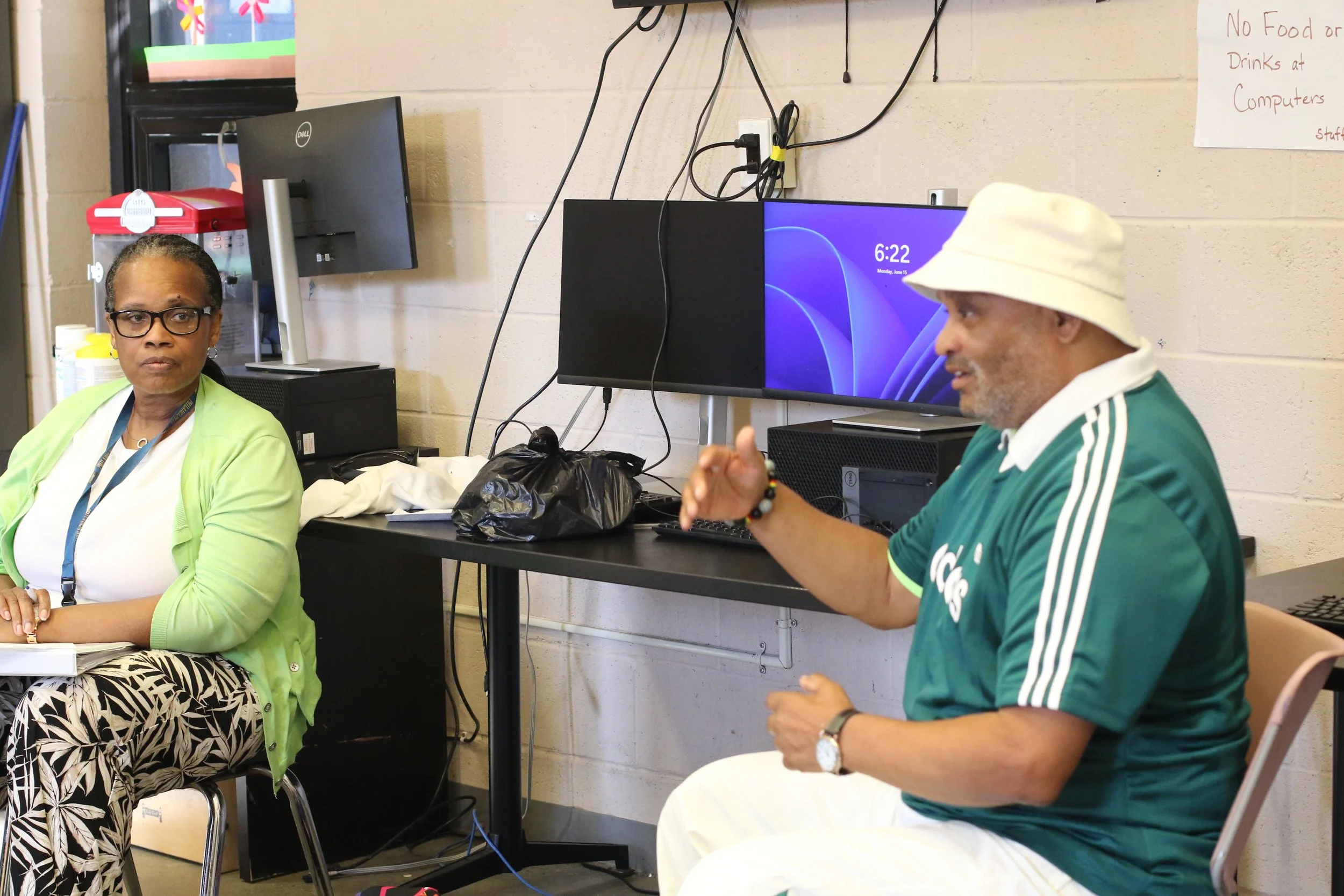
Wali Smith address youth while Linda Smith, member of ‘Peacekeepers’, listens intentionally. (Photo by Caroline Keane for Inti Media)
Shifting the approach
Burton brought Fullman into work he does with Delaware County Youth Hub, including participatory defense and restorative justice practices. He’s noticed shifts in Fullman’s approach and demeanor since he’s been involved in restorative practices.
“His vocabulary, articulation, vernacular, better emotional intelligence [which is] is one of the biggest things that I normally preach to him. How he reacts to certain situations, he's gotten a lot better with it. His self-awareness is higher.” Burton said. Burton sees accountability, honesty, and trust as some of the most critical components to support youth.
“One thing I think we need to understand and realize with these kids is we're not perfect and we have to remember that… When I think about the prison-to-school pipeline, how these little kids are and how they deal with the justice system and the pressures that come with that. What the country has been doing in terms of investing, the amount of funds that they put into these prison systems, what they're willing to do in order to institutionalize our people and the lengths that they're willing to go to, it's a lot. It's definitely a lot. We were talking more about building community safe spaces.”
Smith reflected on Frontline Dads’ approach compared to a more punitive one.
“When the system gets involved, DHS, they're just in the primitive, they're not trying to really solve, but we see the core of these young men. All they need is some real stern direction and discipline, but with love, knowing that it comes from love, not that I'm putting a hammer down. That's the success that we see in the young men and women that come to our program…We don't want to send nobody away. We go beyond. It's just not like a job. It's really because we care about these kids, and we're trying to save the lives of Black men in the city of Philadelphia.”