
In Philadelphia, Doulas help immigrant mothers navigate pregnancy
Doulas are a key resource for Philadelphia’s immigrant and underserved populations. From culturally empathetic support to in-person advocacy, doulas offer a range of services.
By Lixandra Portuondo. On April 29, 2026. Edited by Ericka Conant.

Doulas can assist in creating nutrition and exercise plans, as well as therapy methods like massage and baths. Image by pch.vector on Freepik.com
Childbirth can be viewed as an act of community, with doulas serving as the bridges between the birthing person and the rest of society. Studies show that mothers who were assisted by a doula were half as likely to experience complications during childbirth that would affect either themselves or their baby.
Doulas are professionals who provide emotional, spiritual, and practical support throughout a mother’s journey. They offer mothers and families information regarding their bodies, their rights, and the baby’s development, but not opinions or clinical decisions. The latter falls under the responsibility of midwives and medical personnel, according to certified doula Micaela Segura, who began her career in her native Costa Rica and now practices in Philadelphia, primarily within the immigrant Latino community.
An enduring profession amid a shifting landscape
Doulas are not by any means a new profession. They have existed within various indigenous, African, and Asian communities, among others, for generations, functioning as support pillars for mothers-to-be by creating a supportive, community-centered space.
However, in recent years, many doulas have felt as if they have been sidelined from their traditional roles, due in part to shifting views amid the institutionalization of medical services.
As hospital-based childbirth became the norm, the services previously performed by midwives and doulas shifted into the hands of physicians and nurses. Further, many doulas are now required to obtain a form of certification before they can practice the skills they acquired through community-based, practical learning.
Current practices in hospital-based maternal care have reduced the availability of a bedside nurse to remain with the mother throughout labor. One consequence of this has been the loss of a bedside presence that offers continuous support throughout the entire birthing process.

Micaela Segura. Photo taken from https://www.matrizjaguar.com/about
According to Segura, midwives must obtain clinical medical training that qualifies them to assist in childbirth and make medical decisions. In contrast, doulas do not offer clinical opinions. Instead, doulas support mothers in making decisions about the options they face during pregnancy.
Segura’s full-spectrum doula training, for example, allows her to support families from the moment they begin planning a pregnancy through the postpartum period. Her experience as a Latina doula operating within the U.S. medical industry has reinforced her mission of ensuring that the right to informed decision-making is guaranteed to all Latinas during childbirth
What to Expect from Doula Services at Each Stage?
If you are embarking on your family-planning journey, a doula may help you understand several factors, from understanding your menstrual cycle and identifying your most fertile windows to strategies that will prepare your body and mind for conception.
If you are pregnant and decide to terminate the pregnancy, a doula will listen without judgment and guide you as you choose the best pathway for your situation. A doula may also accompany you to medical appointments and procedures, if allowed. Doulas, explains Segura, approach the period following an abortion as a form of postpartum recovery due to the physical changes that this procedure triggers in one’s body. Forms of support include active listening, recovery practices, and rituals for closure.
If you are pregnant and wish to give birth, a doula will visit you to address any questions you may have regarding your body, the baby, labor and delivery, breastfeeding, the postpartum period, and parenting. The doula can also assist in creating nutrition and exercise plans. These professionals are also trained to teach your partner and family how to best support you, depending on the specific stage of pregnancy you are experiencing. Therapy methods may include massage, therapeutic baths, and rituals designed to enhance both your physical well-being and your emotional state.

Throughout labor and delivery, a doula will provide emotional and practical support. (Photo by pch.vector on Freepik.com)
In the event of pregnancy loss, a doula will help you navigate the grieving process. Doulas are trained to listen, respond to your emotions, and assist the family in understanding how to support you. Depending on the type of loss, doulas provide information regarding hospital procedures. Throughout the process, doulas will share techniques for breathing, pain management, hydration, movement, and rest. During the postpartum period, they assist with physical recovery techniques, emotional processing, and farewell rituals, and help facilitate difficult conversations with your partner and family.
Throughout labor and delivery, a doula will provide emotional and practical support, including guides for the best physical movements and breathing exercises that may facilitate the process. Doulas are trained to function as liaisons between the mother and the healthcare professionals; in many cases, a doula may serve as an interpreter if there is a language barrier between the mother and the medical staff. Doulas are not there to make clinical decisions, but rather to empower the mother to request all necessary information before any medical procedure is performed, ensuring that you are an active participant in the decision-making process.
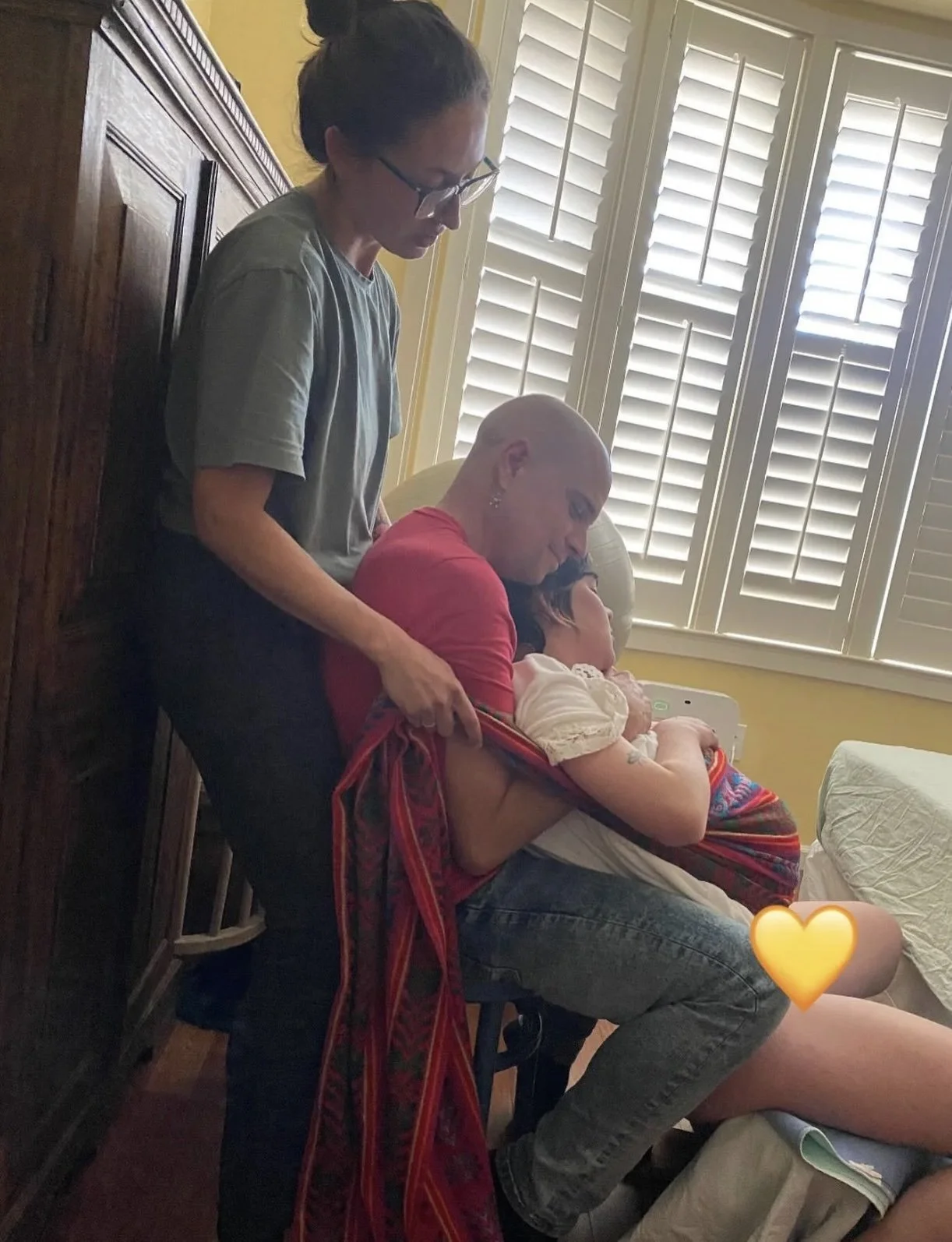
Micaela Segura provides postpartum care to a couple learning how to care for their baby.
(Photo: https://www.matrizjaguar.com)
During postpartum visits, a doula offers guidance as you adjust to this new phase of life, providing answers and support regarding any questions or concerns you may have. They can also assist with light household chores and meal preparation to ensure you get adequate rest. This professional can also support and guide you through breastfeeding and/or bottle feeding. Techniques for soothing and carrying the baby, performing hip-closing exercises, and navigating the physical and emotional aspects of recovery may also be shared.
Although doulas focus their support primarily on mothers, they do not limit themselves to them. Fathers and families receive guidance on “how to support their partner, what fears the birthing person may have, and ways in which they can demonstrate their love and strength,” so that the mother feels supported and can trust her own body to give birth, explains Segura. This type of connection is essential not only in the home environment but also upon arrival at the delivery rooms of medical institutions.
Doulas: A Bridge Between the Family and the Hospital
According to a report by the Philadelphia Maternal Mortality Review Committee, “the rate of pregnancy-related deaths in Philadelphia between 2013 and 2018 was approximately 20 per 100,000 live births—a figure exceeding the national rate for 2018, which stood at 17.4 per 100,000 live births.”
This is also linked to social and structural barriers that impact the prenatal and postpartum care received by immigrant, Black, and racialized mothers. Given this context, the presence of a doula can be key to reducing these statistics within the immigrant population.

Doulas can serve as the bridges between the birthing person and the rest of society. Photo taken from https://es.phillylovesfamilies.com/doula-support
Doulas remind their clients of their right to ask about every procedure—a point that is crucial because, as Segura notes, based on her experience with immigrant women, there is a cultural predisposition within the Latina community against asking doctors questions or communicating how they are feeling.
“Culturally concordant doulas can occupy a truly special place and possess a unique power to reach people from diverse cultural backgrounds—not merely diverse racial backgrounds,” noted Dr. Rose Molina, an obstetrician-gynecologist and assistant professor at Harvard Medical School, during a SciLine press briefing on maternal mortality in the United States.
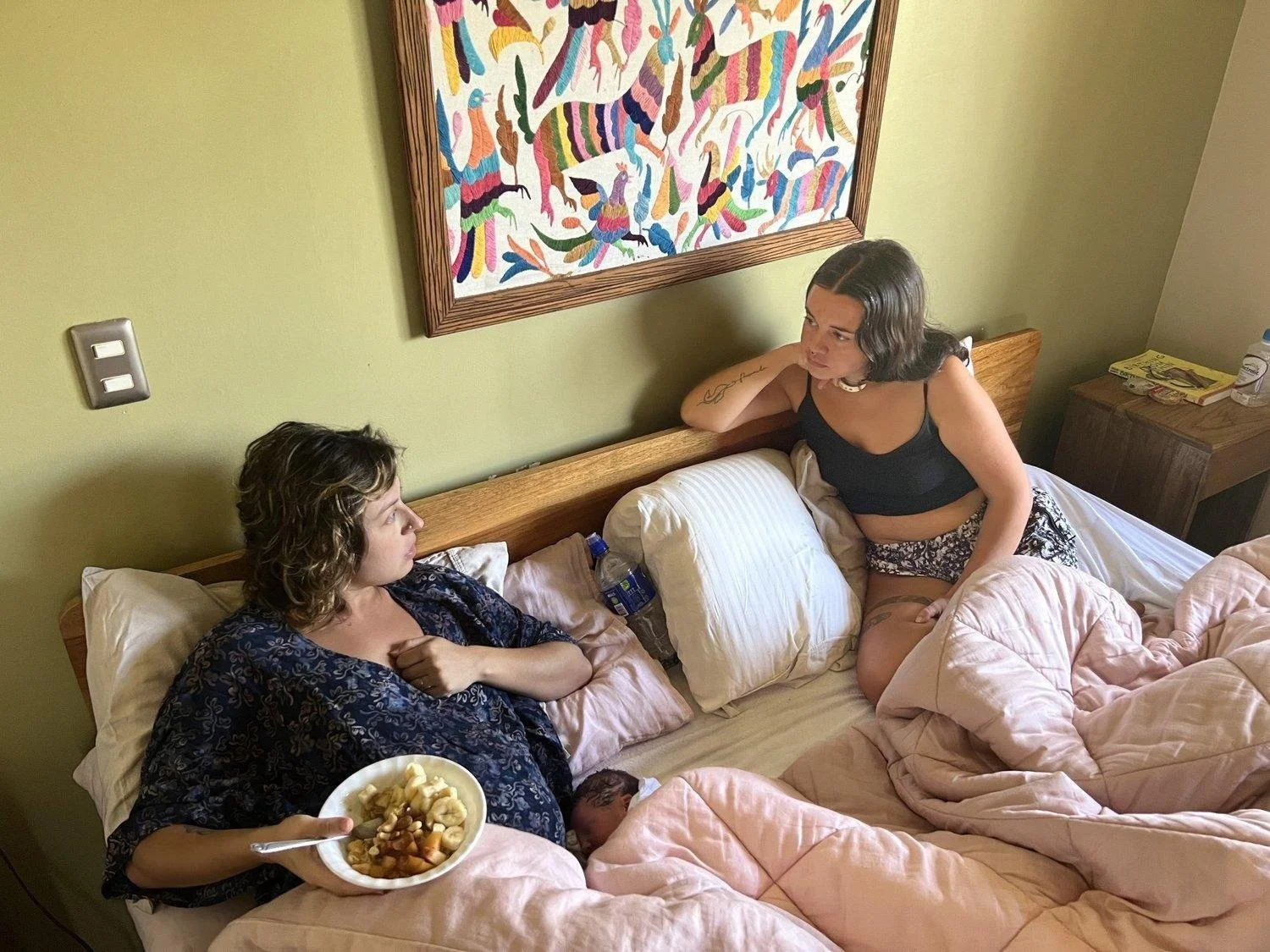
Micaela Segura receiving support and a listening ear from a friend during her postpartum period. (Photo: https://www.matrizjaguar.com)
In this regard, Segura shared that when she attends to families who do not speak English, her primary role is to actively translate the conversation—from the doctor to the patient and family, and from the patient’s sensations to the medical staff.
It is common for mothers to feel fear, uncertainty, and anxiety regarding childbirth; however, doulas guide mothers from fear toward confidence in their bodies' capabilities, helping them have a positive, non-traumatic experience during the process. Nevertheless, this service can still be unaffordable for many people, given that it is not covered by all insurance plans, and private options can be costly.
However, in our list of resources for Latina immigrant mothers, you can find less expensive ways to access a doula. The important thing is to find the support that helps you experience pregnancy, childbirth, and motherhood as a deeply personal and trauma-free journey—because, as doula Micaela Segura put it:
“To feel heard when our bodies are undergoing such a unique, transformative process—simply to feel heard, without even having to fully understand what is happening to us—changes the entire experience.”
This content is part of Empowering Madres Latinas, a multilingual media campaign uplifting the stories, voices, and organizing power of immigrant mothers in Philadelphia. This initiative is produced in collaboration with Centro Integral de la Mujer Madre Tierra through the 2025 Leeway Media Artists + Activist Residency Program. This campaign serves as the community engagement piece of the upcoming documentary Immigrant Mothers Tell Their Stories.