
Latine Journalists Share Career Journeys and Industry Insights
All the media professionals provided advice to the next generation of journalists.
ByJensen Toussaint. December 10, 2025.
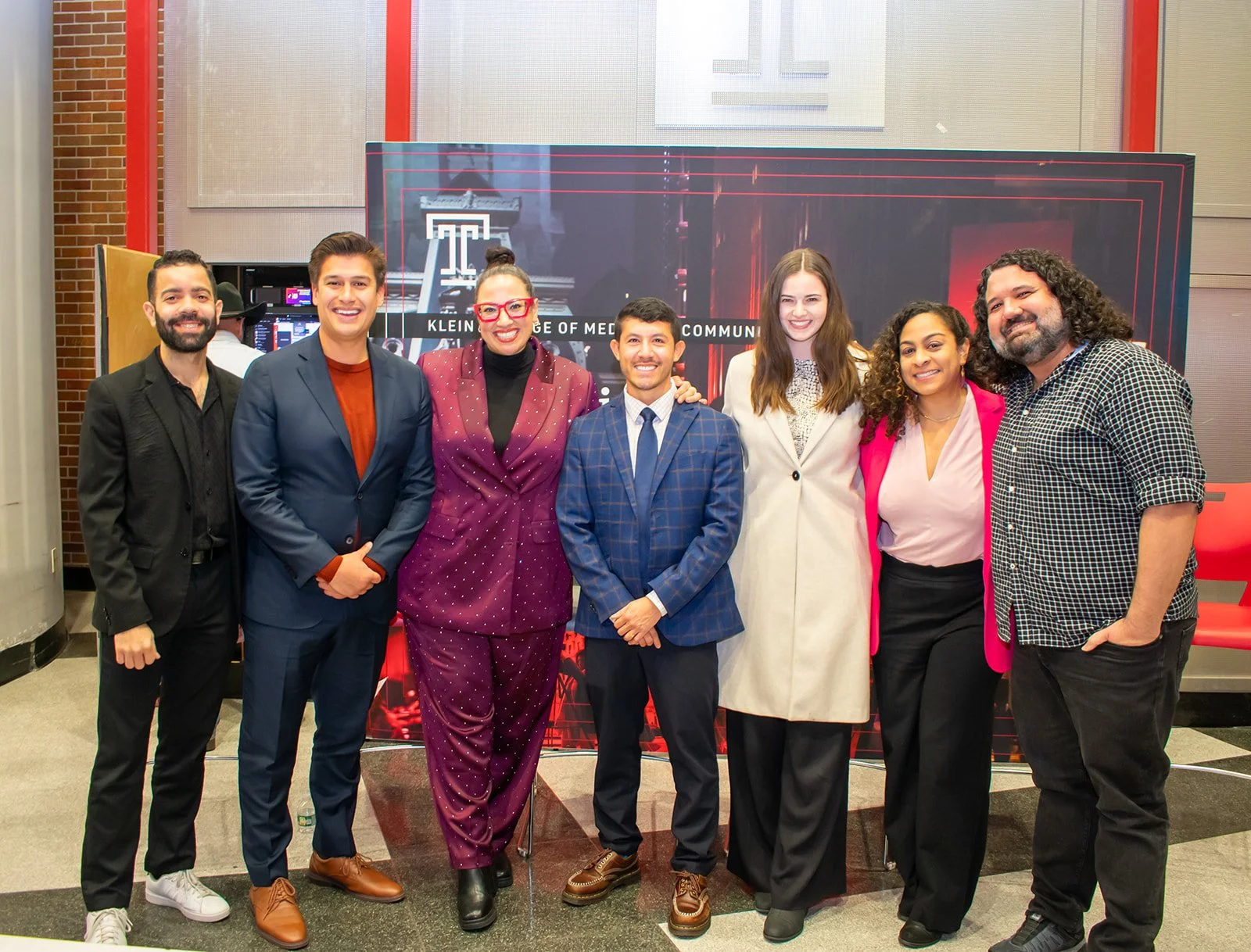
Philadelphia media professionals pose with National Association of Hispanic Journalists Philadelphia Chapter board members. (Credit: @melquiphotographer)
On Tuesday, December 2, five Philadelphia-based journalists took part in a panel discussion at Klein College, just moments after the celebration of the official launch of Temple University’s student chapter of the National Association of Hispanic Journalists.
As several students aspiring to make their mark in the media industry sat in the audience, each of the professionals shared their own journeys and career paths.
Each had their own unique paths into the field.
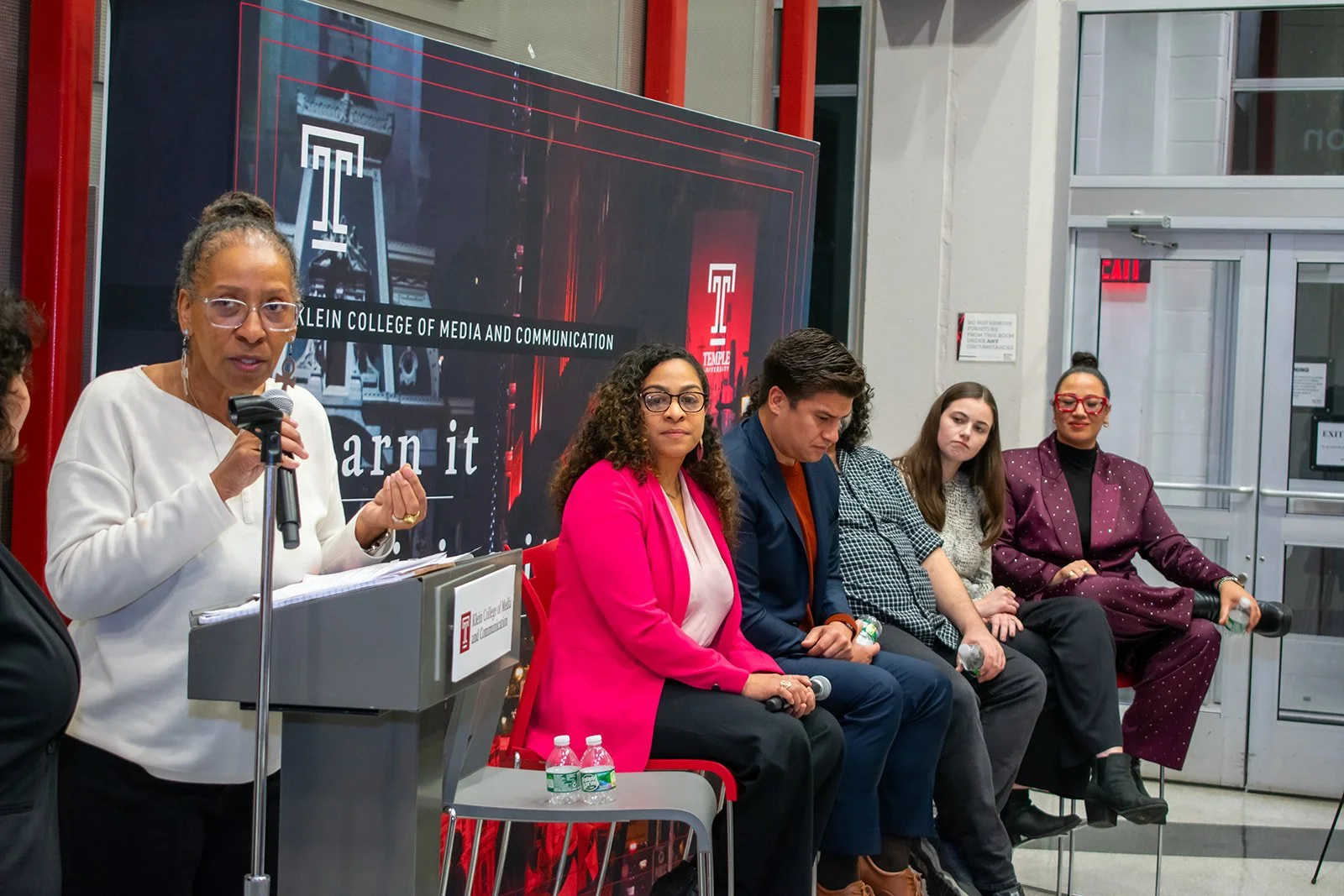
Temple University professor Denise James moderated a panel discussion with five Philadelphia media professionals. (Credit: @melquiphotographer)
“It’s never too late”
Finding your way into the media and journalism industries isn’t always linear.
Ariane Datil worked for several years in the fashion industry before entering the media industry at the age of 28.
At the time, social media was becoming a bigger part of the media and journalism world.
Earlier this year, Datil was named The Philadelphia Inquirer’s first-ever social video host.
While she — and the role itself — are new, she found that having already been creating social videos for nearly a decade helped.
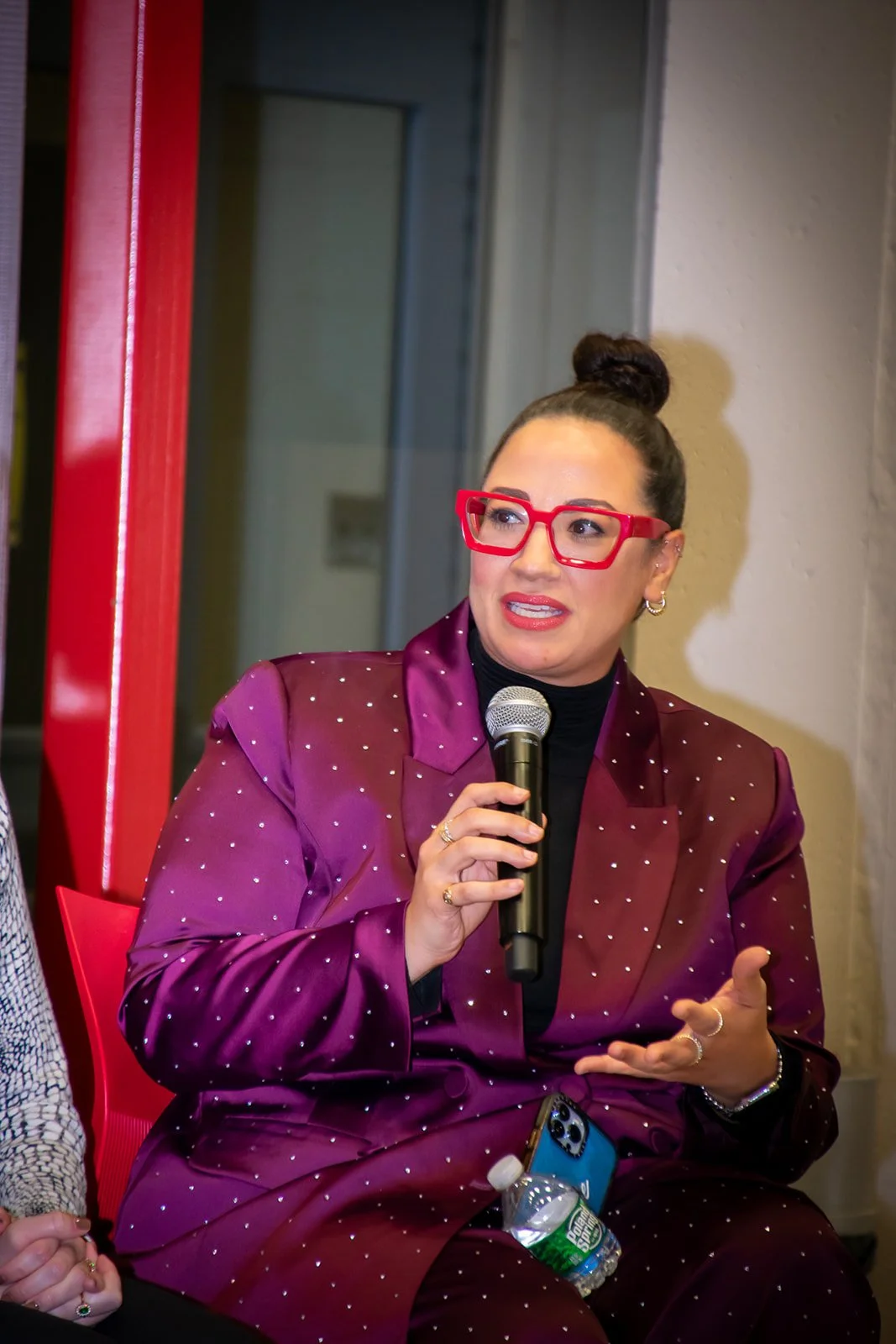
Ariane Datil is the Philadelphia Inquirer’s first-ever social video host. (Credit: @melquiphotographer)
“Without doing that for the last eight, nine years, I don’t believe I would have the job that I have now, which is getting to make those videos every single day, to talk to audiences that are now solely relying on social media to get their news,” Datil said.
Danny Freeman, a CNN correspondent based in Philadelphia, also didn’t have a traditional path into the industry.
“I did not study journalism in college, I did not work for the school newspaper. We did not have a TV station when I went to school, we didn’t have a communications major,” he said.
Understanding that he had an interest in public speaking, politics, government, and public policy, he ended up taking a journalism job out of happenstance.
“I’m Colombian, I wanted to go down and live in the country of Colombia after college. That was the only thing that I wanted to do. I didn’t care what the job was … it just happened to be a journalism job,” he added.
Freeman found that the job aligned with his interests, and he’s remained in the industry ever since.
Dealing with pressures and challenges
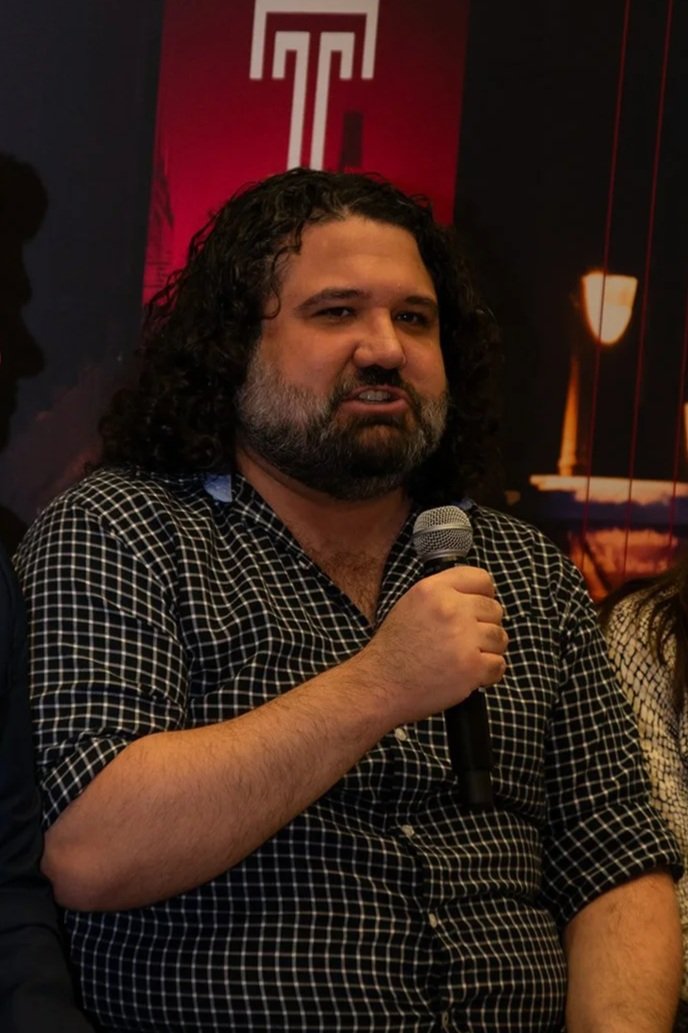
Jeremy Rodriguez, editor at Philadelphia Gay News, leads coverage for Philadelphia LGBTQ+ communities. (Credit: @melquiphotographer)
Meeting deadlines, producing stories rooted in facts, public criticism, and work-life balance are just some of the many challenges of working in journalism.
Among the most significant challenges, however, can be a fear of making mistakes.
For Jeremy Rodriguez, editor at Philadelphia Gay News, they’ve learned that “the world keeps spinning.”
As embarrassing as it may be to make a typo or slip up while on the air, it’s not the end of the world.
“I made so many mistakes over the years,” they added. “And I can tell you they are very, very embarrassing, but nobody remembers them at all. … so, I’d say just give yourself some grace.”
To this end, Datil has improved her time management skills, which have helped her become more efficient with her everyday tasks.
This, in turn, can give you more time to take second and third looks at your work and avoid making the same mistake twice.
Meeting deadlines is also a significant factor in public relations, as Abby Klemen, an account executive at Cashman & Associates, said.
She highlighted that having an open line of communication, being transparent, and intentional about your storytelling are all also important.
Developing skills is another key ingredient for overcoming challenges and pressures, as well as imposter syndrome.
“One thing that has helped me go through that is reminding [myself] that if I’m here, it’s because I can do this,” said Gabriela Watson-Burkett, founder and executive director of Inti Media. “So, be confident in your skills.”
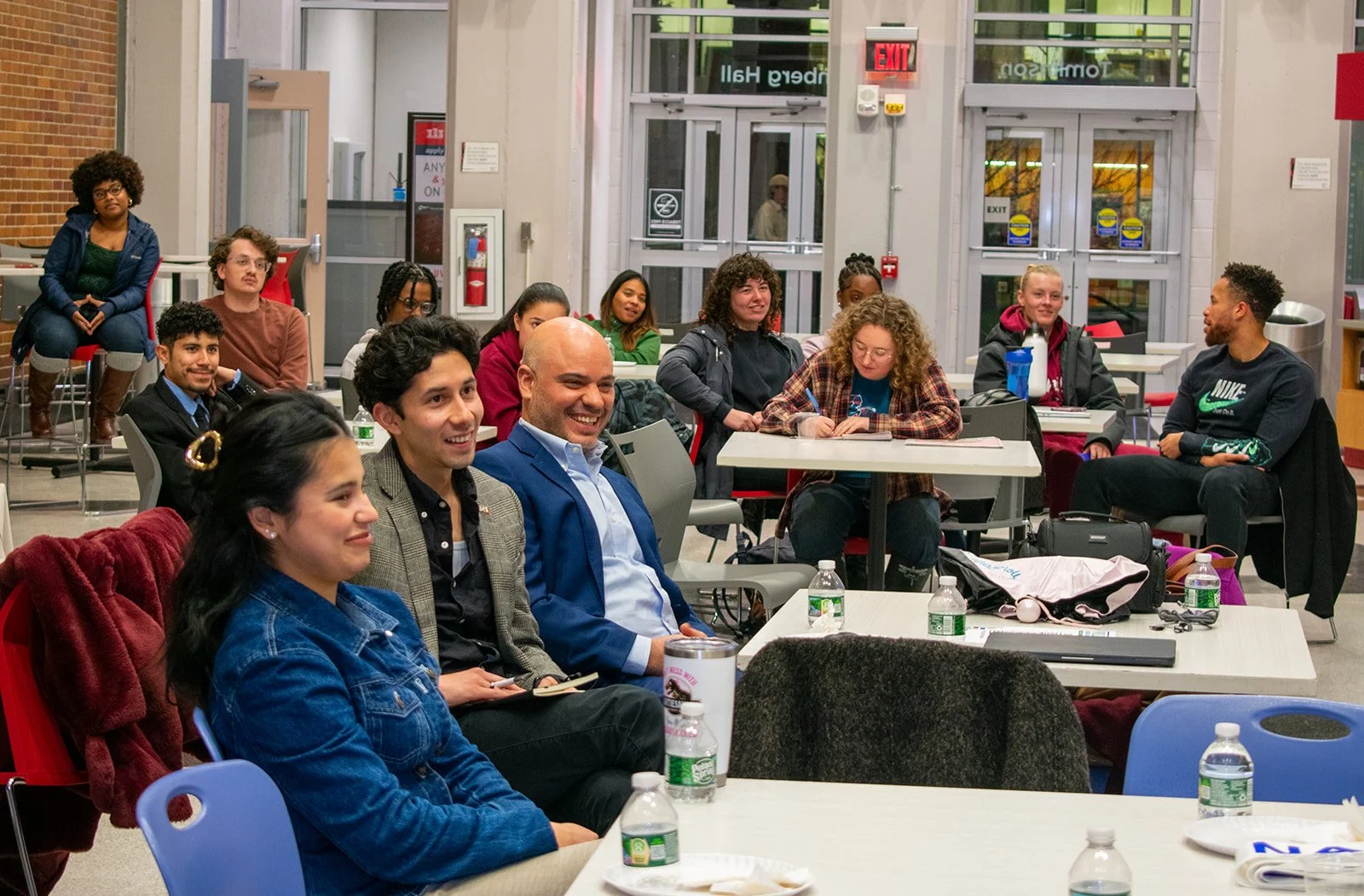
The audience listen intently as media professionals shared gems about the industry. (Credit: @melquiphotographer)
What are some other important skills?
“It’s just writing,” said Datil. “How you write will change from year to year, given your life experience and the life experience of what people are going through at the time … you just have to get it right.”
Another essential skill that transfers well for both journalism and public relations is the ability to condense large amounts of information and make it media-friendly.
Rodriguez said that thinking outside the box is also a valuable skill.
That ability can help a journalist find alternative ways to report on a particular topic that differ from what other media publications are covering.
Watson-Burkett expanded on that point, adding that documentary work “allows for a deeper connection with the subject matters.”
“To do documentary work, you have to be really invested,” she added. “Choose topics that you’re really passionate about. Choose a different angle. There are so many ways to tell stories, but why are you the right person to tell the story? What’s something new that you’re bringing to this [story]?”
Temple assistant professor Denise James, the moderator for the panel, added the ability to take critical feedback and turn it into potential growth as another valuable skill to develop.
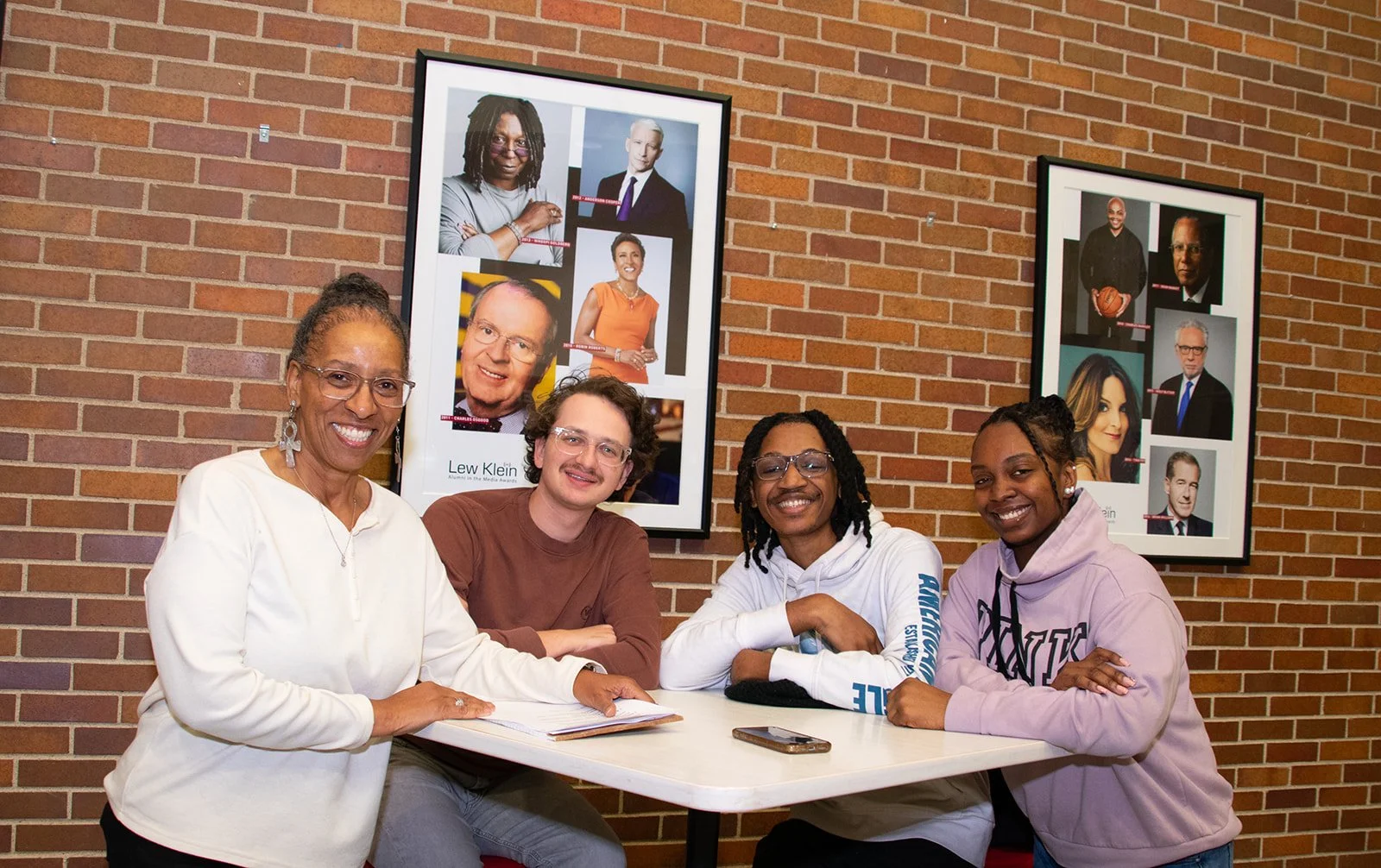
Professor Denise James with three of her students. (Credit: @melquiphotographer)
Advice for the next generation
The media landscape — locally and nationally — is changing, and the need for diverse voices is more prevalent than ever.
There is true power in journalism, and that power comes from the people.
Last year, during the lead-up to the 2024 presidential election, a big question raised was how Latinos would vote.
When Freeman was covering the 2024 presidential election, he heard many correspondents state that Pennsylvania’s suburban counties would all vote heavily Democratic, as has been the case for decades.
However, upon visiting many of those counties and speaking to residents, Freeman found that he was hearing the opposite. Many voters he spoke with told him they would likely sit out that particular election or were contemplating voting Republican for the first time.
Donald Trump did wind up flipping Pennsylvania during the 2024 election, winning 50.4% of the vote to Kamala Harris’ 48.7%, earning 19 electoral votes.
In relation to this, Freeman told the students and aspiring journalists that they should trust what they bring to a story as reporters.
“Trust your eyes, trust what you see, trust what you hear, and what people tell you,” Freeman added.
Watson-Burkett shared a similar story about when she shot and directed her first documentary about Afro-Peruvians in Peru.
It was a population that many, even in Peru, were not familiar with.
While the footage was not ideal, the content and message of the story were so profound that she began receiving invitations to screen the documentary at festivals throughout Brazil and later in New York.
Fast forward, Watson-Burkett moved to the United States, enrolled at Temple University to study film, earned her Master's in Fine Arts degree, and has since directed several documentaries.
“It’s been an amazing journey, and all that [was] because of that simple documentary. So, keep growing your dreams and believe in yourself,” she advised.
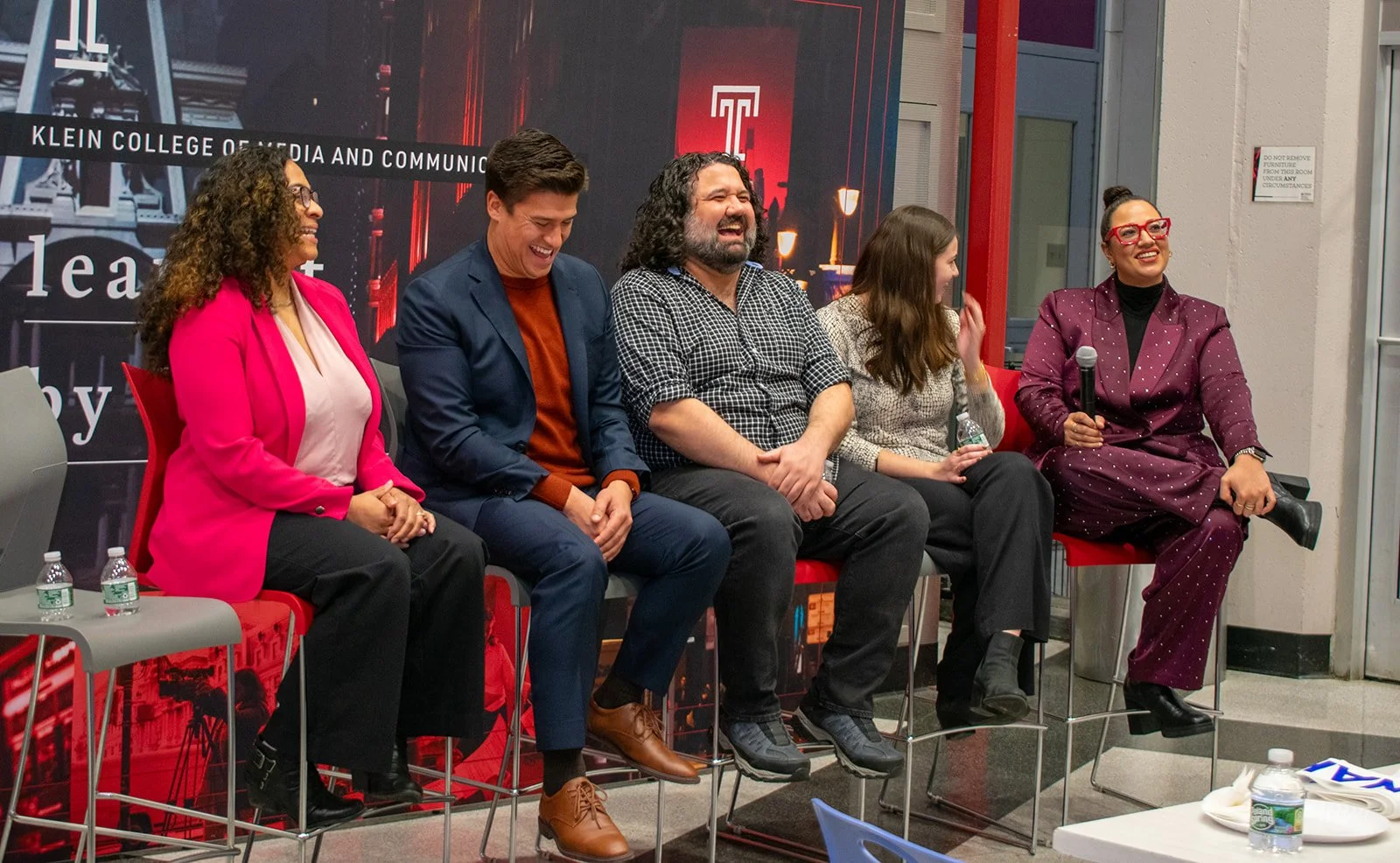
Each of these media professionals all have their own unique paths and journeys into the industry. (Credit: @melquiphotographer)
Call to action to create change
Journalists can be change agents in our society.
While Latinos are becoming a bigger segment of the United States population, those numbers aren’t reflected in newsrooms. It isn’t reflected in management roles. In addition, the stories covering Latinos and Hispanics don’t capture the authentic and vast essence of these communities.
Those realities are a big reason why Watson-Burkett wanted to launch Inti Media.
“Because we wanted to have the freedom, the agency to tell stories from our perspectives,” she said.
While not everyone on the team is Latino, each person has a story. That mix of team and community members’ backgrounds, as covered in the stories, breeds power and freedom of expression.
“Community-centered journalism is the main gift that we have. We’re not telling stories about, but we are producing and giving space for the community to be at the center,” Watson-Burkett added. “I think that’s a really nice source of change.
”Freeman shared that knowing and understanding your community is another way to bring change. This can help you become a reliable subject matter expert when a story about your community needs to be covered.
“Don’t be afraid to speak up,” Rodriguez added. “No matter where you are on the career ladder, don’t be afraid to speak up, even for little things inside the newsroom.”