
Mayor Parker’s new nearly $7 billion budget puts economic mobility at the center
The new budget proposes more investments in workforce development, housing, and even a new student loan program.
By Jensen Toussaint. On March 24, 2026. Edited by Nigel Thompson.
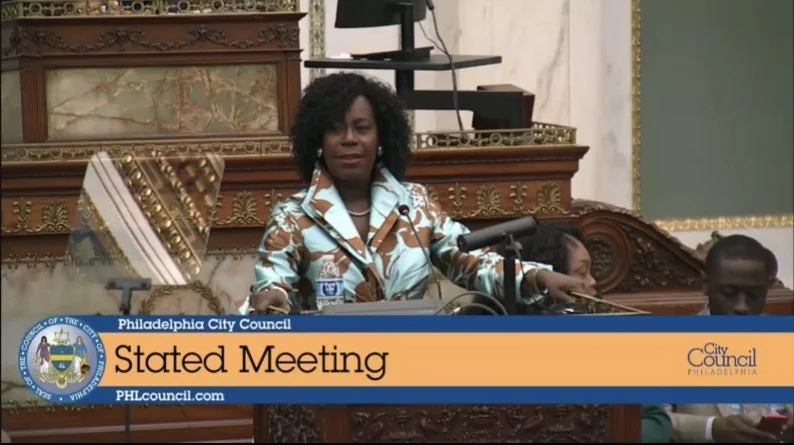
During a March 11 Philadelphia City Council meeting, Mayor Cherelle Parker delivered her third budget address. (Screenshot/City Council livestream)
As she stood inside City Hall, the Mayor proposed a nearly $7 billion Fiscal Year 2027 budget with an eye towards holding up one of her main campaign promises to expand economic opportunity for all Philadelphians.
She, however, said that the budget proposal is more than just that.
“I want you to know that this $7 billion FY27 budget is not just a ledger full of numbers,” Parker said. “It’s a bold set of strategic investments, and actually, what I believe is a road map to a safer, cleaner, and greener Philadelphia with access to economic opportunity for all.”
Just before getting into further detail on her budget proposal, Parker highlighted that “people need access to opportunity so that they can feel hope, pride, and inspiration.”
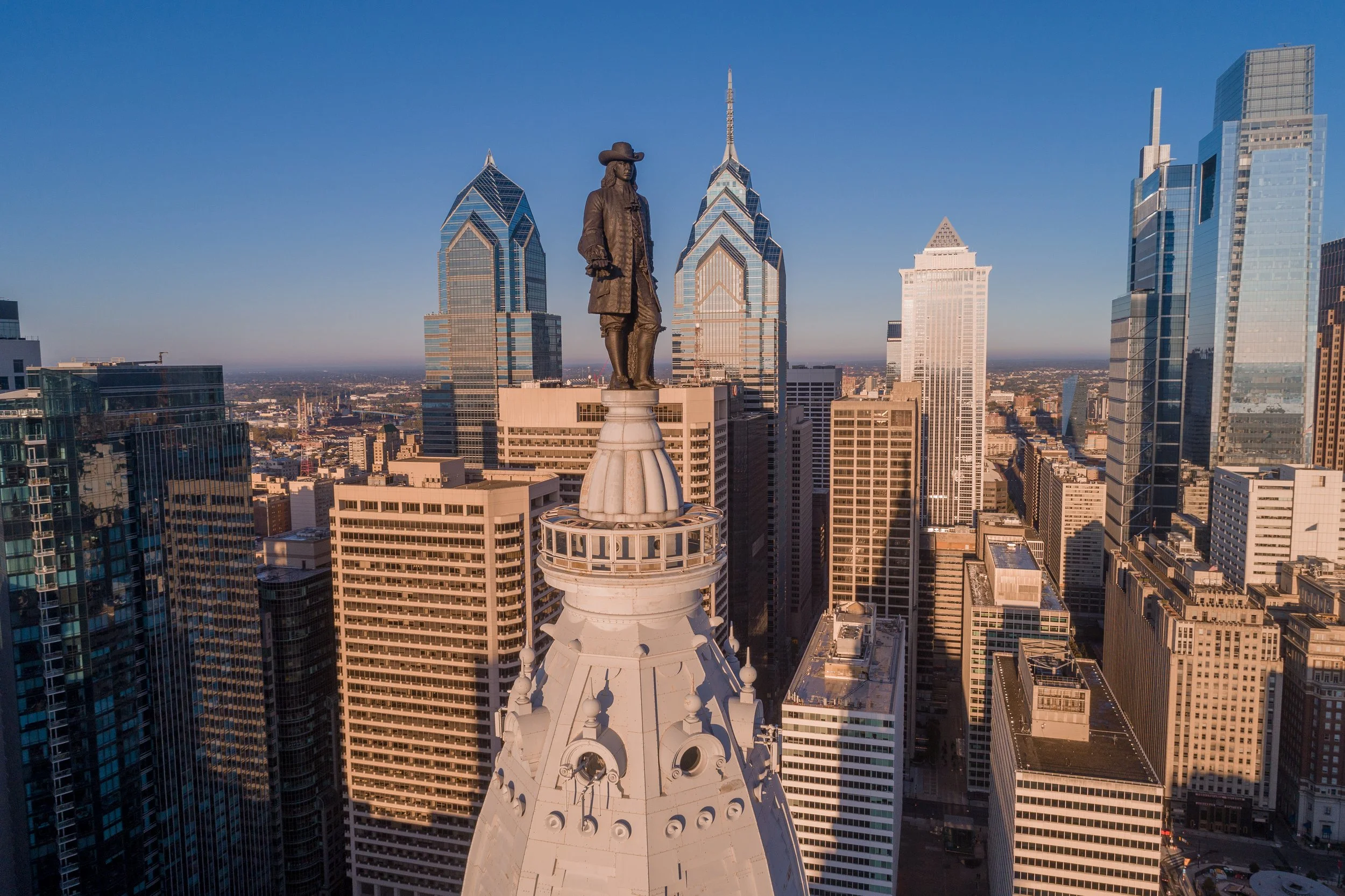
$7 billion budget proposal aims to improve public safety, economy, housing and education
(Photo by Mindaugas Dulinskas)
During a March 11 Philadelphia City Council meeting, Mayor Cherelle Parker delivered her third budget address.
According to Philadelphia Police Department statistics, Philadelphia finished the year with 222 homicides, marking a 61% decline from its alarmingly high 562 in 2021.
A Pew report titled, “The State of the City,” found that Philadelphia’s progress outpaces over 20 other major U.S. cities.
Parker gave much of that credit to the leadership of Police Commissioner Kevin Bethel and Public Safety Director Adam Geer, respectively, as well as the city’s holistic PIE strategy, which stands for Prevention, Intervention, and Enforcement.
To continue making forward progress on violence prevention, Parker proposed $25 million toward community-based anti-violence grants that would fund grassroots organizations working in neighborhoods most affected by gun violence.
“Because we know that these investments work,” Parker said.
In addition, she highlighted plans to expand community policing efforts throughout the city.
Specifically, Parker said the Philadelphia Police Department will be helping address quality of life issues — such as nuisance properties and neighborhood disturbances — through the deployment of “quality-of-life assurance officers.”
“A promise that we made to you about transparency in public safety, we talked about body-worn cameras,” said Parker. “As your mayor, I’m proud to affirm for you… that body-worn cameras are now issued to every officer in every patrol district, as well as our front line personnel.”
Fiscal stability as a ‘ground rock’
As the mayor progressed through her speech, she urged Philadelphians to dream big, and think even bigger.
“But we can’t dream big and think bigger without making sure that fiscal stability is our ground rock that we will stand on together,” Parker said.
She continued: “Nothing will shake me from my core belief that fiscal stability is the foundation upon which we will build everything else together.”
While Parker said that the city’s fiscal health remains strong, it continues to face rising challenges.
To this end, she noted that the city is continuing to make contributions to its budget stabilization reserve fund — or “rainy day fund.”
Parker highlighted that the fund will have $344 million by the end of the proposed five-year plan, which will be “the most we’ve ever had for a rainy day in the history of the city,” she noted.
This fund will be especially crucial as the city faces economic and federal policy uncertainties.
Meanwhile, Philadelphia’s pension fund has surpassed 67%, reaching its highest funding level in decades.
The mayor highlighted that this fund is projected to reach 80% by Fiscal Year 2029, and 100% by Fiscal Year 2033.
After praising these projections and crediting them to shared sacrifice, collective discipline, and determination, Parker also highlighted that Philadelphia has secured its highest combined credit rating in decades.
Economic growth, prosperity, and security
Among the city’s many challenges, Parker emphasized economic mobility as its biggest.
This is why economic opportunity and mobility has been one of Parker’s biggest pillars since coming into office as mayor.
While her first two budget addresses focused on making Philadelphia safer, cleaner, and greener, Parker wanted to ensure that this third budget address focused on economic mobility and self-sufficiency for all Philadelphians.
“What good is a safer, cleaner, and greener city, if our people don’t have access to good-paying jobs, quality health care, and a real shot at raising a family, owning a home, and building a pathway to a better and more affordable life?” Parker asked.
To address what she called “the heart of this budget,” Parker introduced Philadelphia’s Economic Growth, Prosperity, and Security (GPS).
The new initiative aims to make it easier for every Philadelphian to move up economically, charting a course from early childhood to school age, from graduation to a career, and all the way up to retirement.
“My economic mobility plan is designed so there is a pathway for everyone at every stage in life to move up that ladder,” said Parker.
The plan includes a $10 million investment in workforce development programs, $7 million to go towards a municipal employment fellowship program that would help recent graduates enter city government jobs, and $850,000 towards a Student Loan Help Center for Philadelphians struggling to pay off student loan debt.
For Parker, it’s crucial that the plan is inclusive and dynamic so that the prosperity element — namely to afford a home, gain a quality education, and valuable skills training — is accessible to all Philadelphian residents.
“If we get this right by making value-driven, data-informed investments, Philadelphia can become the national model for economic mobility across the country,” Parker said.
Housing affordability as a gateway
Housing affordability is another critical component of the mayor’s budget.
For Philadelphia, Parker believes housing affordability has to be thought of “as a gateway to economic mobility.”
When it comes to the nationwide housing crisis, Parker said it’s rooted in two things: supply and production.
To address the issue, Parker and her administration plans to continue the H.O.M.E. (Housing Opportunities Made Easy) initiative, which aims to create or preserve 30,000 housing units across the city. The city recently invested $2 billion to restore and build units through this initiative.
Furthermore, the city is partnering with the Philadelphia Housing Authority to create or preserve an additional 20,000 affordable housing units.
To help increase housing supply faster, Parker also proposed a $10 million investment in modular housing manufacturing.
She harkened back to when Philadelphia was the home base for factories, where countless jobs were created to put people on the path to self-sufficiency.
“It’s with that history in mind and our possibility for the future that I want you to think about building factories to create modular housing right here in the city of Philadelphia, where we can build the supply to meet the demand,” said Parker. “Not just in one neighborhood, in all neighborhoods in the city of Philadelphia.”
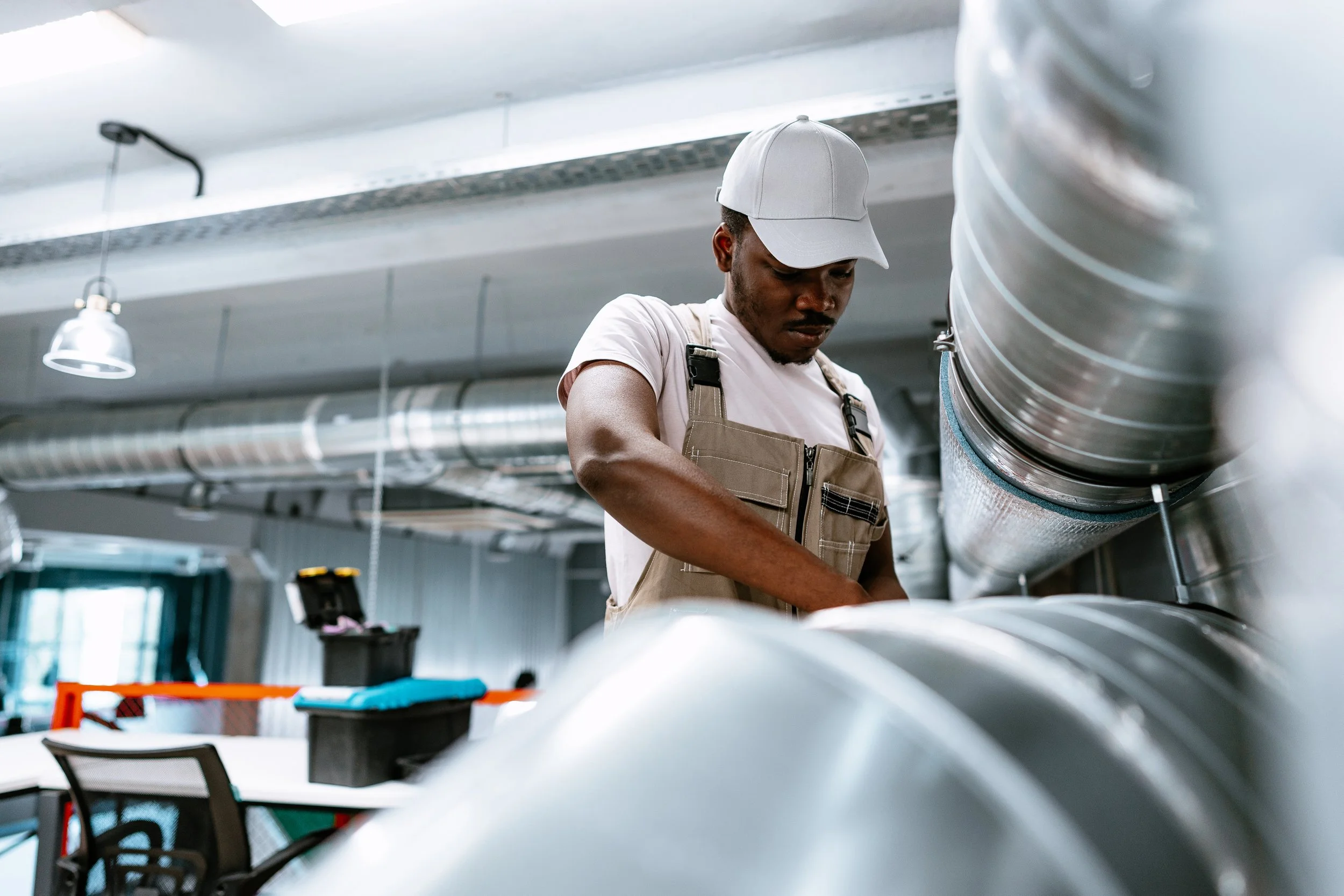
$10 million will be dedicated to support workforce training. (Photo by FabrikaCr)
Access to workforce development, education
Another part of the Parker administration’s economic mobility agenda is workforce development.
To this end, Parker proposed adding $10 million to the budget to support workforce development training.
In the previous budget, the city invested in organizations like the Center for Black Educator Development, UNITED Here, and SEIU.
An additional $10 million has been invested to provide workers in emerging industries with valuable support and skills training.
“That’s economic mobility,” Parker said.
She added that education is another part of her economic mobility agenda.
“Every day, we’re focused on increasing pathways for our children and adult learners,” Parker said.
For the youngest learners, she proposed adding 100 new, high-quality seats to the PHLpreK program, which would bring the total to 5,350.
Parker also proposed a $1.9 million investment to expand extended school days and extended years to 47 schools across the district.
For adults, Parker has proposed a $7 million investment to establish a City College for Municipal Employment (CCME) Fellowship program for recent graduates to transition to employment within the municipal workforce.
The mayor’s proposed budget will go to Philadelphia City Council, who will soon begin budget hearings. The deadline to pass the budget is July 1, 2026.