
“Public history must tell the truth” - As attempts to whitewash U.S. history grow nationwide, Philadelphia pushes back
As a slavery exhibit was partially reinstated at the President’s House site, local voices say the struggle to preserve African American history continues
By Emily Davis. On March 28, 2026. Edited by Jensen Toussaint.
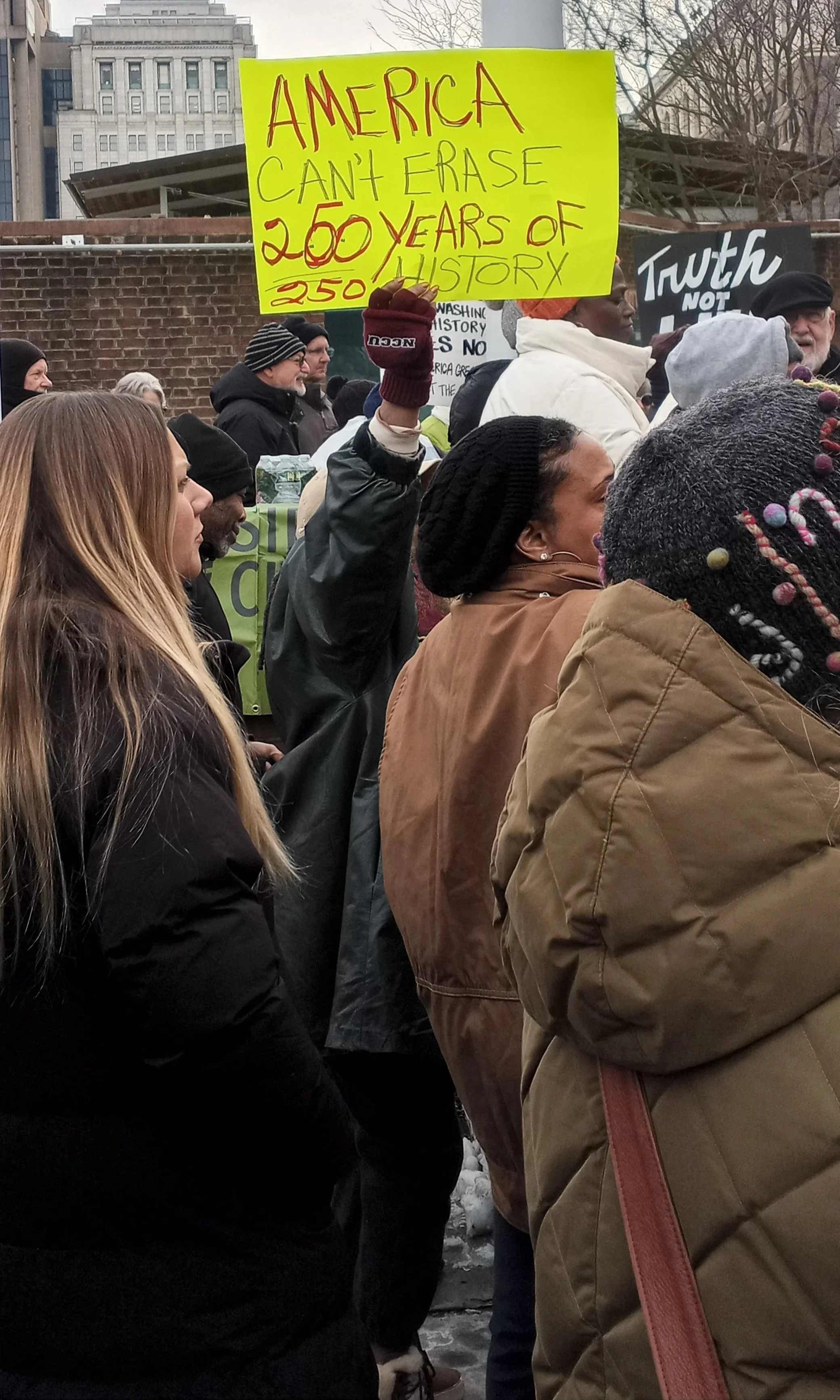
Protesters at the "Restore The Truth" rally led by the Avenging the Ancestors Coalition on February 10, 2026. (Photo by Emily Davis for Inti Media)
Large crowds gathered on Feb. 10 and 16, for the “Restore the truth” rally that Avenging the Ancestors Coalition (ATAC) had held at the President’s House Site in Independence Mall to listen to speakers from across the political spectrum. Many carried signs decrying the removal of history.
Behind the speakers, on the bare walls, people had been posting notes and art in support since the exhibition panels were taken down on Jan. 22, 2026.
The panels, which were installed in 2010, discuss the enslavement of Austin, Paris, Hercules, Christopher Sheels, Richmond, Giles, Oney Judge, Moll, and Joe by President George and First Lady Martha Washington while they resided in Philadelphia. Another told the story of Oney Judge’s escape to freedom and how she evaded recapture for the rest of her life.
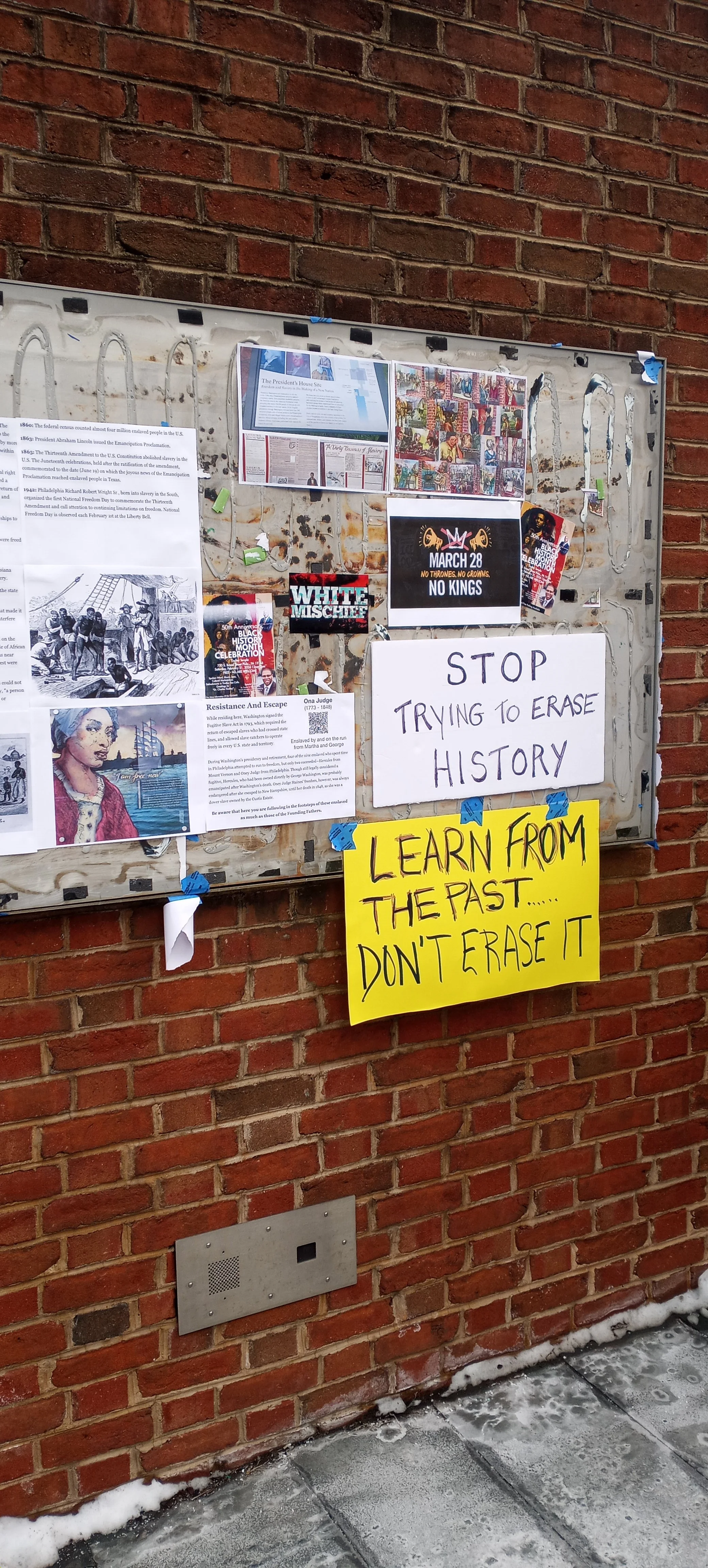
Behind the speakers, on the bare walls, people had been posting notes and art on Jan. 22, 2026. (Photo by Emily Davis for Inti Media)
Inti Media reached out to the Park Service in February for a comment and was told, “We don’t have further comment, as this matter is pending litigation.”
The litigation was the City of Philadelphia’s lawsuit against the Secretary of the Interior and the Acting Director of the National Park Service over the removal. The City got a victory on Feb. 16, 2026, when federal Judge Cynthia Rufe ruled in favor of the panels’ reinstatement. This decision has been appealed by the Department of the Interior.
Although there is a temporary victory in Philadelphia, exhibits continue to go down or are being targeted around the country. On March 19, 2026, KOAA News 5 in Colorado reported a leaked database that showed which exhibits in Colorado National Parks were being flagged for removal.
Similar actions have been taken in other National Parks in Montana and Arizona. Information about climate change, the contribution of immigrants, and Native American history has been removed in a coordinated effort to erase certain parts of American history.
All of these removals are in an effort to fulfill an executive order that President Donald Trump signed last year. The order was to, among other things, make public monuments and memorials “do not contain depictions, or other content that inappropriately disparage Americans past or living (including persons living in colonial times).”
The Movement Behind the Monument
The main group that has been leading the charge against the removal is the same one that got the site excavated and the panels put up in the first place: Avenging the Ancestors Coalition.
Michael Coard, an attorney and activist, founded the group in 2002 to create the President’s House Site.
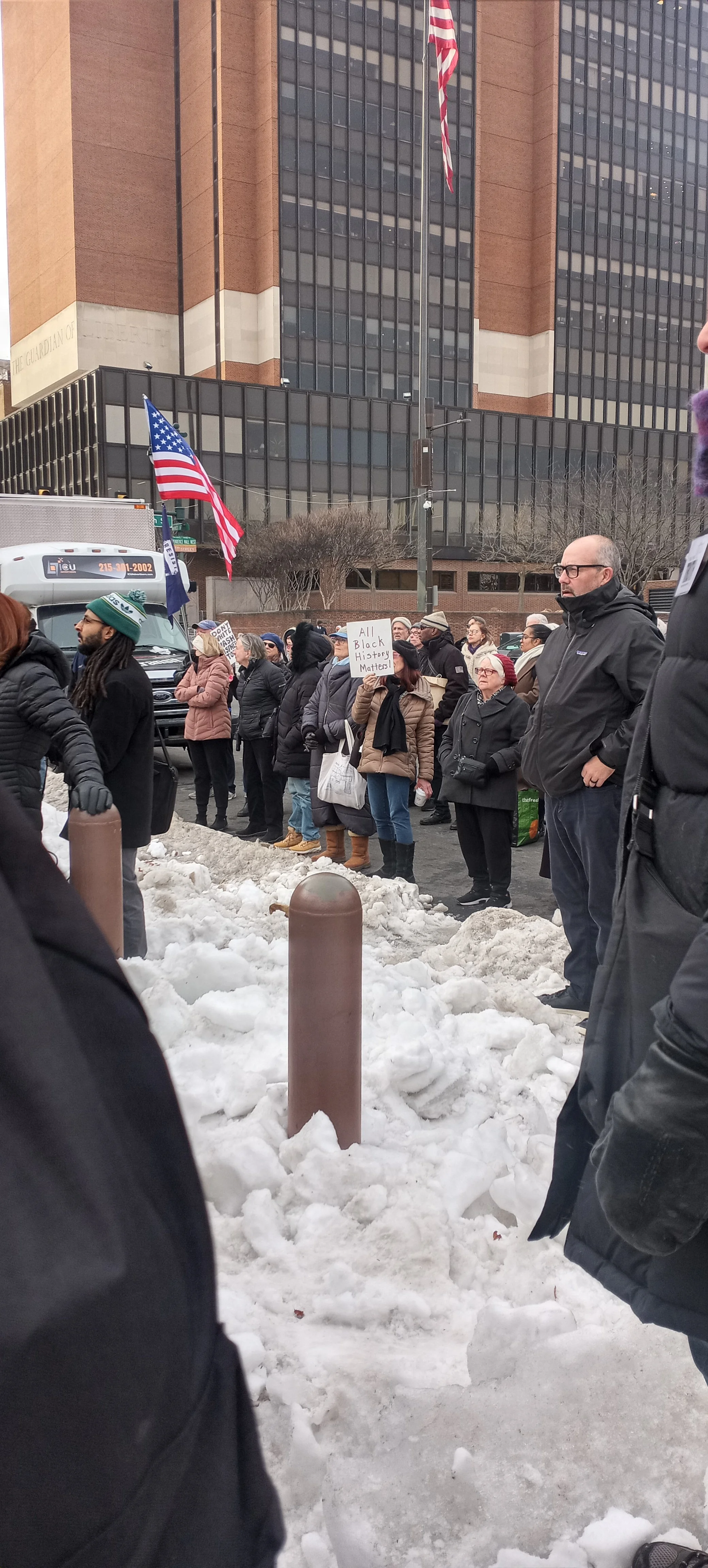
Protesters at the "Restore The Truth" rally led by ATAC on February 10, 2026. (Photo by Emily Davis for Inti Media)
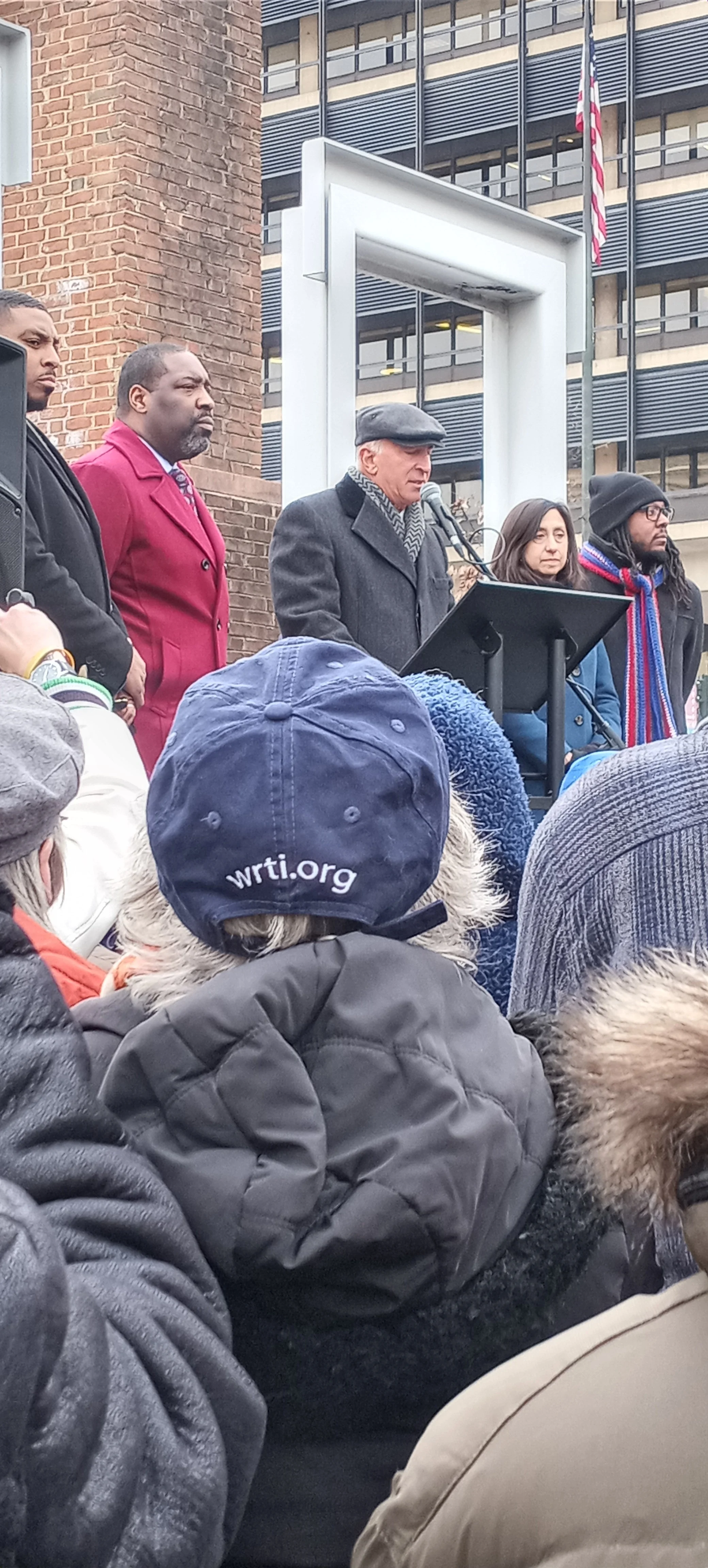
Speaker during the rally on February 10, 2026. (Photo by Emily Davis for Inti Media)
ATAC was instrumental in advocating at the local, state, and federal levels for the history of the nine enslaved African descendants held by President George Washington to be told as part of American history.
At ATAC, the belief is that access to sites like the Slavery Memorial is essential to shaping public understanding.
One of the panels in particular discussed how the Washingtons illegally skirted Pennsylvania’s Gradual Abolition of Slavery Act.
Coard explained that the memorial itself shapes how people understand one of the contradictions of American democracy: that freedom was built alongside slavery. He assures that the information presented at the memorial is foundational to the story of America — without it, the story is incomplete and misleading.
“Public history must tell the truth, even when that truth is uncomfortable, because democracy depends on an informed public that understands both our ideals and our failures,” Coard stated.
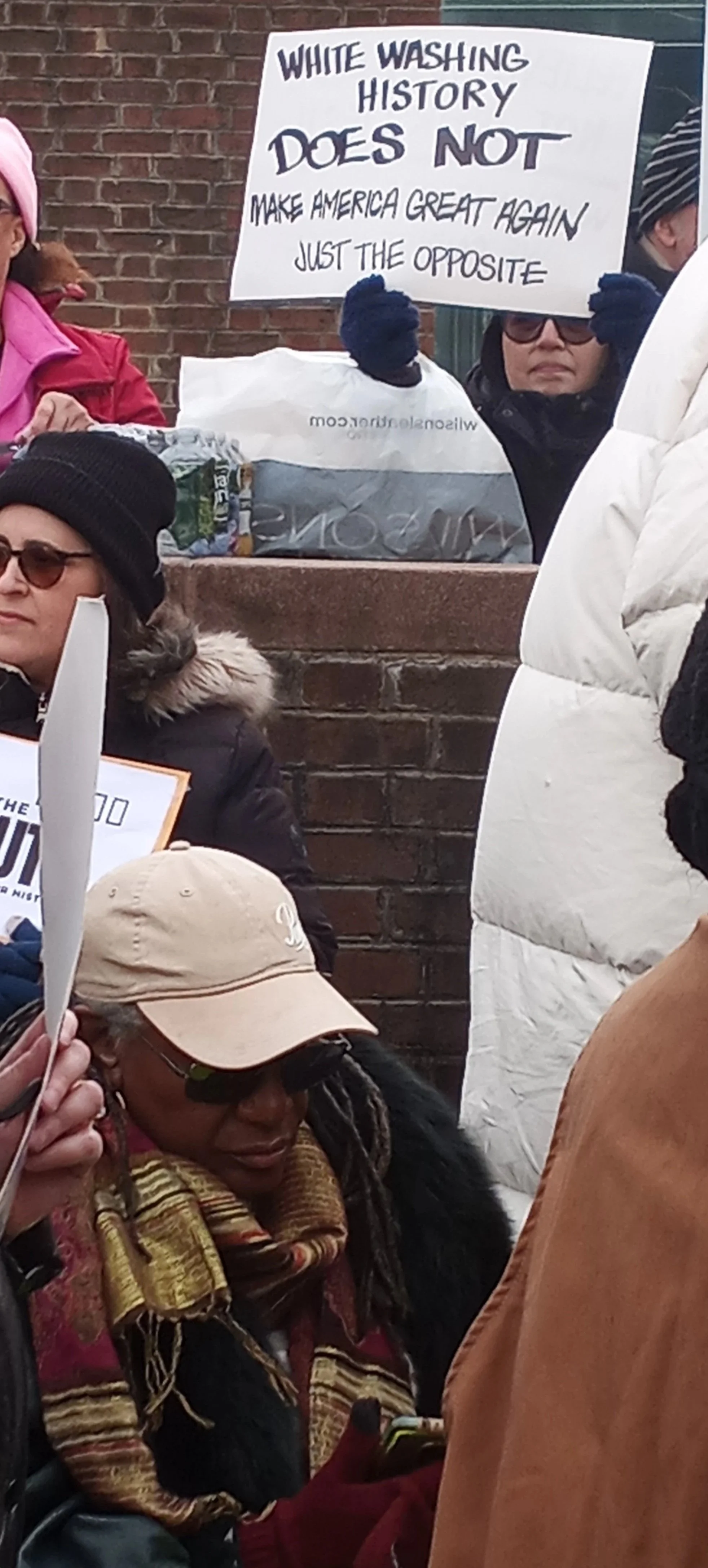
Signs during the "Restore The Truth" rally. (Photo by Emily Davis for Inti Media)
Stephen Pierce, a historian, tour guide, and George Washington interpreter, noted that not talking about Washington as a slave owner would be denying reality.
“He never hid the fact that he was a slave owner, and in many cases, he knew this issue would divide the country, but Washington did not act on it. He once wrote to his personal secretary, David Humphreys, that slavery was the ‘Only Unavoidable Subject of Regret,’ Pierce shared in an email to Inti Media.
Furthermore, this denial would also disregard the main cause of the Civil War: 750,000 Americans died because the Founders failed to destroy the institution of slavery from the start.
Excavating Buried History
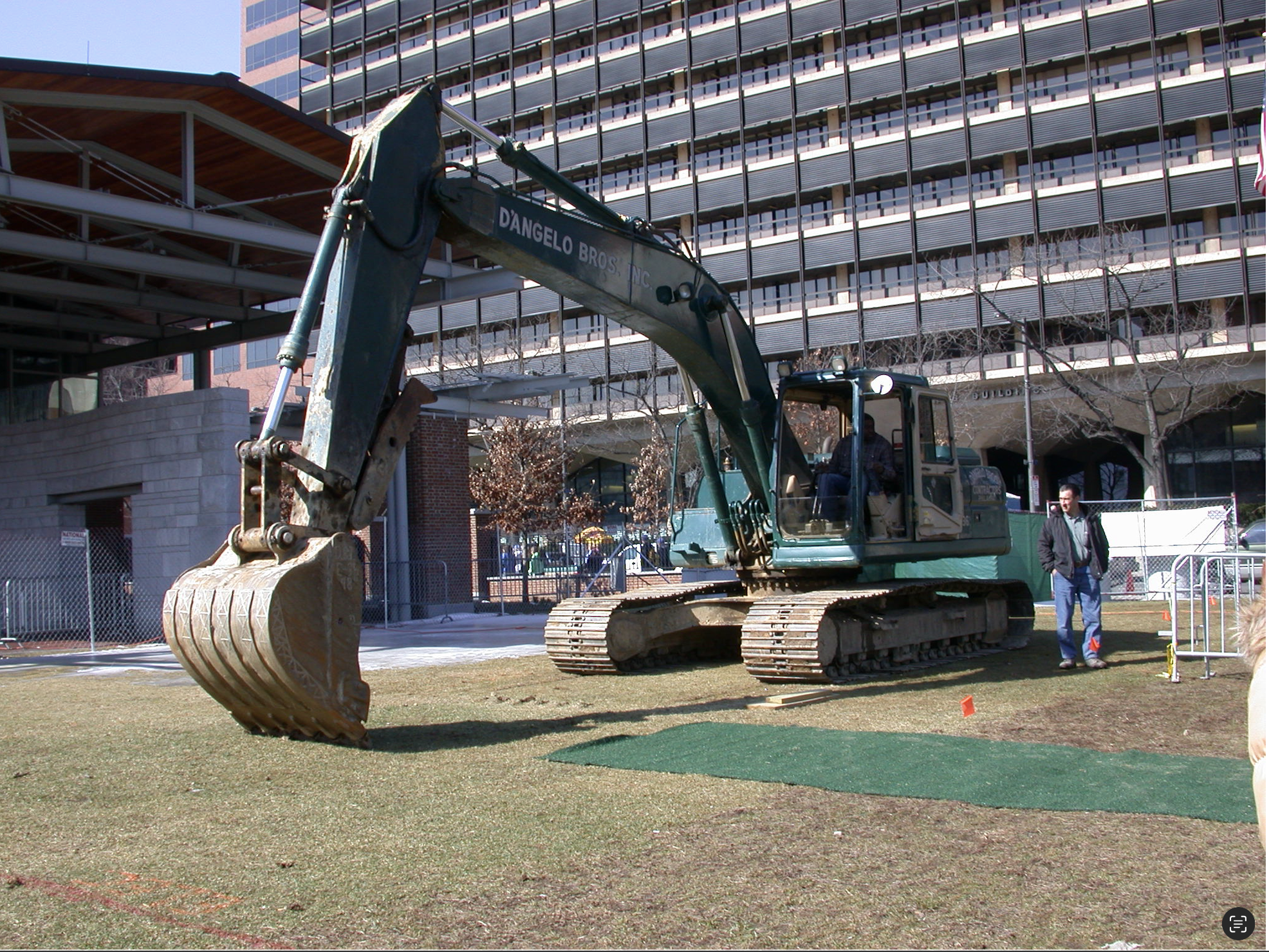
A backhoe operator at the kickoff of the President’s House archaeological dig, March 21, 2026. (Photo by Patrice L Jeppson)
Dr. Cheryl LaRoche was one of the lead archaeologists who worked on the President’s House Site excavation and has spent most of her career doing digs related to the Underground Railroad.
She remarked that her reputation as an activist scholar often precedes her, and the sites themselves require this kind of activism.
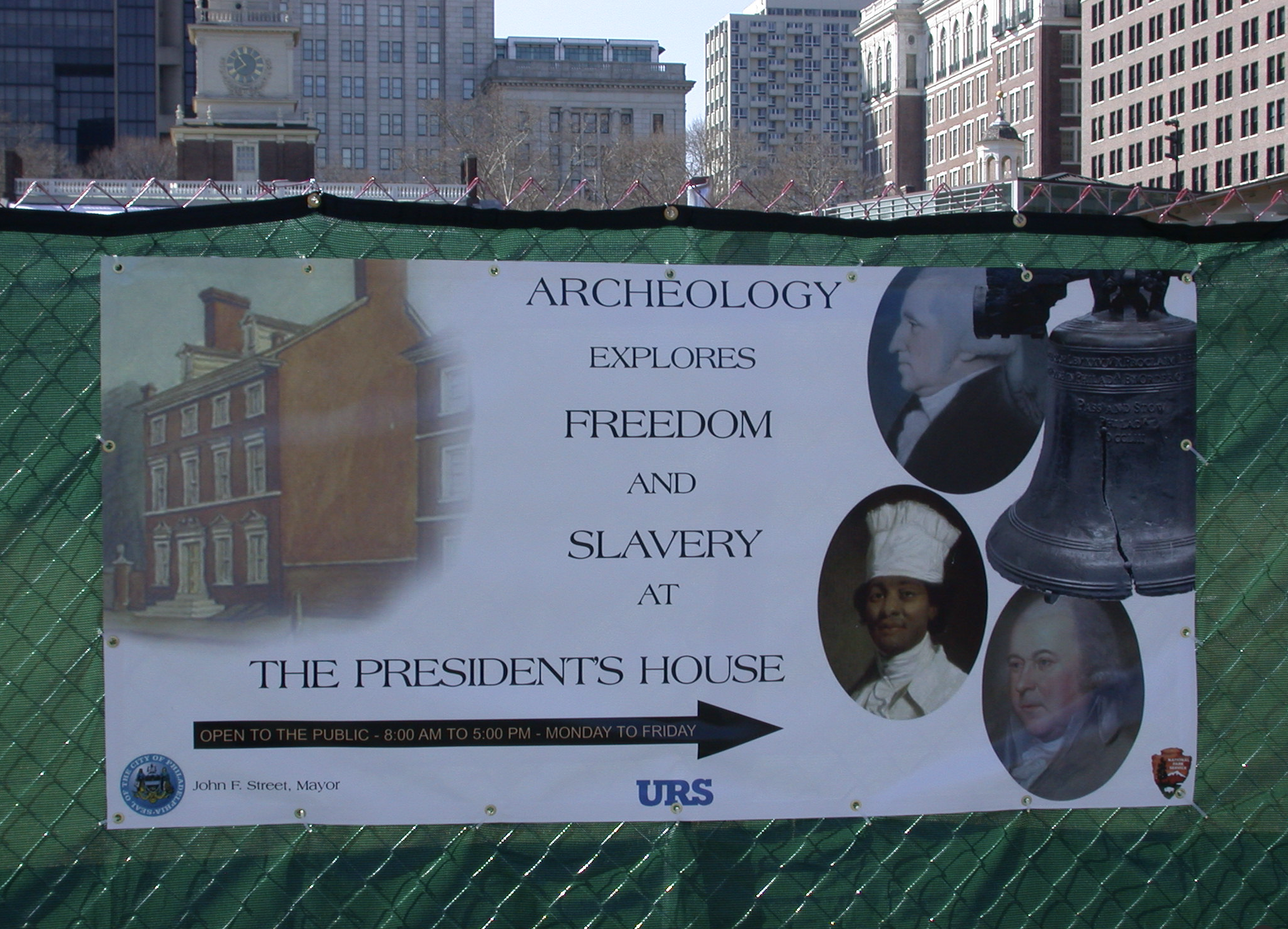
Signage on the fence around the excavation site, on March 21, 2026. (Photo by Patrice L Jeppson)
“I am drawn to these big, contentious sites because I think that it's an access to history, and it's an access for large numbers of people to know about a history they might not have known about otherwise,” Dr. LaRoche told Inti Media. “And so that attracts me, that compels me, that calls me.”
LaRoche explained that sites like these, in urban areas, have been built over multiple times, and people often don’t realize that they were even there. For these digs, the archeologists involved are also learning about the site as they dig due to a lack of surviving documentation.
In the case of the President’s House, she said that there was some documentation about its location, and parts of it had been stumbled upon during unrelated construction nearby.
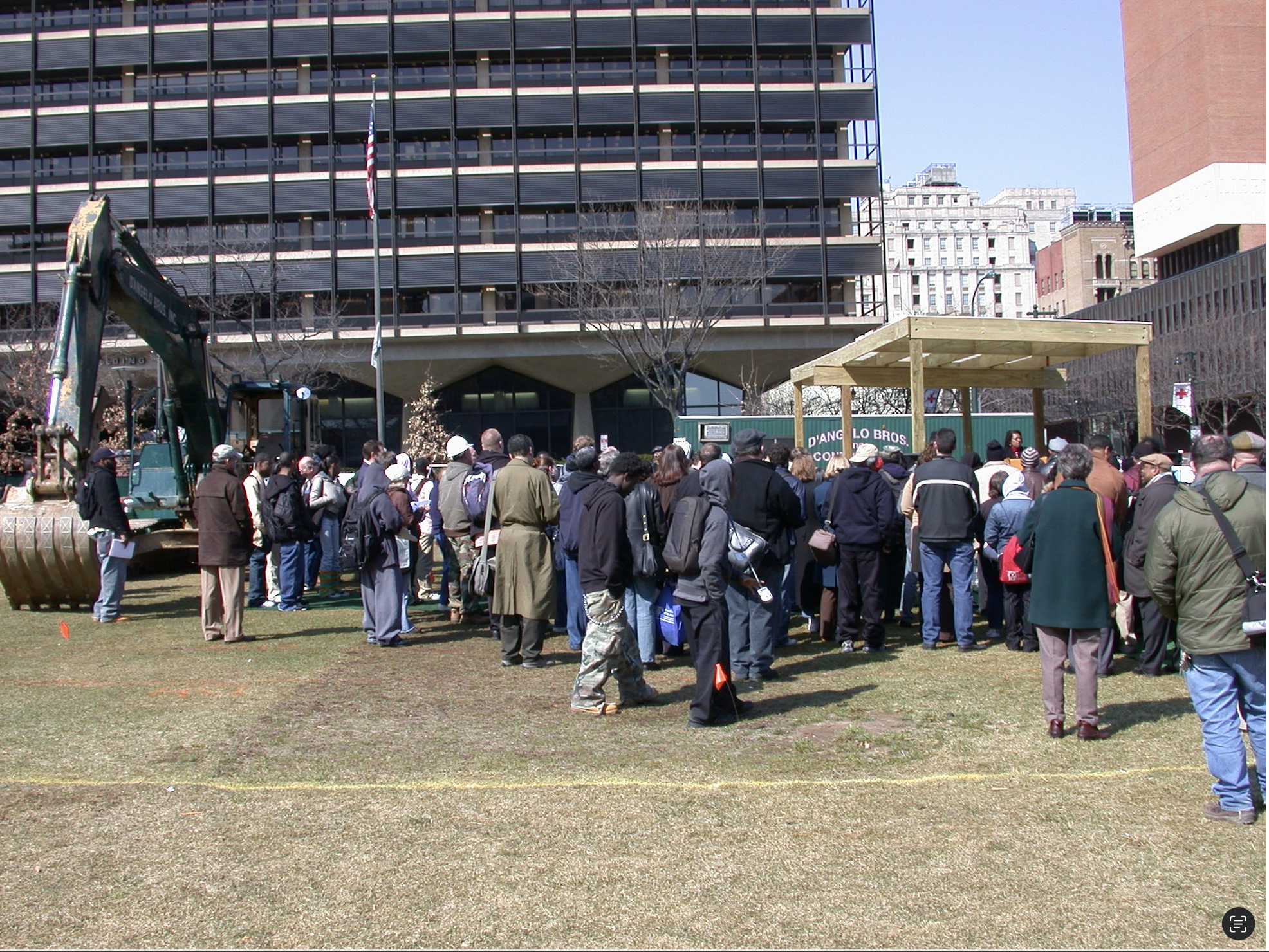
The crowd included charter school students and local Philadelphians on March 21, 2026. (Photo by Patrice L Jeppson).
“When I saw the panels being ripped off the walls of the President's House site, my first reaction was, we have to go back to work. We have to do the same kind of rescue that we did once before,” said Dr. LaRoche.
A unique aspect of the excavation site was the viewing platform erected above it, which allowed anyone passing by to come and observe.
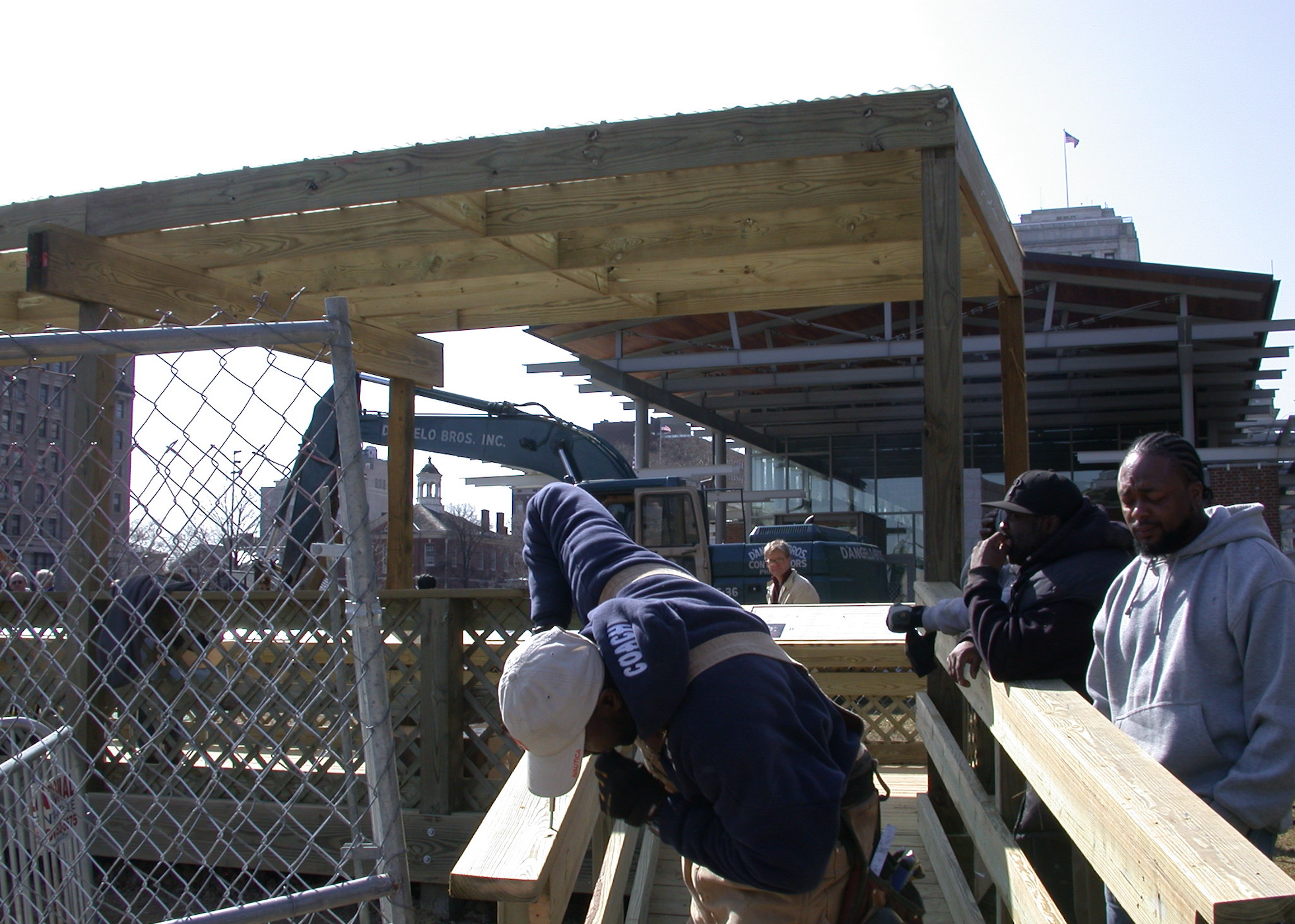
Last-minute work to finish the platform for the kick-off, on March 21, 2026. (Photo by Patrice L Jeppson)
“Many of us who were either excavating the site or interpreting the site were on the platform to talk to the public as they came; we could seamlessly talk about George Washington, about slavery, because it was all right in front of us on the ground,” she added.
This, however, isn’t to say there wasn’t backlash.
“There were people who said we were besmirching George Washington, that we were being negative, that we shouldn't be talking about these things,” said Dr. LaRoche.
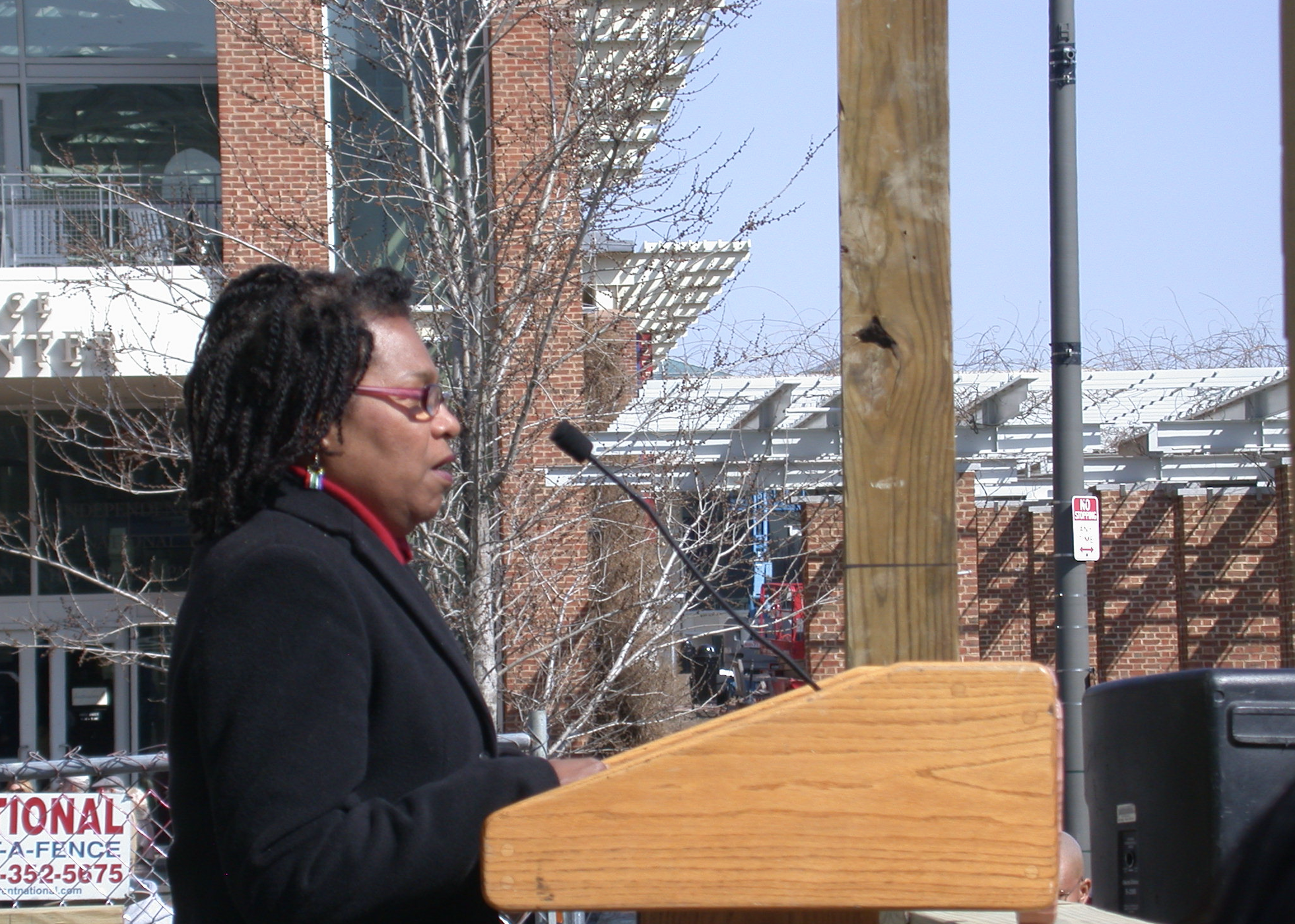
Dr. Cheryl LaRoche addresses the crowd at the launch of an archaeological dig organized by then-Mayor John F. Street, March 21, 2026. (Photo by Patrice L Jeppson)
When asked what she thought would happen if people weren’t able to access this information anymore, LaRoche said, “I'm an optimist and think that … it's been curated. We know places to find it.”
“Are you going to get rid of all of those paintings of George Washington? How important is it to you? Is it more important to glorify the man, or is it more important to get rid of slavery?”
For many involved, the issue is no longer just about one site in Philadelphia but about who gets to shape public memory - and what histories and what histories are allowed to remain visible.
“We have the power to change the narrative every day” - Local, young voices weigh in
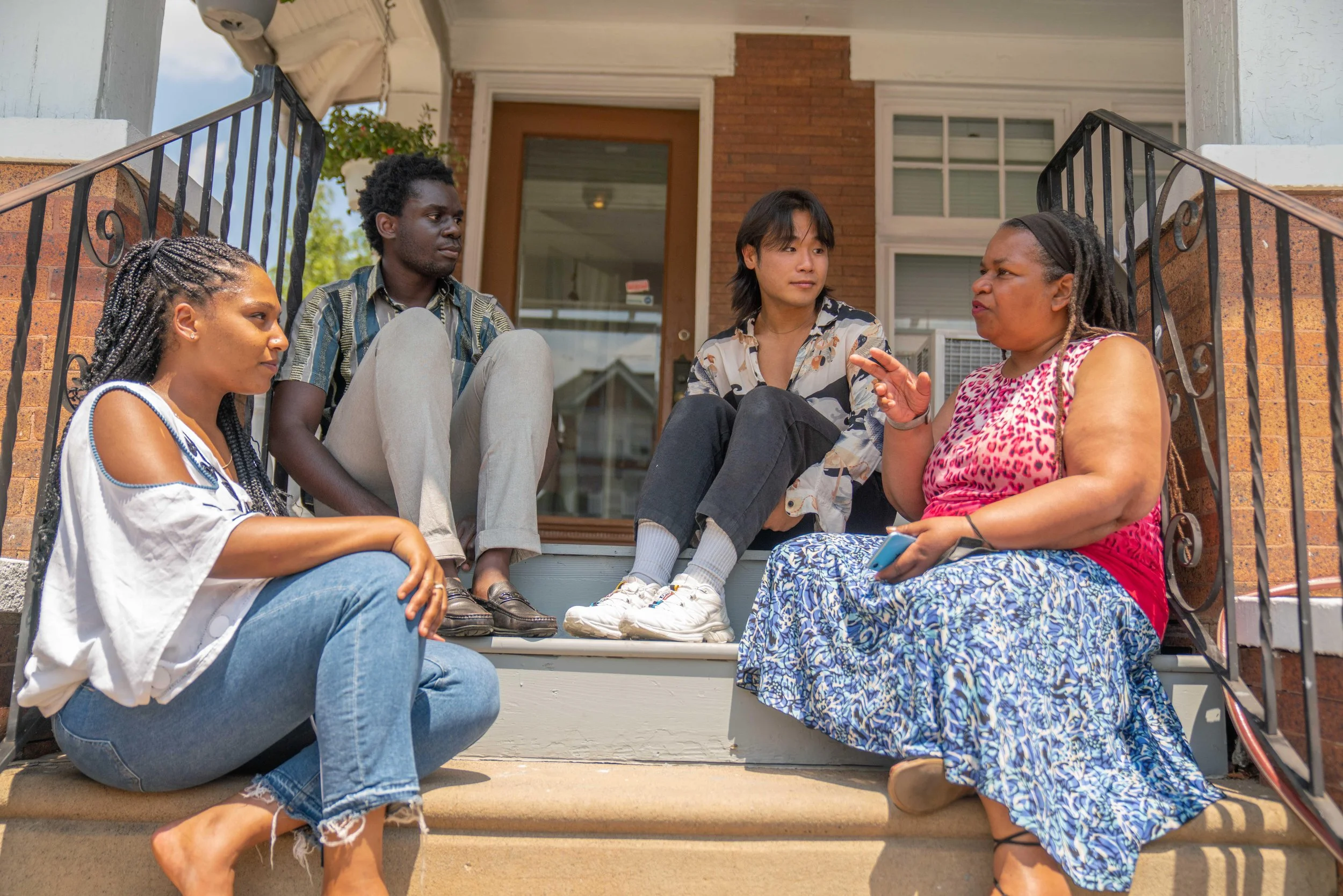
Collective Climb co-founders Mckayla Warwick, Kwaku Owusu, and Hyungtae Kim. (Courtesy Collective Climb)
At a Mindful Monday meeting of Collective Climb, a Philadelphia-based restorative justice group for teens, several attendees gave their opinion on the removal.
Gaia Smith, 19, Mindfulness Monday Organizer and Facilitator, an alum of the group’s Restorative Community Project, had heard of the site and its removal.
Smith explained that she believes if people in her age group are never exposed to certain ideas, they’re unlikely to seek them out due to a lack of bridges between older and younger generations, as well as the influence of technology.
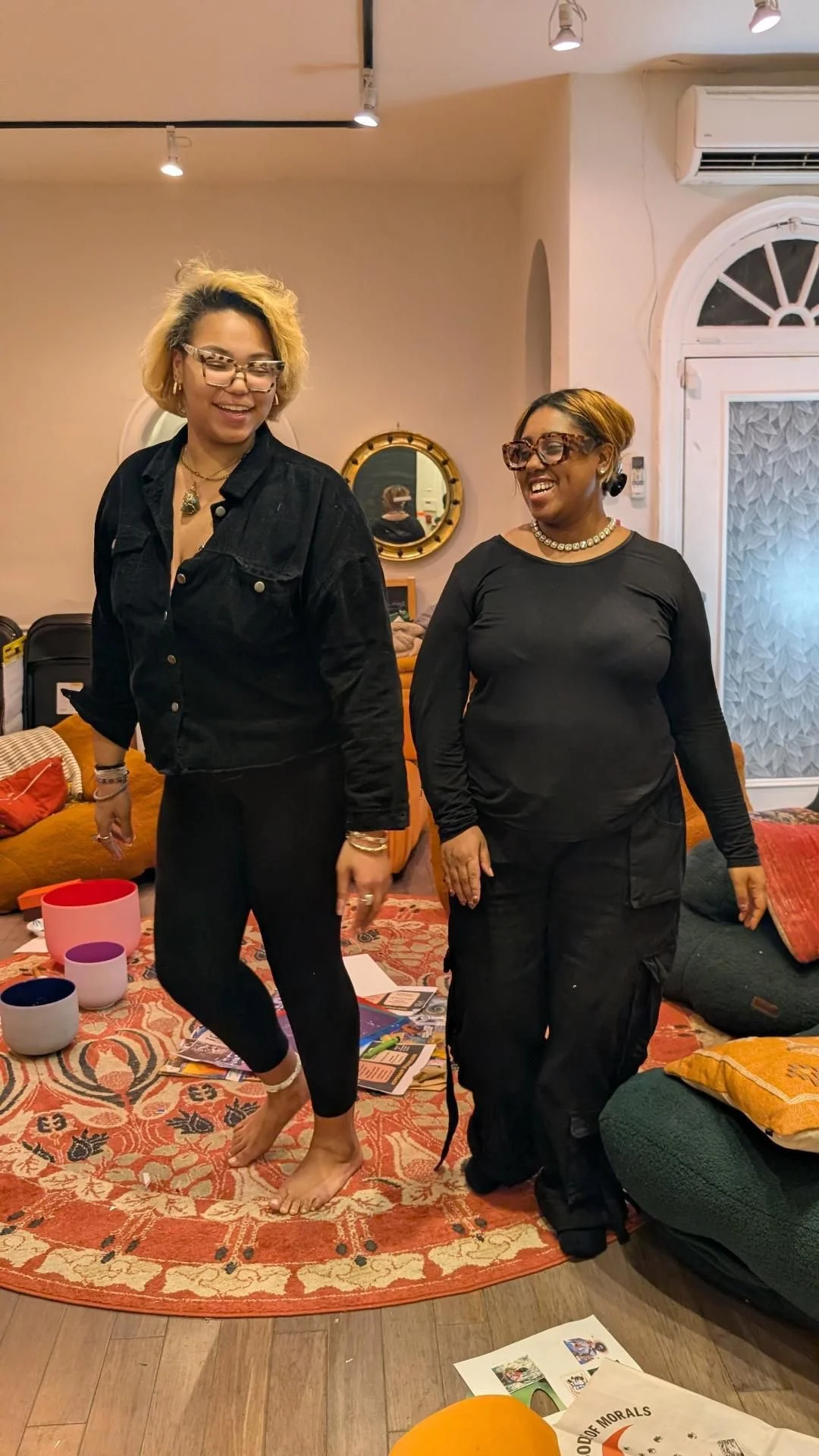
Gaia (left) and Marz (right) at the Mindful Monday meeting. (Courtesy Collective Climb)
“History can be rewritten. Things can be erased. Things can be lied about,” Smith said.
She compared it to the previous campaign against critical race theory and expressed that she understands such actions are purposeful to make people unaware of what happened to their ancestors.
Shannon Hawkins, 19, one of the event’s participants, was unfamiliar with what was going on. Once brought up to speed, her response echoed other interviewees.
“I think access to this information is important because it's our history, it’s our ancestors. Them taking it away, is taking it away from younger people. Like I got to learn about those things, but my 10-year-old sister, what’s she supposed to know” she explained.
Mars Mobley, a therapist and special needs instructor, remarked that she was blessed to have an African American history class in high school, where she learned how much African Americans had overcome.
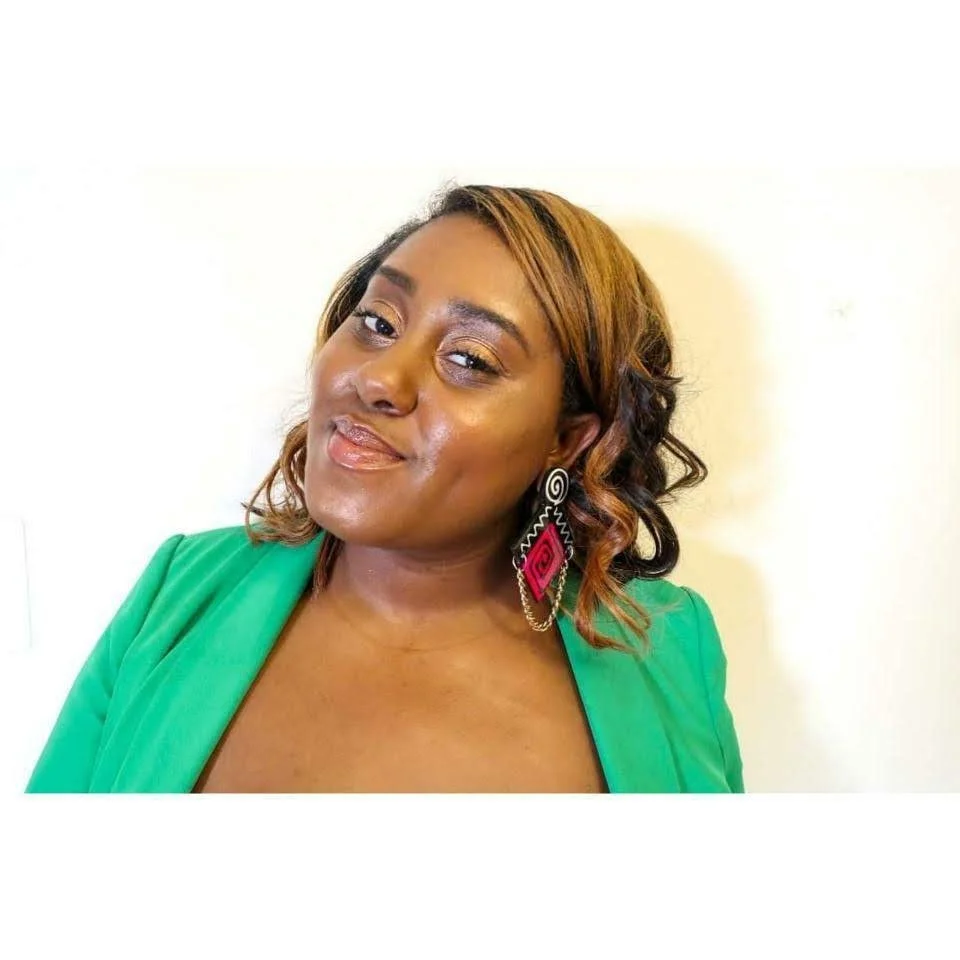
Mars Mobley, a therapist and special needs instructor. (Courtesy Collective Climb)
“It doesn't surprise me. Anything that's going to educate us or empower us, they try to tear down. I don't think it's something that really is going to affect us too much… Because we have the power to change the narrative every day,” Mobley said.
Although the administration has been told to reinstate the panels at the President’s House, its appeal of the decision, as well as the continued signage removal at other National Parks, signals its ongoing effort to remove parts of the country’s history from public access.
“When information is removed from public view—especially information that addresses injustice, violence, or systemic oppression—it creates historical amnesia. It sends a message about whose stories matter and whose do not,” said Coard.
“History does not disappear when panels are removed, but the public’s access to truth does. That loss has serious consequences for how future generations understand justice, democracy, and equality,” he continued.
According to ATAC, 16 out of 17 of the glass panels and 3 out of 4 video monitors have been restored to the site.
“What remains missing are the 13 metal panels, which are critical to presenting the full and accurate historical narrative of the President’s House/Slavery Memorial and the enslaved African descendants who lived and labored there,” explained Coard.
If the swift response from the City of Philadelphia and its people is anything to go by, then the pressure to fully restore the memorial will continue until the remaining panels are back in their places. The President’s House's future remains uncertain, as does the broader question of how history is preserved in public spaces.
“Our fight will continue. ATAC remains committed to telling, defending, and protecting the truth—and we will continue this work until the full history of the President’s House/Slavery Memorial is restored to its original intent,” Coard added.
The President's House could be permanently restored under new legislation announced by U.S. Rep. Brendan Boyle.
This is the latest move by public officials to keep the history detailed by the President’s House intact. Philadelphia Council Members Mark Squilla and Kenyatta Johnson spoke in support of the memorial at the first rally on Feb. 10, with three of their fellow council members on stage beside them.