
Safe Healthy Homes Act advances again out of Philadelphia City Council Committee
A final vote for the package is now expected on Thursday, April 16.
By Nigel Thompson. Edited by Jensen Toussaint. On April 6th, 2026.
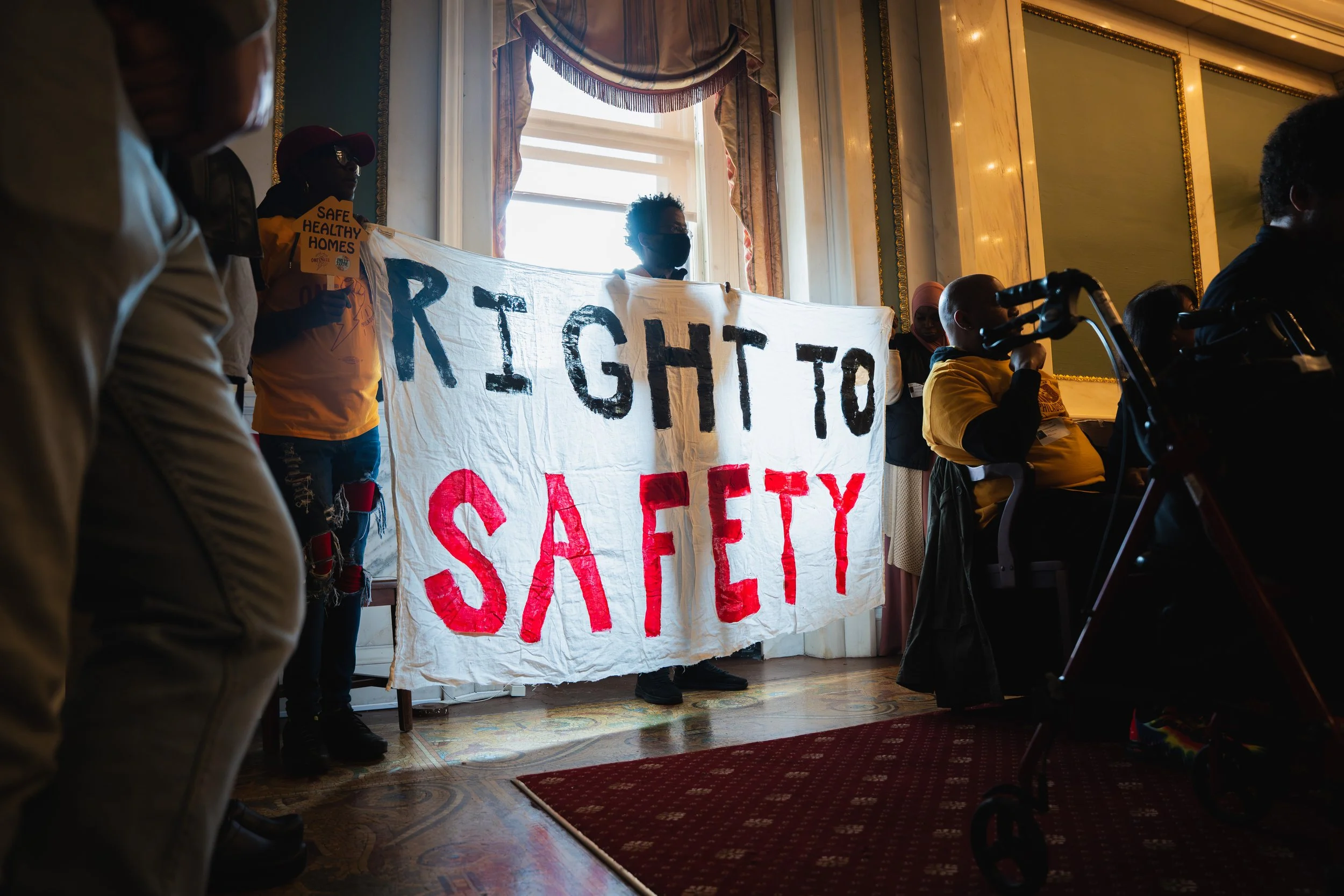
Supporters of the Safe Healthy Homes Act unfurl a banner in City Council’s chambers during a hearing on Monday, March 30, 2026. (Photo by Durrell Hospedale/PHL City Council)
After a lawsuit brought by two Philadelphia landlords forced an additional hearing on Monday, March 30, Philadelphia City Council’s Committee on Housing, Neighborhood Development, and The Homeless passed the Safe Healthy Homes Act for a second time.
The package of bills was introduced nearly a year ago by Councilmember Nicolas O’Rourke, and its goal is to enhance protections for renters across Philadelphia.
“This is about protecting tenants from landlords who refuse to follow the law,” O’Rourke said during the Monday committee hearing. “Who neglect to apply for a license, who refuse to repair crumbling properties, and then all the while collect rent from vulnerable residents and tenants.”
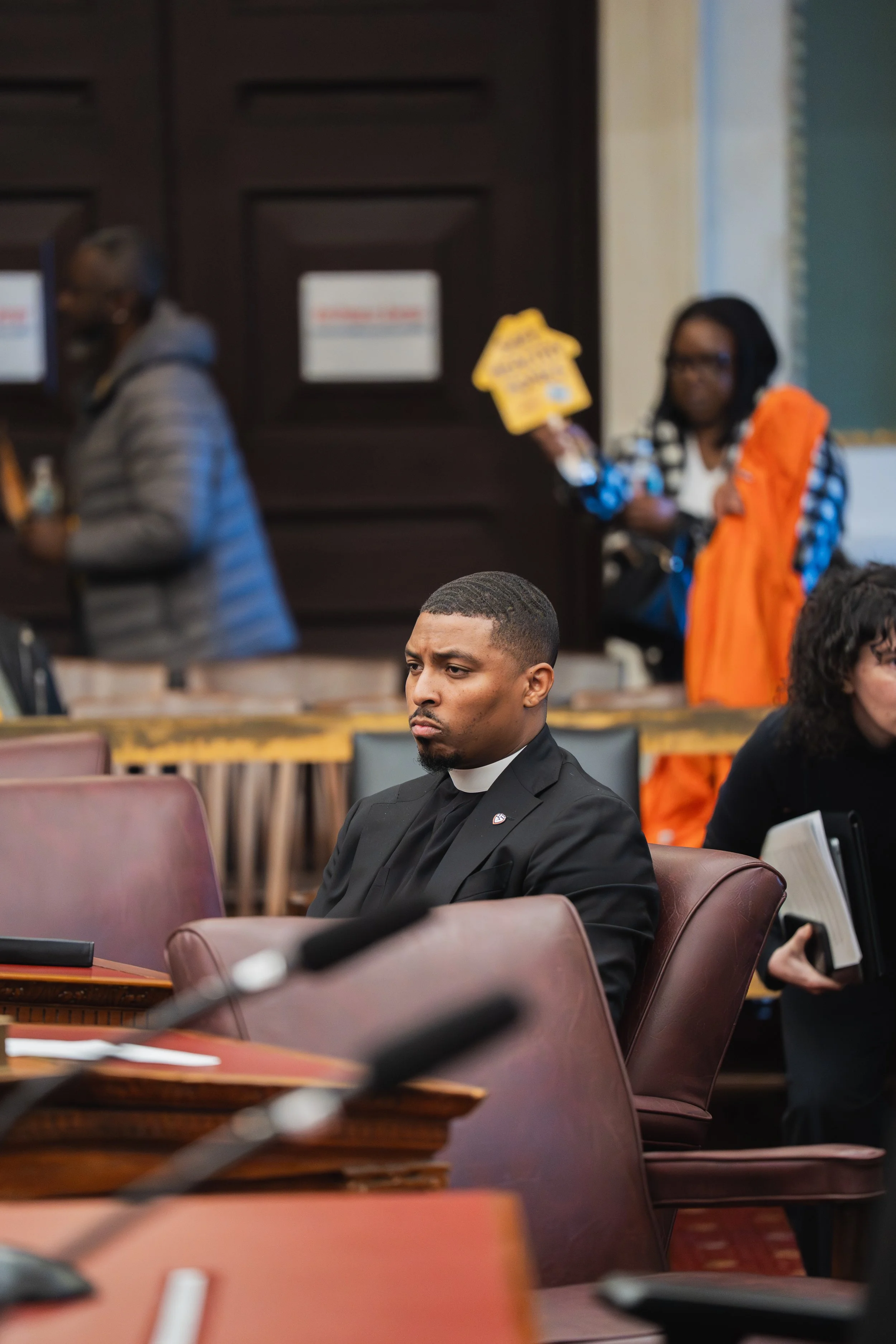
Councilmember Nicolas O’Rourke is the chief sponsor of the Safe Healthy Homes Act and introduced it nearly a year ago. (Photo by Durrell Hospedale/PHL City Council)
Those added protections include creating a proactive rental inspection program, and expanding “good cause” protections for renters, which currently only covers month-to-month leases or those lasting less than a year. The new legislation would cover all renters regardless of the length of their leases.
Fair housing advocates, who showed up in droves to the Monday hearing, argue the package provides vital protections for tenants who are often scared to speak out against poor living conditions because of potential landlord retaliation.
Theresa Howell with OnePA Renters United Philadelphia was one of the many advocates to testify Monday in favor of the bill and shared her own harrowing living experience.
“I had to deal with an infestation of rats, raccoons, leaks, mold, and a child in my home ended up with lead poisoning,” she said. “These bills are the bare minimum for landlords to follow.”
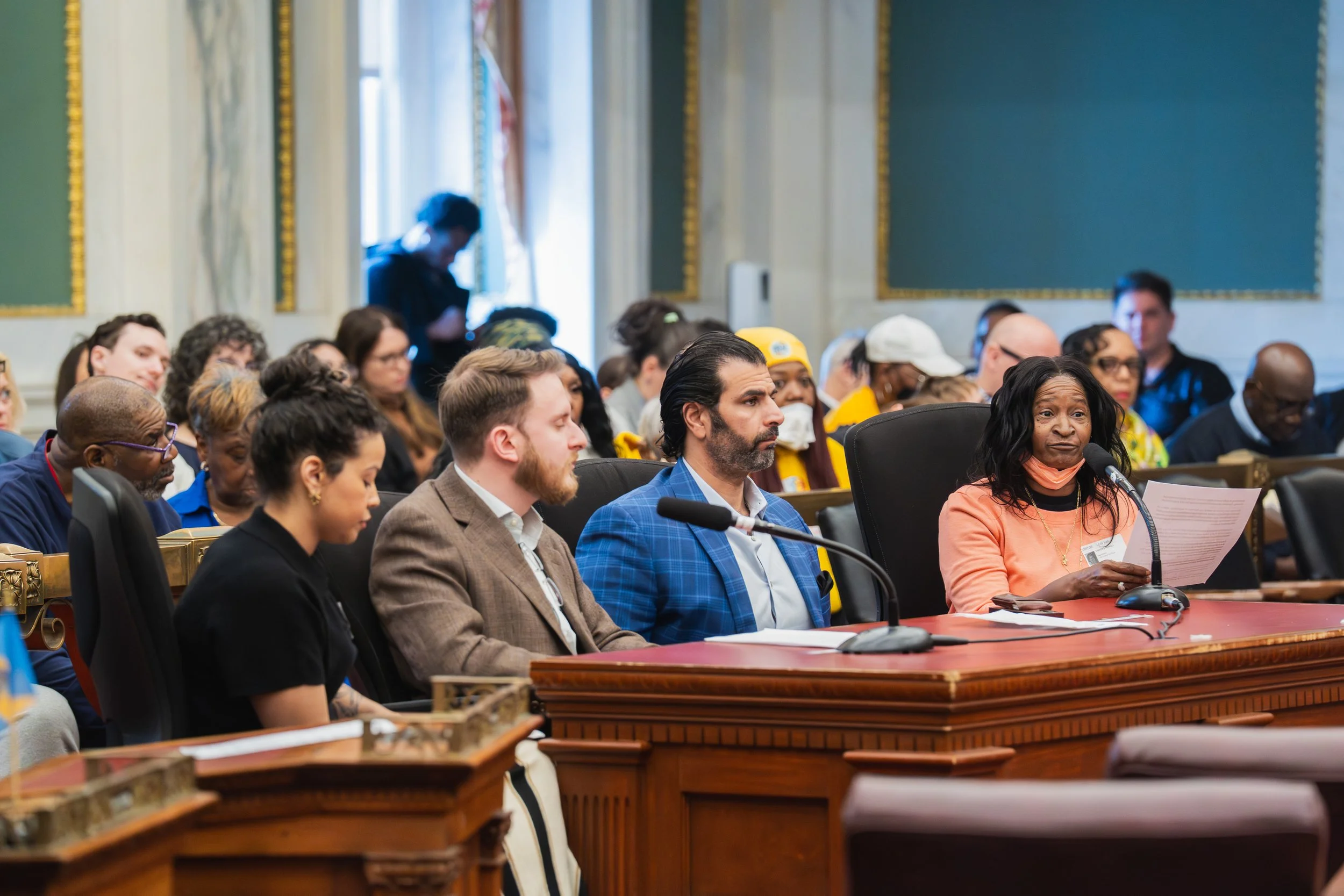
Theresa Howell with OnePA Renters United Philadelphia testifies at the re-hearing on Monday, March 30, 2026. (Photo by Durrell Hospedale/PHL City Council)
Landlords and property managers in attendance told lawmakers that the bills run the risk of forcing smaller landlords out over rising costs and penalties, but also agree with their intent.
Seth Floyd, one of the two lawyers to file the lawsuit that forced the re-vote on the package, applauded the title, “but the language needs work,” he added.
Lev Kravinsky, a board member of the Pennsylvania Apartment Association, said he believed “that protecting tenants is not at odds with regulating property management,” but also urged City Council to consider amendments to the package and pressed O’Rourke about providing protections for landlords from city delays.
O’Rourke said the package includes a “safe harbor” provision to protect landlords in the event the city is to blame for a delay in certification or other required processes.
Floyd and fellow landlord Megan Handley have since filed an additional motion in court to amend their original lawsuit against City Council’s Committee of Neighborhood Development, Housing, and The Homeless. The original lawsuit alleged the city violated the state’s Sunshine Act by cracking deals regarding the legislation without proper public input. The new motion alleges the bill package is unconstitutional because it violates “fundamental property rights.”
“It could be catastrophic,” Floyd told WHYY. “I could run into the wrong tenant with this legislation, not be able to make my mortgage on my properties and then end up in foreclosure or myself out of business.”
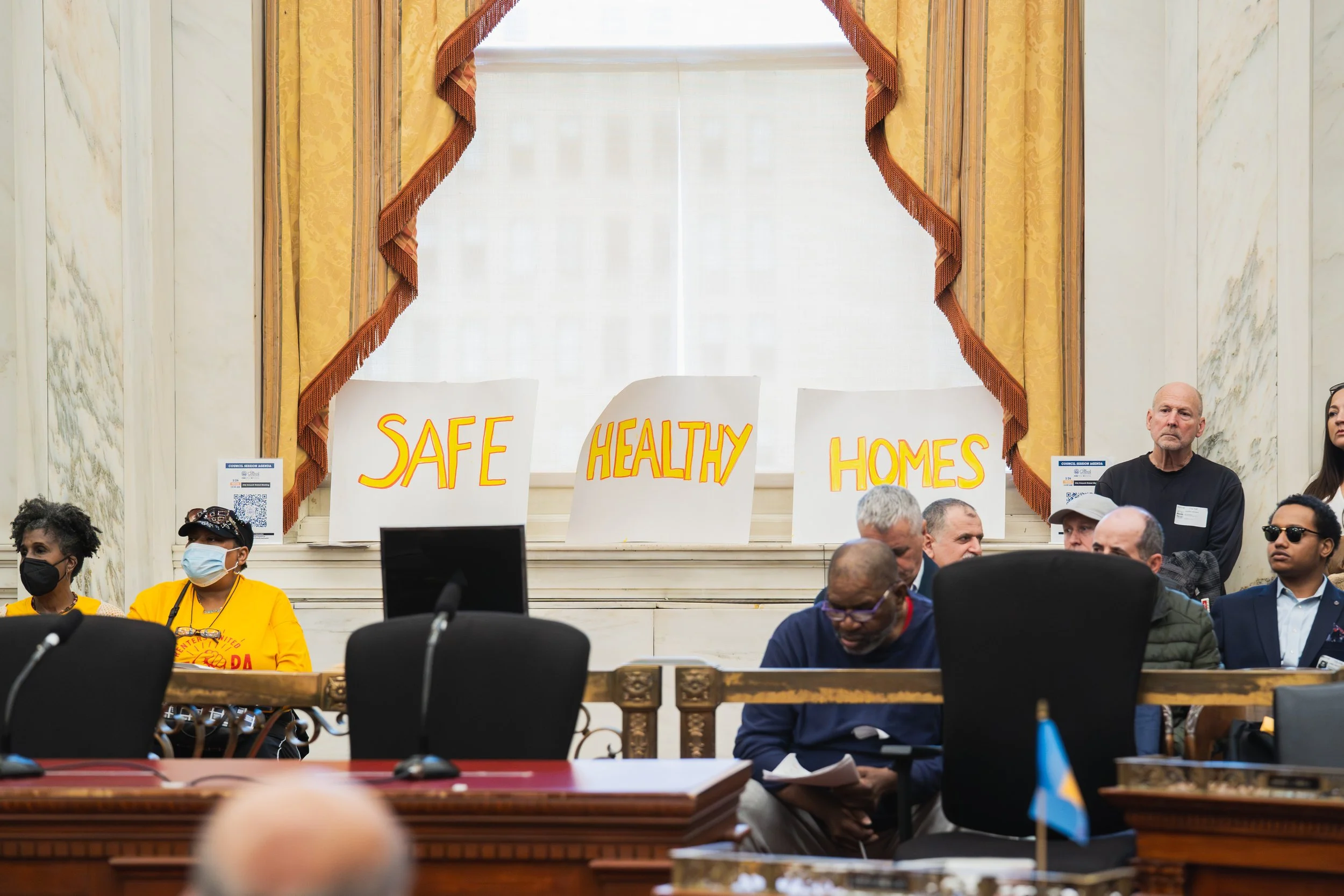
The two lawyers fighting the legislation have filed a new motion in court to change the grounds of their lawsuit, alleging now that City Council’s Committee on Housing, Neighborhood Development, and The Homeless is violating “fundamental property rights.” (Photo by Durrell Hospedale/PHL City Council)
Howell said the ongoing legal fight only exposes more of the imbalance between renters and landlords in the city.
“Landlords can hire high-priced lawyers to run into court again and again to stop legislation from passing,” she told WHYY. “Meanwhile, renters can’t get water leaks fixed or rodents exterminated. And if we dare say anything about it, our landlord can force us out of our home without explaining why.”
Following the unanimous vote of support from the committee on March 30, a final vote could come on the Safe Healthy Homes Act as early as April 16.