
Land Stewards Union & lawmakers tour evicted community members’ vacant lots in North Philly
It was a strong show of support for the union, which now boasts upwards of 180 land stewards across the city.
By Nigel Thompson. Edited by Jensen Toussaint. On September 21, 2026.
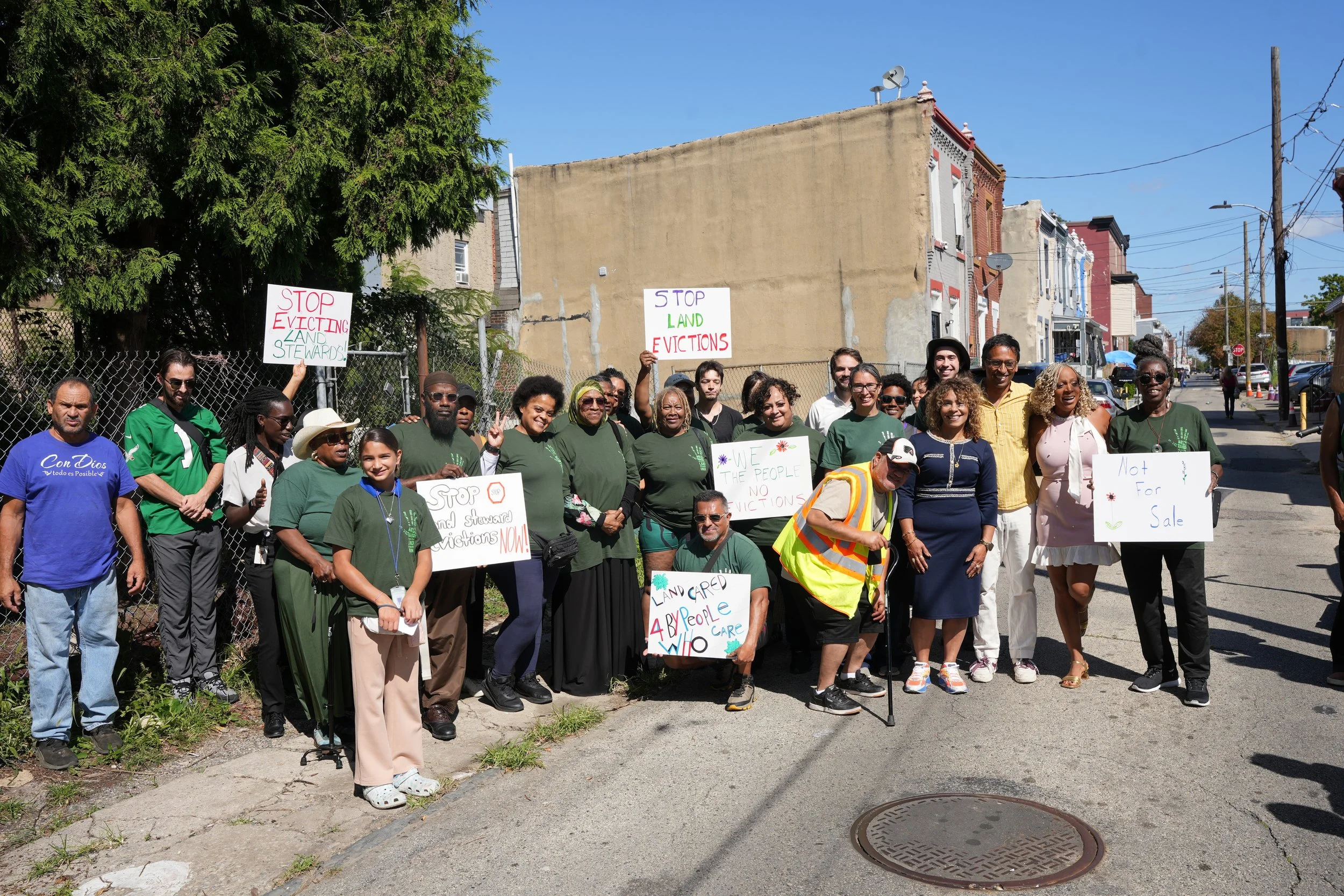
Members of the Land Stewards Union pose for a photo with lawmakers and community members on Orianna Street after the walking tour on Monday, Sept. 14. (Photo: Nigel Thompson/Inti Media.)
Dorothea Rogers, better known as Miss Dottie, has lived on her block on Orianna Street in West Kensington for 50 years. For at least 25 of those years, her mother maintained the side lot next to their house just south of York Street, and then, it became Miss Dottie’s lot to take care of.
“We had gardens, block parties, pools, and family gatherings,” Rogers told a crowd of lawmakers, news reporters, and fellow members of the Philadelphia Land Stewards Union. “This wasn’t just a vacation lot, it was part of a community.”
Miss Dottie’s home was the second stop of a tour through West Kensington organized by the Philadelphia Land Stewards Union on Monday, Sept. 14. Several Philadelphia City Councilmembers and state legislators joined the tour. The three lots visited were all long maintained by members of the union, and the group says those members have since been evicted, or given notice that they were trespassing on the properties and needed to vacate. All three of the lots are owned by the Philadelphia Land Bank, but none appear as available to purchase on the Land Bank’s online database of parcels.
Longtime stewards evicted
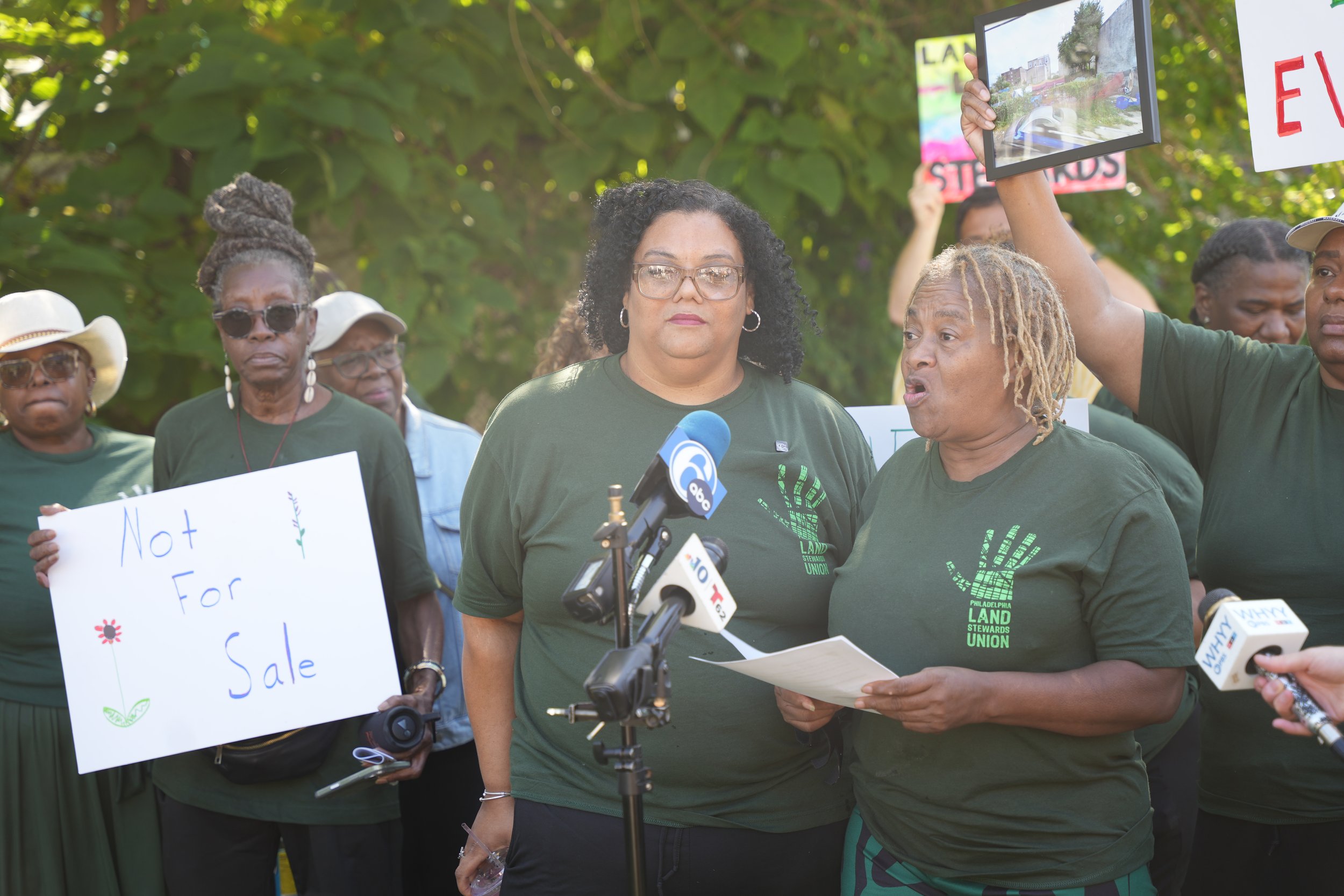
Dorothea Rogers, ‘Miss Dottie,’ speaks to a crowd next to her now-fenced-off lot on Orianna Street. (Photo: Nigel Thompson/Inti Media)
In Rogers’ case, she said after years of trying to legally obtain the lot through the Land Bank, the city finally came out, cleared all she had built on the plot, fenced it off, and locked the gate — barring entry for her and anyone else. She said the city hasn’t done anything with it since, and it’s become overgrown with no one to care for it, and weeds have begun climbing the wall of her home right next door.
“If you’re going to fence it off from the community, who’s going to take care of it?” she said to the crowd gathered in an unfenced plot of grass next to the cordoned-off lot. “Now, the community that cares for this land is being shut out of it.”
Similar stories were told at the other two stops along the tour.
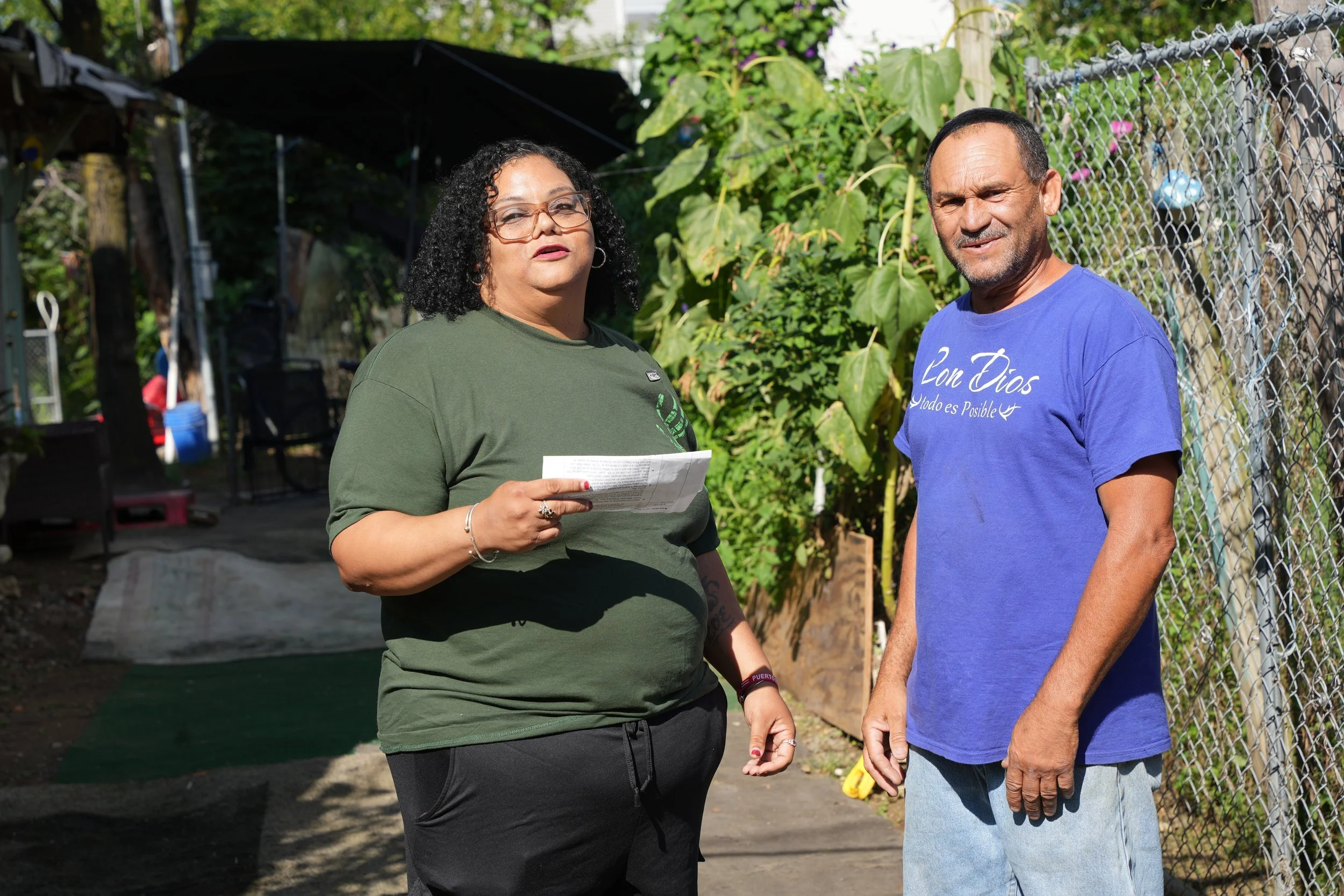
Juan Colón tells the story of the lot he’s taken care of for more than 20 years on Diamond Street with the help of Land Steward Union member Taussy Valcarcel. (Photo: Nigel Thompson/Inti Media.)
Juan Colón said he was served an eviction notice for the side lot next to his house at 5th and Diamond Streets that he’s taken care of for more than 20 years. It was not only a garden that produced harvests of vegetables and gandules, but also a place for his grandkids to play. Not long after the notice came, he met the Land Stewards Union, who tried to help him apply for a side yard through the Land Bank, but the union said the application was rejected.
“It made me upset that I was rejected and wouldn’t be able to keep caring for the lot,” Colón said through a translator.
Mary Redding lives on 4th Street, north of York Street, but has turned the vacant lot behind her house off Orianna Street into a haven for kids to come and play in the community.
“They jump on the trampoline, use the swings, play games, and run around,” said Redding, on the last stop of the tour. “It’s important for the community to have a green space for the kids to come and be safe.”
She said she and Rogers first tried to obtain the lot before the Land Bank even existed, and went to then-Councilmember Maria Quiñones-Sánchez, who they said told them Redding could keep it as long as she maintained the lot. When the Land Bank came into existence, Redding said she tried to legally obtain the lot, but heard nothing back.
In May of this year, she said an eviction notice appeared on the fence that surrounded the lot.
“The city has never given me any clear answer about this, and now they’ve changed their tune,” said Redding.
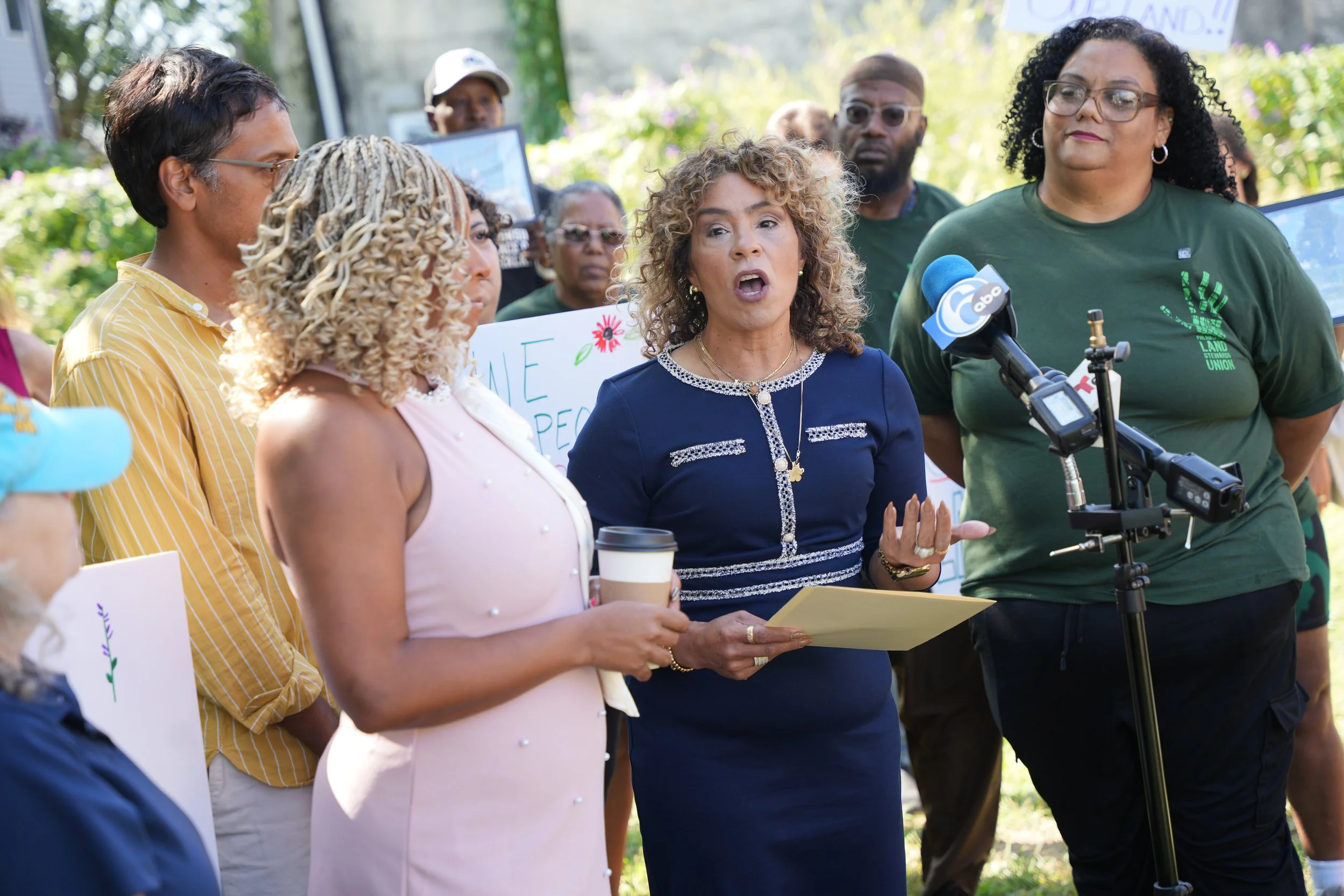
Councilmember Quetcy Lozada, who represents District 7 on City Council, speaks during the walking tour on Orianna Street. (Photo: Nigel Thompson/Inti Media.)
A personal battle in City Hall
For Councilmember Quetcy Lozada, the union’s fight over land is a personal one. She spoke of her Grandmother Valentina, who was a steward of nine lots around her home in North Philadelphia.
“It was because of her and because of people like her — many of whom are here today — who have prevented a lot of negative activity from occurring in their own community,” said Lozada.
Through her grandmother, she said she’s also experienced the frustration of legally obtaining land in the city. Lozada said her grandmother never got ownership over any of the lots and lost them despite all she poured into the parcels.
“I lived the frustration with her and my family,” she said. “There has to be a path to making it a priority instead of taking it away from them.”
Legislatively, Lozada introduced a resolution during City Council’s spring session that formally recognized the Land Stewards Union. She said another resolution to further recognize their work will be introduced soon. Lozada said she’ll also work during the current fall session to spread the union’s message to her fellow councilmembers to make sure it reaches all parts of the city.
“This can’t just be a 7th Council District thing, land is being taken care of across the city,” said Lozada.
Since launching nearly a year ago in October 2025, the union said it now boasts some 180 members.
A “culture of no”
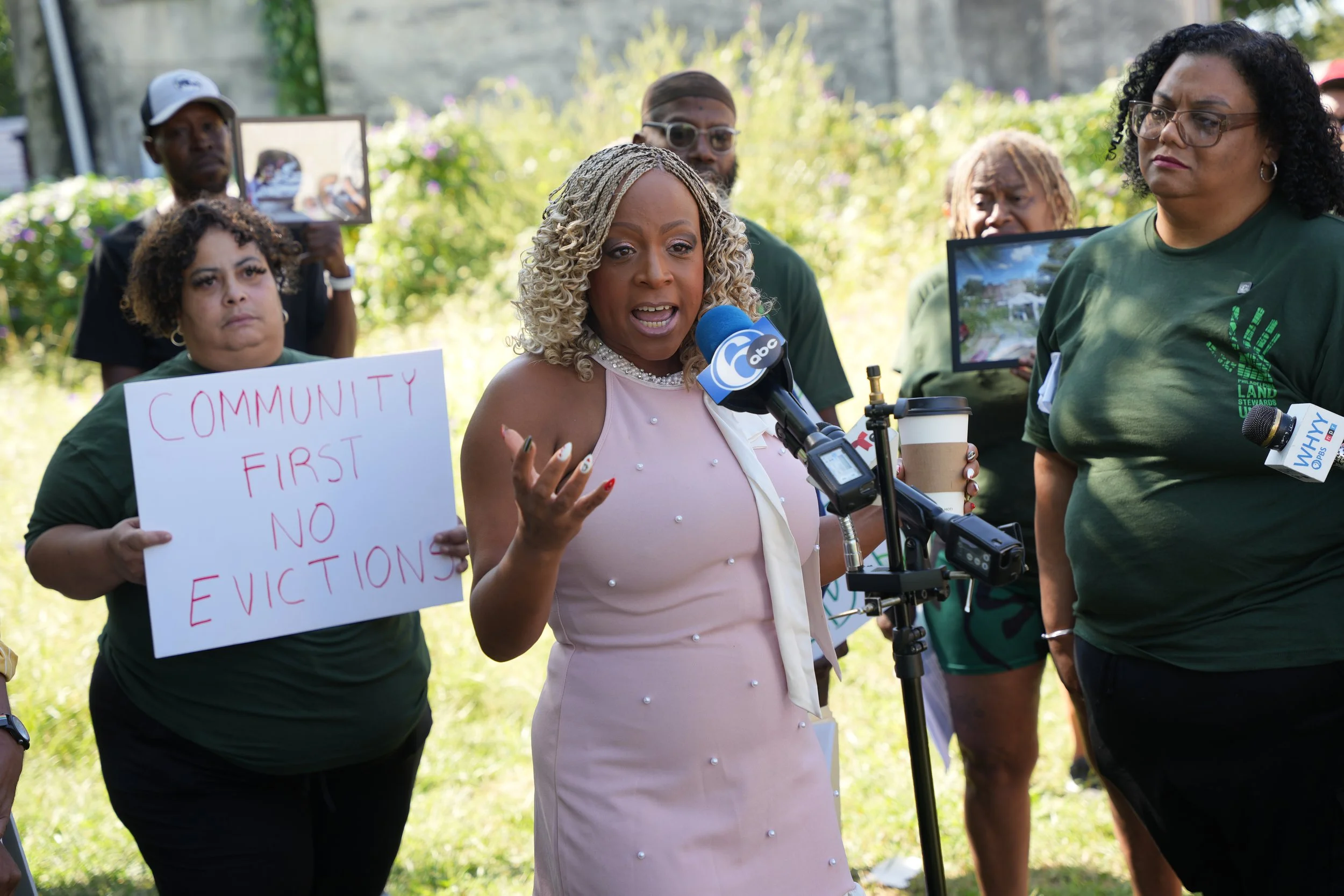
Councilmember Jamie Gauthier speaks during the walking tour on Orianna Street. (Photo: Nigel Thompson/Inti Media.)
Councilmember Jamie Gauthier represents District 3 on City Council, which makes up most of West Philly. She also chairs City Council’s Housing Committee, and said she’s had to fight similar battles over community gardens in her district.
Gauthier accused the Land Bank of operating under a “culture of no.”
“You’ll use any regulation and any code against the regular people in the community who are trying to do good,” she said.
But, Gauthier said, that culture of “no” doesn’t appear to exist for housing developers in the city, especially amid Mayor Cherelle Parker’s big push for new or revitalized housing under her HOME Initiative. The plan has demanded faster processes for housing construction from entities like the Land Bank.
“They’ll figure out how to get it done, and if the process doesn’t exist, they’ll create the process,” said Gauthier.
The Land Bank responds
In a statement to Inti Media in response to the tour, a spokesperson for the Land Bank cited an insurance policy as the reason for the evictions.
“Unauthorized entry or use of a property owned by the Philadelphia Land Bank or its sister agencies (Philadelphia Redevelopment Authority and Philadelphia Housing Development Corp.) poses a substantial financial risk because the liability insurance policy for the Land Bank and its sister agencies does not provide coverage for claims arising from such unauthorized entry or use,” the statement reads, “and the Land Bank is not financially equipped to defend against such claims putting tax payers dollar at risk.”
“When the agencies are made aware of unauthorized entry or use, the agencies take steps to give notice to the unauthorized users of the properties prior to taking corrective action and to further prevent such activity,” it continues.
The statement goes on to define “gardening or occupying agency property without explicit permission” as “unauthorized entry and use,” which the spokesperson said, “is not an authorized and covered activity under the insurance policy.”
When asked about the proper process longtime land stewards should go through to obtain lots, the spokesperson directed them to the Land Bank’s online Community Garden Application.
A list of demands
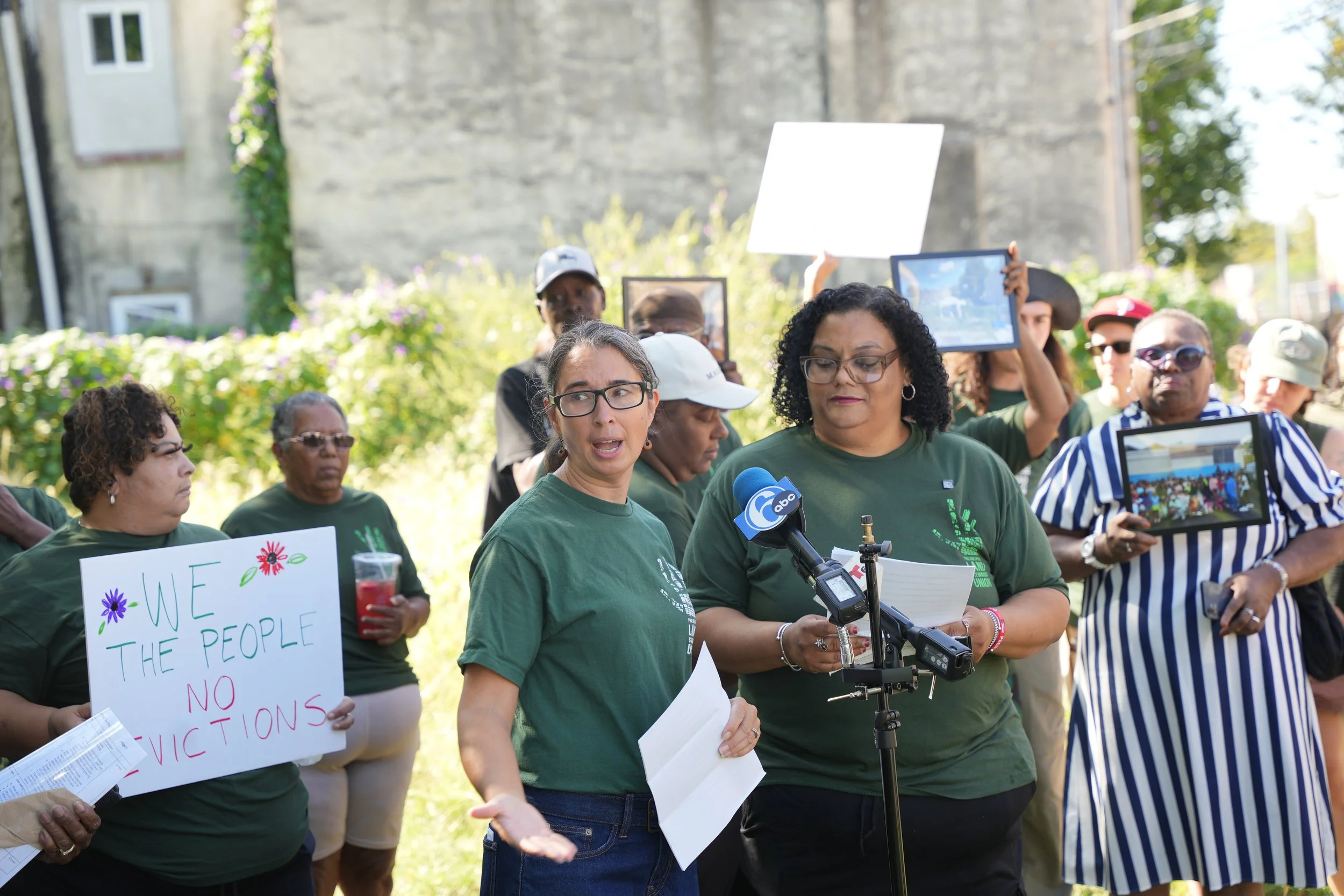
Christina Saxton, member of the Land Stewards Union, lists the union’s demands during the tour on Orianna Street. (Photo: Nigel Thompson/Inti Media.)
As the longtime stewards and lawmakers spoke near Miss Dottie’s, several other community members also gathered to hold up photos of the many memories captured in her side lot — the birthdays, summer days spent gardening, holidays, and more.
“We are here today to stop what happened to Miss Dottie from happening to anyone else,” said Christina Saxton, a longtime land steward and founding member of the Land Stewards Union.
She then listed the three demands of the union for the Land Bank: to issue a moratorium on evicting land stewards from property, restore land stewards already evicted from their lots, and bring back processes for residents to gain legal access to land, such as leases and garden agreements.
“We cannot keep accepting this inaction from the organization that is supposed to work for, not against, the community,” said Saxton.