
Philadelphia’s H.O.M.E. plan moves forward with repairs and new paths to ownership
More than 16,000 homes have been built or preserved since Jan. 1, 2024, according to the city’s new H.O.M.E. dashboard. The city says it has built 4,670 new homes and preserved 11,724 existing ones, reaching 54.6% of its 30,000-home goal.
By Milan Parker. On October 19, 2026. Produced and edited by Jensen Toussaint.
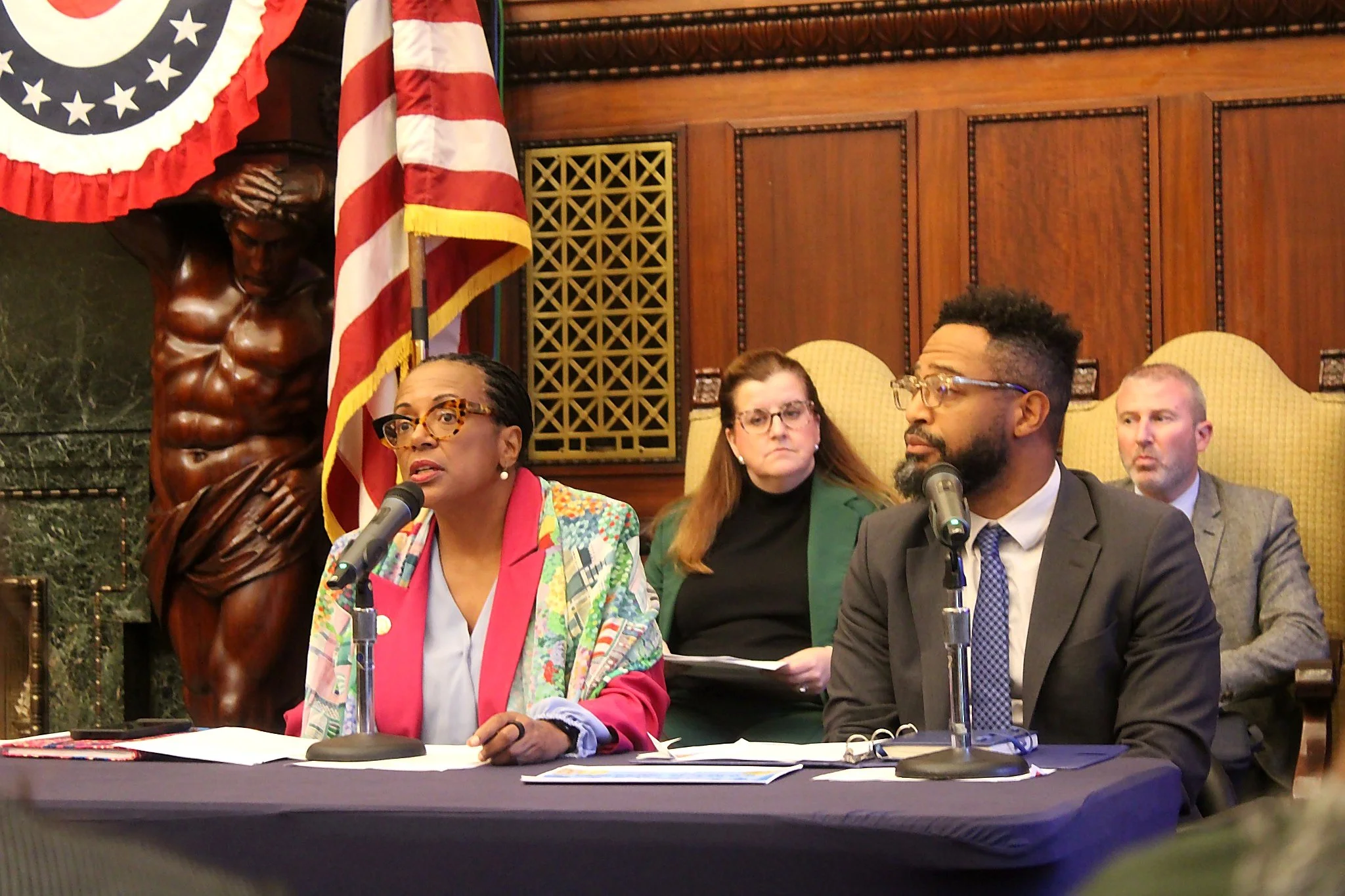
Angela Brooks, Philadelphia’s chief housing and urban development officer, says Mayor Cherelle Parker’s H.O.M.E. plan has passed its halfway mark and is “happening in neighborhoods across the city right now.” Photo: Jensen Toussaint/Inti Media.
When Tambora Reeves heard about a new city program that pays to fix up residential blocks, she went straight to her block captain, Miss Mary. Miss Mary has looked after their block for decades. She runs a summer lunch program for neighborhood kids and brings all kinds of resources to families on the block. So the two sat down and filled out the application together. Then Reeves went door to door, explaining the program and collecting signatures from almost every neighbor.
“The clock was ticking,” Reeves said.
Eventually, an email arrived from the city. Miss Mary and Reeves’ block had been chosen as one of the first 10 in Philadelphia for the Curbside Appeal Program, which prioritizes areas of North Philly and Germantown. Their block will receive up to $100,000 for tree trimming, lawn restoration, and vacant-lot cleanups.
“Many residents take pride in their blocks and where they live, but just need some help to make them look as good as we feel about our communities,” Reeves told a room of city officials, reporters, and community workers at a Sept. 23 briefing inside City Hall. Curbside Appeal is one small piece of Housing Opportunities Made Easy, or H.O.M.E., Mayor Cherelle L. Parker’s $2 billion plan to build and repair 30,000 homes more before her first term ends. At the briefing, city officials announced that the plan had passed the halfway mark.
“H.O.M.E. is not a plan on paper,” said Angela Brooks, the city’s chief housing and urban development officer. “It’s happening in neighborhoods across the city right now.”
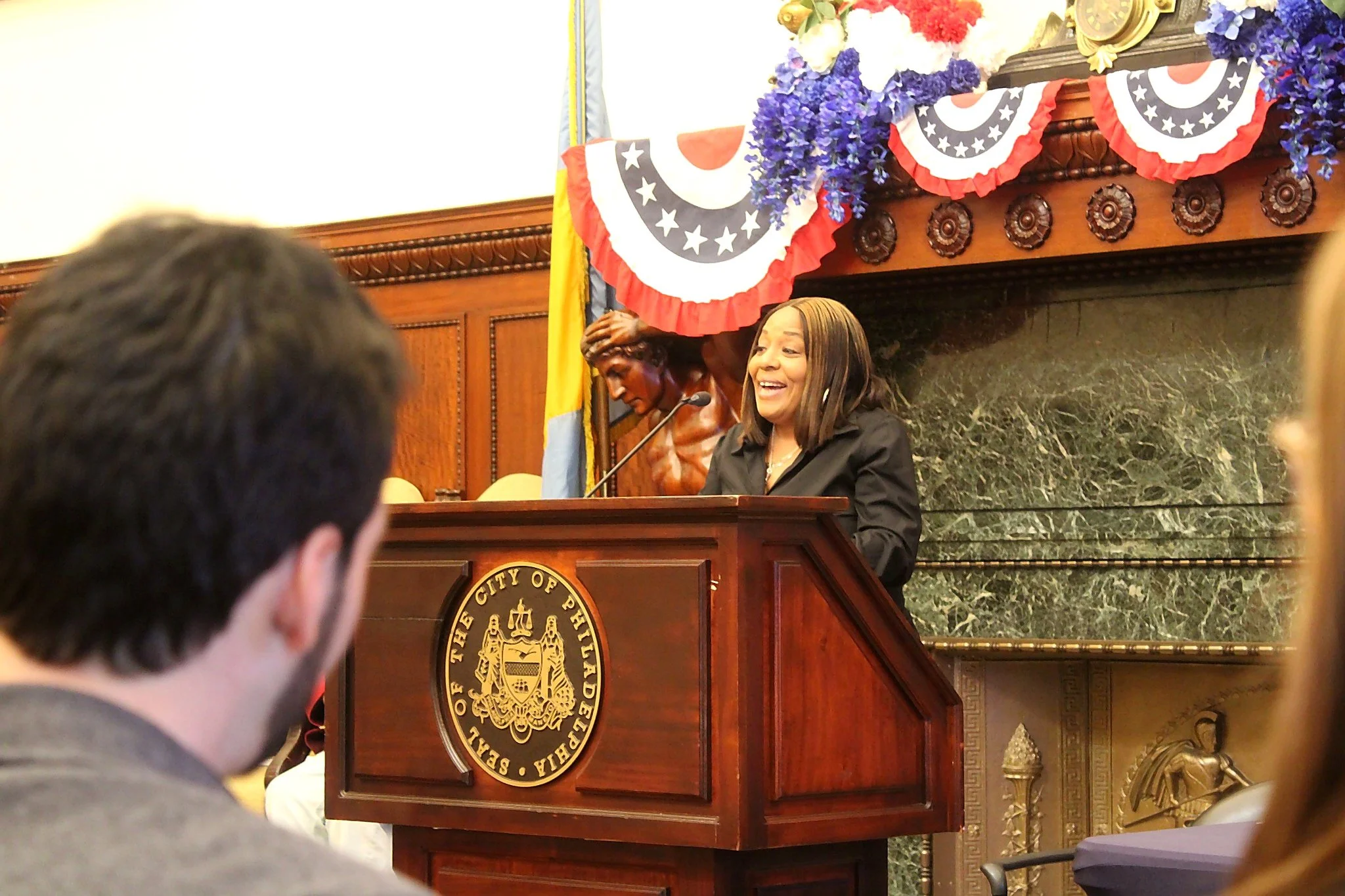
Tambora Reeves’ block was one of the first 10 chosen for Philadelphia’s Curbside Appeal Program, which provides up to $100,000 for tree trimming, lawn restoration and vacant lot cleanups. Photo: Jensen Toussaint/Inti Media.
Fixing what’s already here
Much of the progress is happening inside homes people have lived in for decades. According to the new H.O.M.E Plan dashboard, more than 16,000 homes have been built or preserved since January 2024. Most of the work is for repairs like new heaters, roofs, and plumbing, done through long-running programs, such as Basic Systems Repair, that now fall under H.O.M.E.
In a city with some of the oldest housing in the country, fixing leaks and cracks keeps families in place.
Philadelphia has long been a city of homeowners, said Jessie Lawrence, director of the Department of Planning and Development. For seniors, these programs can mean the difference between staying in their home and having to leave, he added.
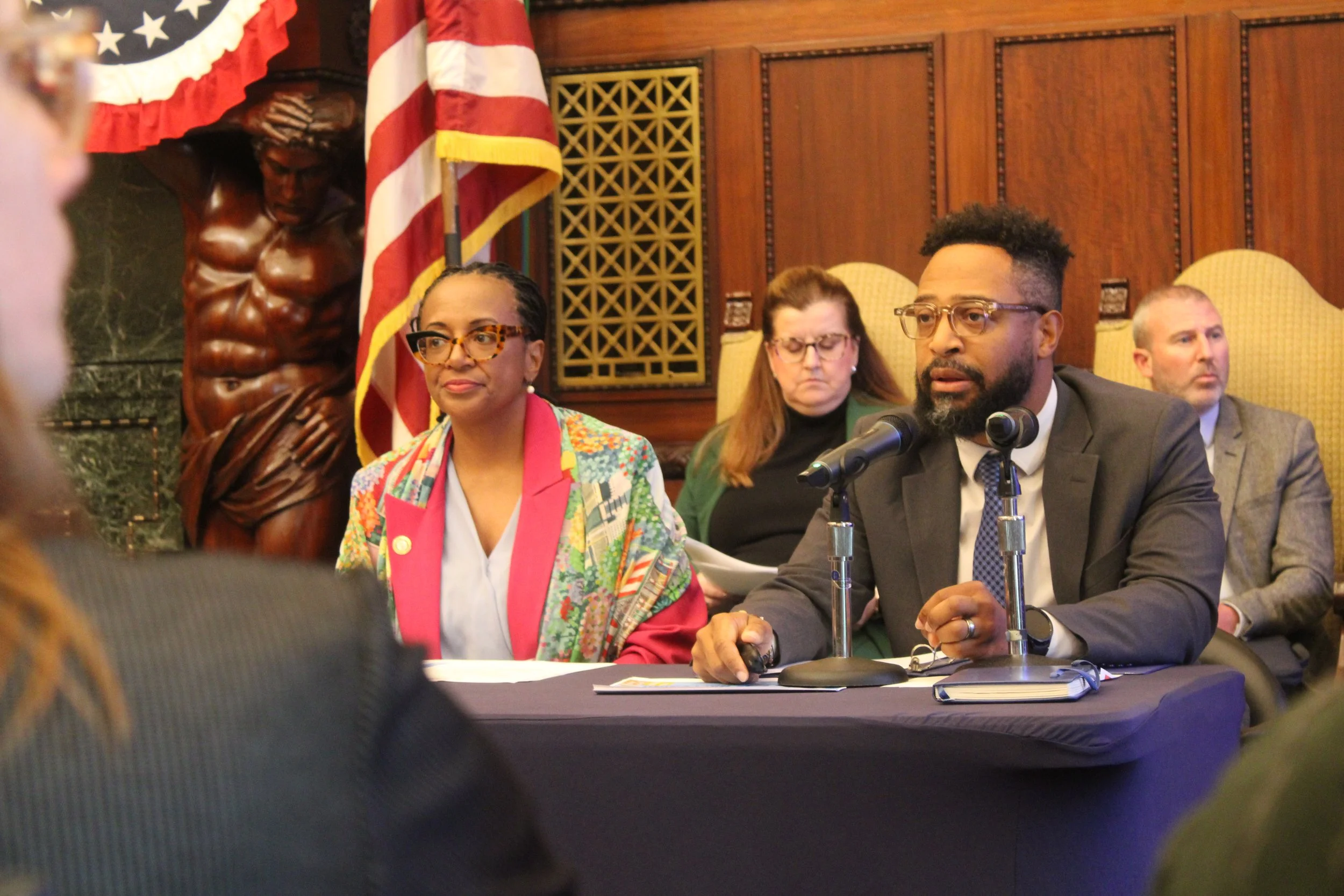
Jessie Lawrence, Philadelphia’s director of the Department of Planning and Development, says repair programs under H.O.M.E. can help seniors stay in their homes. Photo: Jensen Toussaint/Inti Media.
The plan also aims to create new homeowners. Through Turn the Key, the city builds homes on vacant public land and sells them to first-time buyers. Buyers can get up to $75,000 in assistance, which is forgiven if they stay in the home long enough.
Later this fall, the city expects to launch the One Philly Mortgage, a city-backed home loan with lower payments and no private mortgage insurance.
Reeves could count on Miss Mary, a block captain who knew the block’s neighbors, resources and how to get an application in on time. Others worry that they won’t have that kind of help.
Miguel Martinez-Valle, a reporter for Telemundo 62, said that the older homeowners he had spoken with were excited about the programs but afraid of slipping through the cracks in an application process with so many steps.
Part of Brooks’ response was visible in the room. At her request, about 20 community workers stood, including housing counselors and Neighborhood Advisory Committee staff. She said that they could help residents who struggled with technology or applications.
“We really want to make it easy for people to participate,” Brooks said. For residents starting on their own, she pointed to One Philly Front Door, a single online form that matches people with the programs they qualify for. The city’s H.O.M.E. webpage can also be translated for families who speak Spanish, Portuguese, or other languages at home.
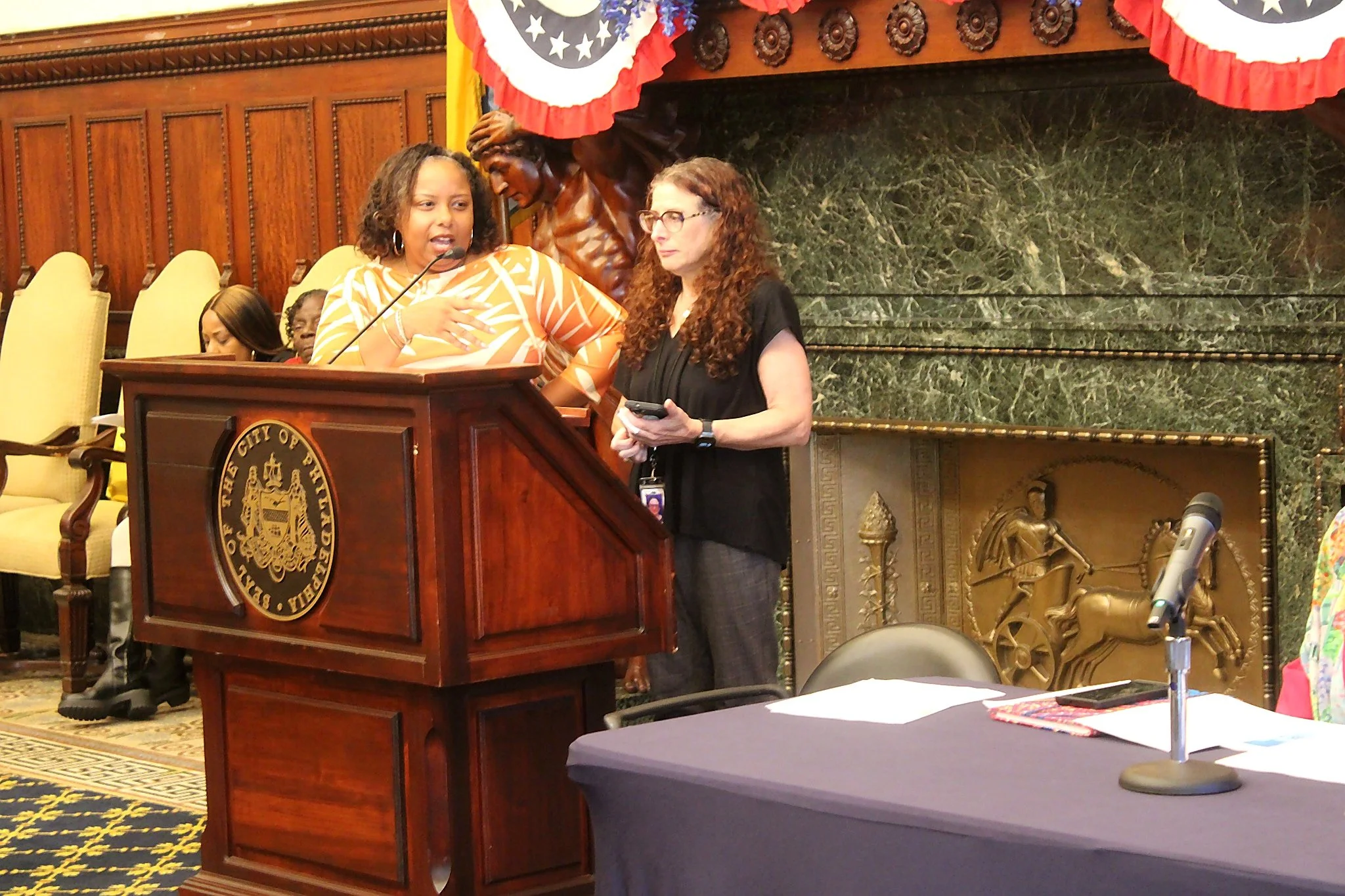
Residents can apply through One Philly Front Door, while city-funded housing counselors also offer free help with applications. Photo: Jensen Toussaint/Inti Media.
For some homeowners, though, paperwork isn’t the main issue. The question is whether they can hold on to their homes at all. One audience member raised concerns about owners who want to keep their homes but can’t afford repairs, and who are being targeted by developers using Act 135, a state law that lets outside parties take control of properties considered blighted. Brooks pointed to the city’s Tangled Title program, housing counselors and Community Legal Services, and promised to follow up with more specific contacts.
For other longtime residents, part of the process has meant losing ground they have cared for. As Inti Media recently reported, members of the Philadelphia Land Stewards Union say they have been evicted or ordered to leave lots they tended for years. Some of them had spent years trying to get those lots legally through the Philadelphia Land Bank, a key partner in H.O.M.E.
Among them is Dorothea “Miss Dottie” Rogers of West Kensington. Her mother cared for the lot beside their home for at least 25 years before it passed to her. After she spent years trying to obtain it, the city cleared it and fenced it off. Councilmember Jamie Gauthier, who chairs City Council’s Housing Committee, has accused the Land Bank of a “culture of no” toward residents while moving quickly for developers.
Debate over who H.O.M.E. should serve first has followed the plan from the start. Last December, over the administration’s objections, the City Council amended the first-year budget to prioritize the city’s lowest-income residents in key repair programs.
Block by block
For now, much of H.O.M.E.’s promise is still ahead. The city has built 4,670 houses so far out of a goal of 13,500 new units since January 2024, and new homes take time to build.
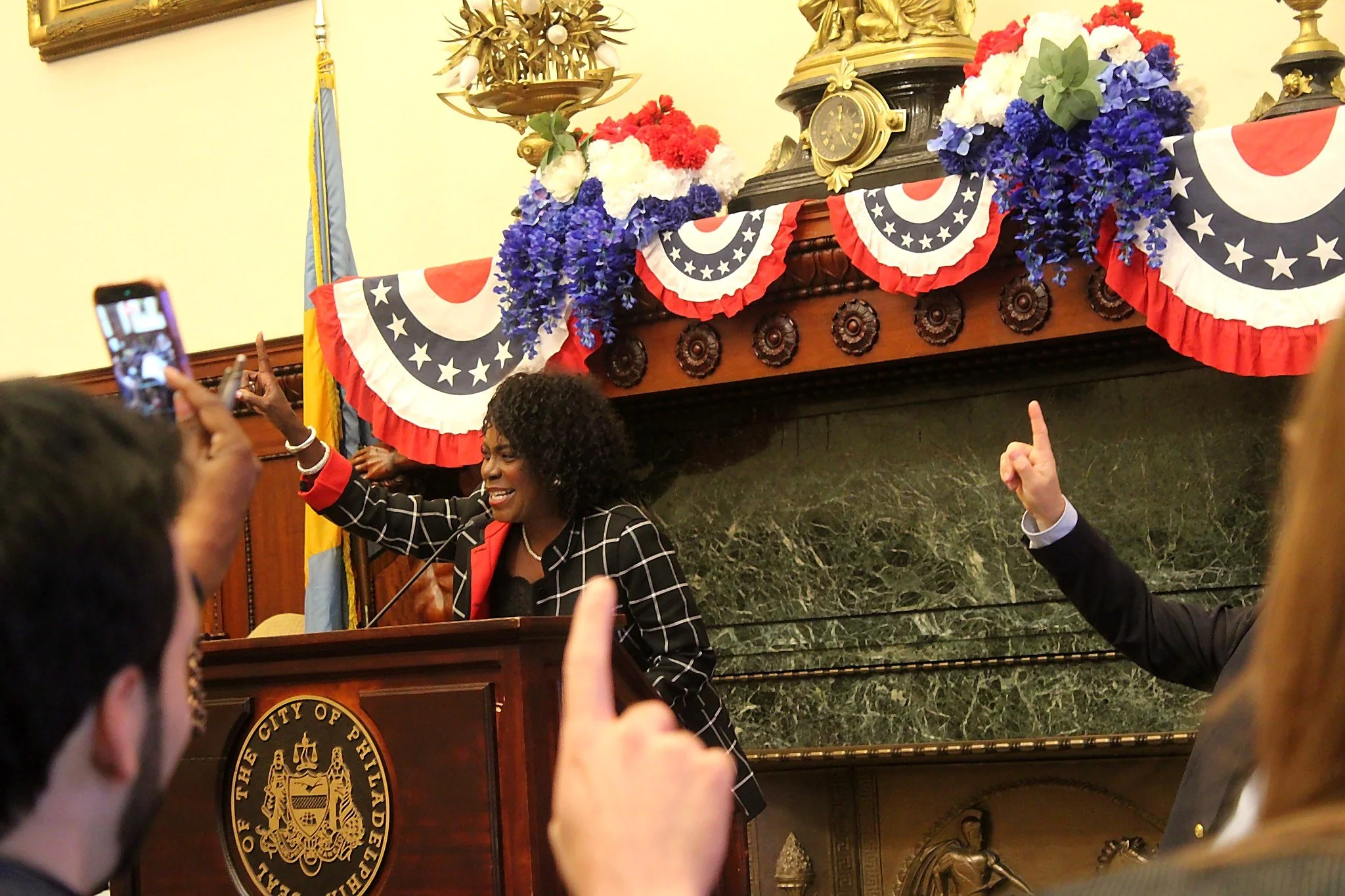
Mayor Cherelle L. Parker’s $2 billion H.O.M.E. plan has contributed to more than 16,000 homes having been built or preserved in Philadelphia since January 2024. Photo: Jensen Toussaint/Inti Media.
“The true measure of success for H.O.M.E. is how it changes lives, block by block, family by family,” Lawrence said.
On Reeves’ block, change will soon be visible. When Curbside Appeal opens again in spring 2027, other blocks will get a chance to join in rebuilding. If Reeves’ block is any guide, it may start with a neighbor knocking on doors.
To find housing programs you may qualify for, visit housing-front-door.phila.gov. Free help applying is available through city-funded housing counseling agencies listed at phila.gov/homeplan, which can be translated into Spanish and Portuguese.