
“We exist. Period”: Local filmmaker’s fundraising concert centers Afro-Boricuas and North Philly Ricans
Drawing inspiration from his neighborhood, Anthony Rivera focuses on the links between Philly’s Black Puerto Rican roots and Loíza through his new film, “La Lengua del Tambor.”
By Vicky Diaz-Camacho. Edited by Nigel Thompson.
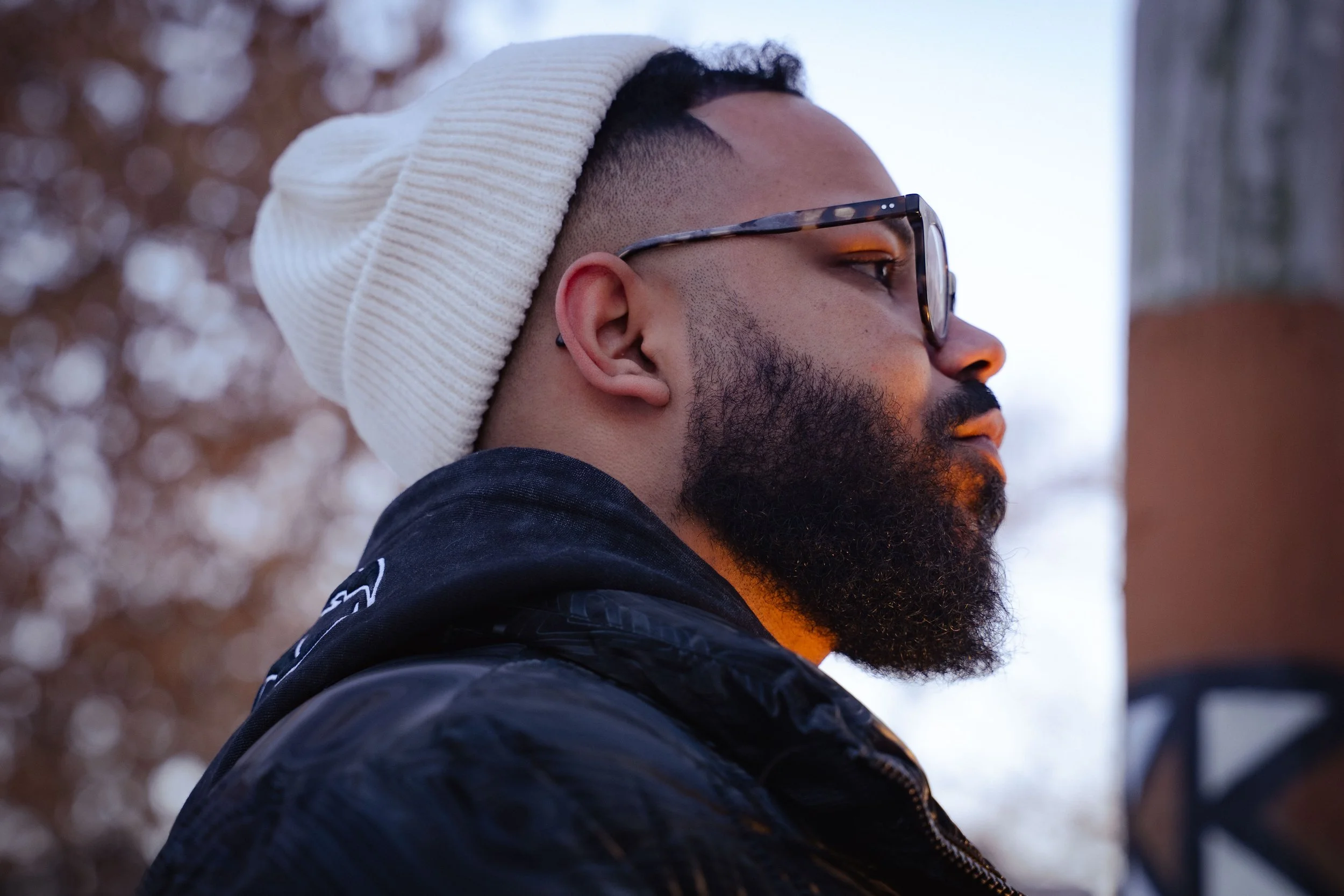
Ant Rivera stands in front of Villa Africana Colobó, a cultural center point in his neighborhood started by Iris Brown, an Afro-Boricua he interviewed in his upcoming film. (Photo by Vicky Diaz-Camacho/Inti Media)
Anthony “Ant” Rivera, flashes a warm smile and leans in for a tight hug.
The 25-year-old filmmaker is revving up for a concert at Taller Puertorriqueño on Feb. 21 to fundraise for the last leg of production on his film, “La Lengua del Tambor.” The film is an exploration of Afro-Puerto Rican history and identity through the practice of Bomba that simultaneously centers his roots in North Philadelphia. The event is an immersive cultural experience, bringing in local Puerto Rican vendors such as Amy’s Pastelillos and performers such as Los Bomberos de la Calle.
He wanted people to feel the spirit of bomba.
“For me, it was really important to tell the story of North Philly Ricans just because we exist. Period. In the general sense, it's not really around Puerto Rican culture. It's literally around Black Puerto Rican culture,” he said. “When we honor Bomba, we are honoring the African ancestors that exist that paved the way for us to now celebrate what was for them, not a celebration.”
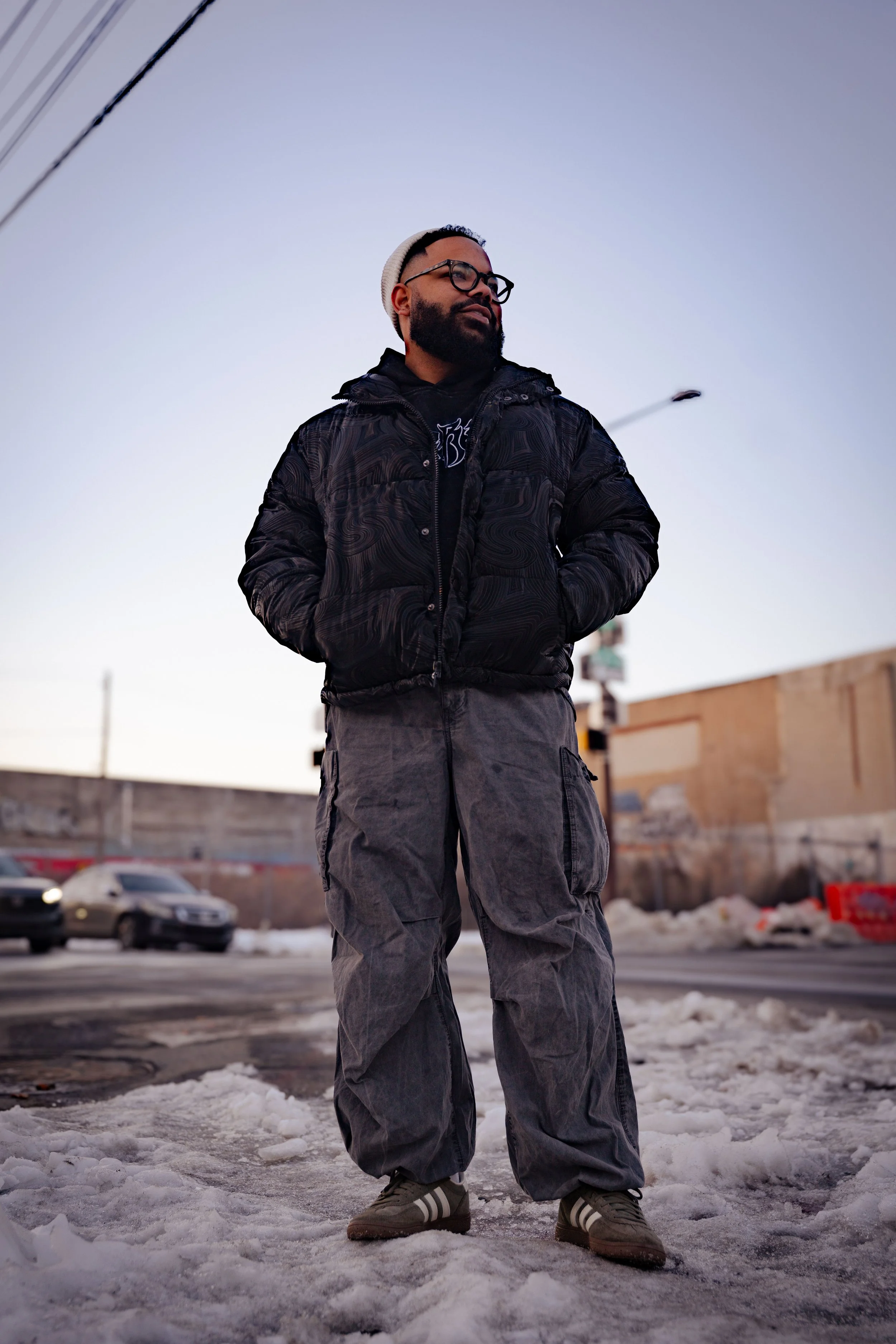
Ant Rivera connects generations by portraying the Bomba, a traditional dance of Afro–Puerto Rican culture. (Photo by Vicky Diaz-Camacho/Inti Media)
The idea first emerged in a dream where Ant says he met his great-great grandmother, a bomba dancer on the island. Then six years ago, Ant reached out to his uncle on his father’s side, Lucas Rivera, about his poetry. He felt artistic kinship and shared an understanding of life as an Afro-Boricua in Philadelphia.
“He plays an integral role in the sense of allowing this story of Bomba to come to North Philly because this is why it matters for me,” Ant said. “He is the connection to the generation that kept Bomba going forward.”
His film’s Instagram page shows vignettes of his trips to Puerto Rico blended with archival footage overlapped by his slow-mo shots of bomberos and dancers, colorful African masks, and featured clips of his uncle Lucas.
“We connected more around art,” Lucas said, who is an author and multidisciplinary artist. “When you think about Afro-Puerto Rican music, you cannot not think about resistance, activism, and collective healing. So he basically saw the whole story within my life. I am just a sliver of thought in a larger conversation.”
His work is also grounded in the Afro-Puerto Rican experience, which inspired Ant to dig deeper into how that identity shaped him in Philadelphia. In the film, he begins with Lucas, weaving the story of Bomba with people like Iris Brown, who migrated from Loíza – known as the heart of the Afro-Puerto Rican tradition.
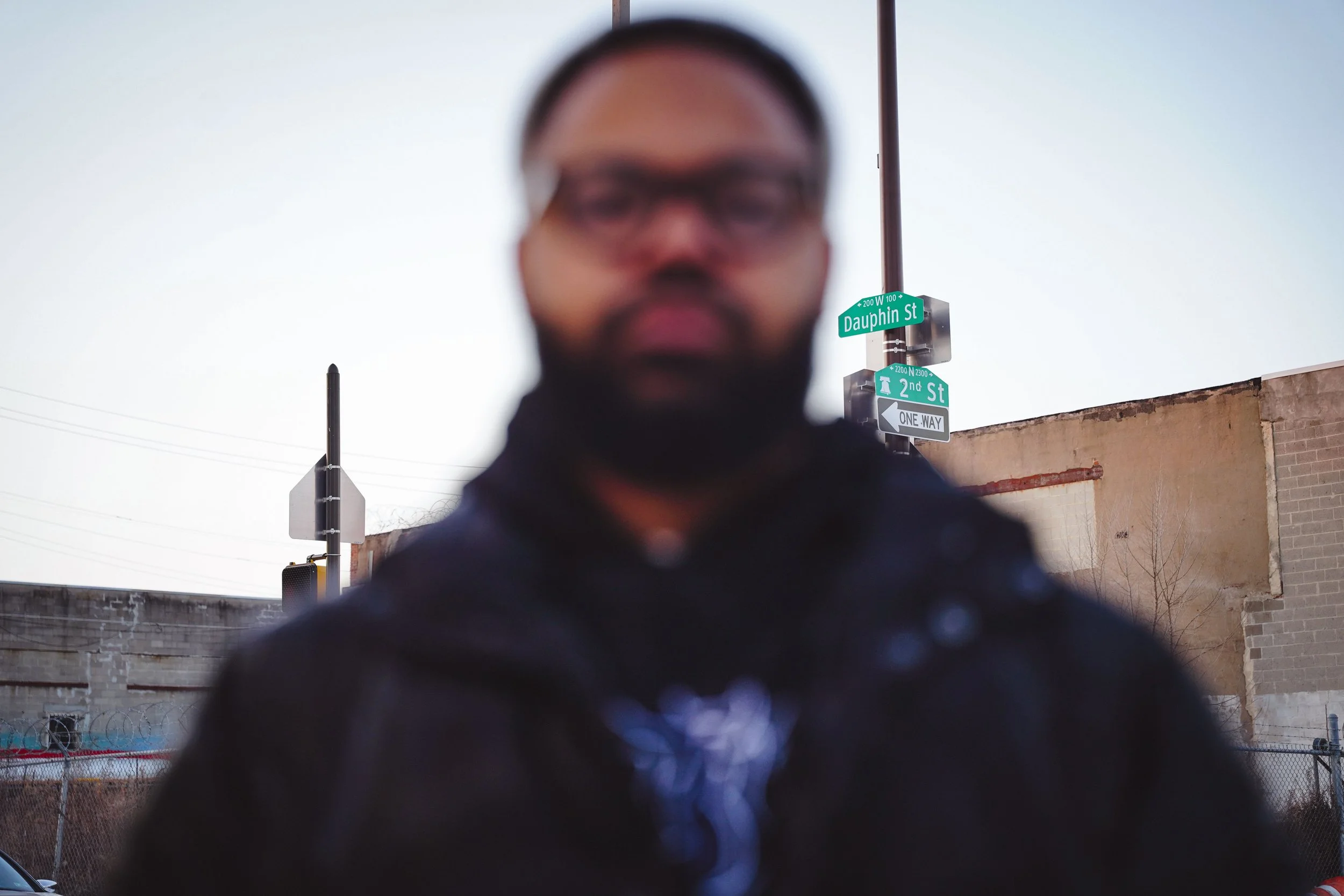
Ant Rivera stands at the intersection of Dauphin St. and 2nd St., where he grew up. North Philadelphia is a strong undercurrent in his work. (Vicky Diaz-Camacho/Inti Media)
As Ant stands near Villa Africana Colobó on Palethorp Street in Norris Square, one of the many community gardens maintained by the Norris Square Community Project, he points toward his childhood home in the neighborhood.
The area is a Puerto Rican hub in North Philadelphia that has grappled with some of the highest rates of poverty and a steep rise in housing costs in recent years. Blocks in the neighborhood are dotted by themed gardens, founded by Iris Brown, a long-time resident and another voice in the film.
“Now if you go through the hood in North Philly you see her gardens,” he beamed. “She's doing that type of work at honoring the Black people, the African people, that paved the way for her people to exist and show up.”
Ant has seen and felt the evolution of his neighborhood, all while navigating a difficult childhood. Rivera was raised by a single mom, his father out of the picture. The youngest of three, he says they lived to survive while his mom struggled with substance use disorder.
“She lost her parents at a young age, so she was just dealing with a lot, coping with a lot, and she fell under a lot of drug use in my early childhood,” he said
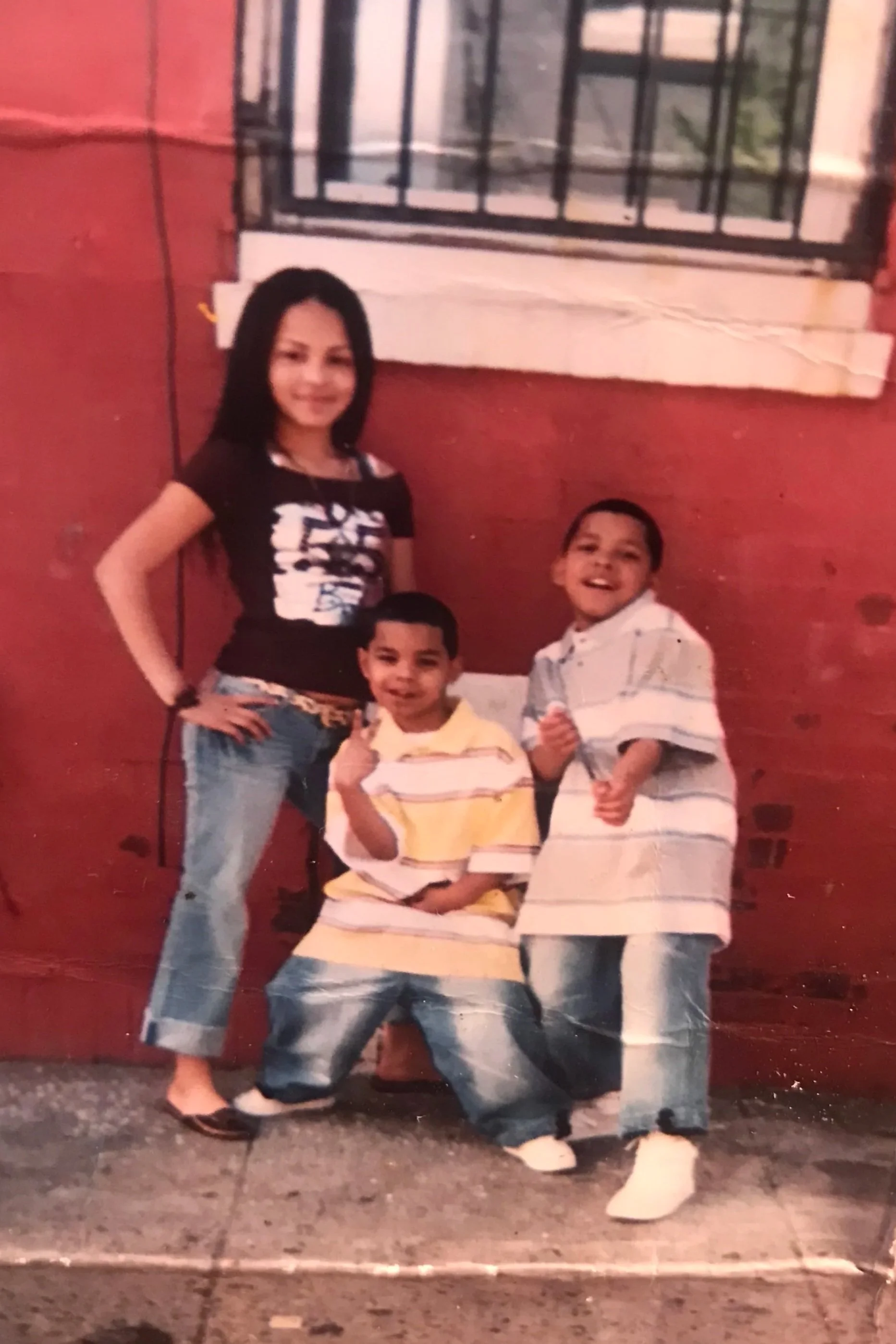
From left to right, Emily Rivera, (bottom, center) Ant Rivera and Fred Rivera on the block they grew up in. (Courtesy: Ant Rivera)
When he was seven, he found his uncle, who had died by suicide.
“After my uncle passed away, my mom got heavy into her addiction, and she started to hallucinate a lot. There would be a lot of moments where she would beat up the home physically,” Rivera recalled, noting how the once-regular family dinners began to wane. “My childhood home started to decay internally and externally.”
He began selling drugs as an 11-year-old to sustain himself. He and his older brother, Fred, lived in a tiny apartment, paying $700 per month as teens, trying to survive.
“There was a lot of growing up that we had to do when we were younger and a lot of adulting we had to do as little ones,” Fred said.
But in high school, Ant found respite through a mentor. Hakim Pitts, an interfaith minister and cultural worker rooted in Afrikana religions, who was the Dream director of The Future Project. They guided him toward an outlet other than what he calls “hood shit” when he was 14.
“I noticed he had a gift in school for writing. He would write these beautiful pieces, writing a lot about his life,” Pitts said. “What I recognized was, this is a kid who’s had to be very, very responsible, but he was so curious.”
Their goal was to coach high schoolers, like Ant, in public schools.
“He already had that ethical imperative that he had to do something for his people, for his community. But that's also something in a lot of poor working class communities. That's already baked in,” they said.
Then Pitts introduced him to the history of people fighting for Black and Puerto Rican justice, like the Young Lords Party and Black Panthers. It was the first time he learned the term “Afro-Latinidad.”
As a teen, Ant gravitated to the camera, drawing inspiration from films by John Singleton such as “Boyz in the Hood” and “Poetic Justice.” Those films revealed that the stories he was writing about his community mattered.
“That drove me to want to tell stories of people in my hood,” he shared.
By the end of high school, he had produced a couple of films centering his own lived experiences. One took him to Philadelphia’s BlackStar Film Fest, entitled “I Am Philly.”
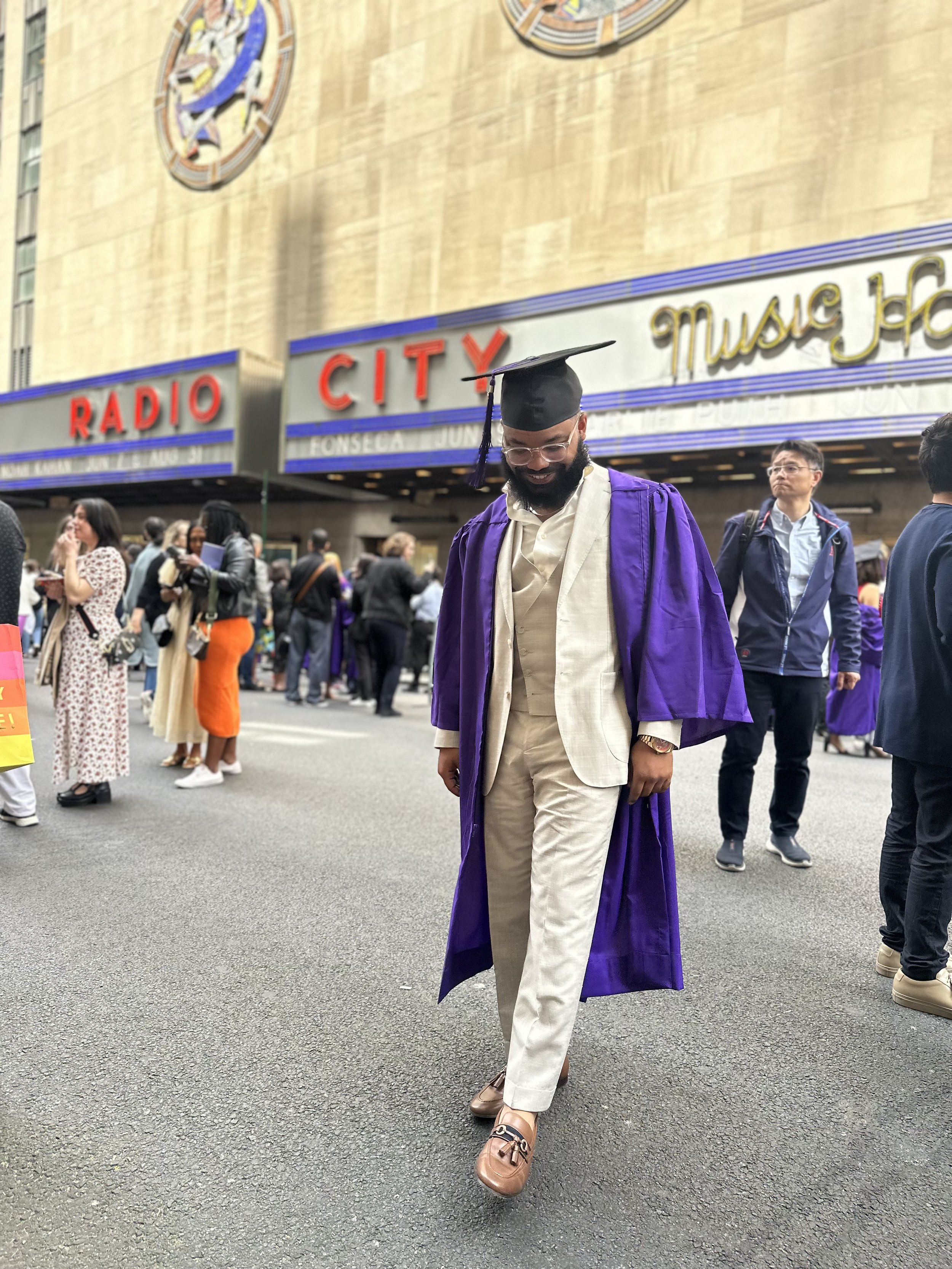
Ant Rivera, dressed in graduation attire, is in front of Radio City Music Hall in New York City. (Courtesy: Ant Rivera)
These projects, along with his high school mentors, led him to apply for a summer program for high schoolers at the Tisch School of the Arts at New York University.
“When I got to Tish, I understood that I wanted to tell stories of Black Puerto Rico. Period,” he said. “Everything that I touched was literally around being a Puerto Rican who identified as a Black Bori. Mind you, I don't have African American parents. Both of my parents are Puerto Rican. So I choose personally to identify as a Black Bori because of my proximity to blackness, which is for me a radical and political standpoint.”
Fast-forward to today, and he is in the final stretch of production for his latest film.
“It’s amazing to see him in this iteration of his life, and what he’s doing. It’s a really beautiful, full-circle moment,” Pitts said.
It is clear his support system is proud, each of them boasting about how much he’s grown from a kid on Philly’s streets to a director.
“He's a visionary with a big heart but also has a lot of logic rooted into that brain of his,” Fred said. “He's connecting the dots, and that's a powerful thing. So I'm thrilled.”
When asked what reflections he has on being a Black Boricua in the context of Black History Month, he said to “always choose yourself.”
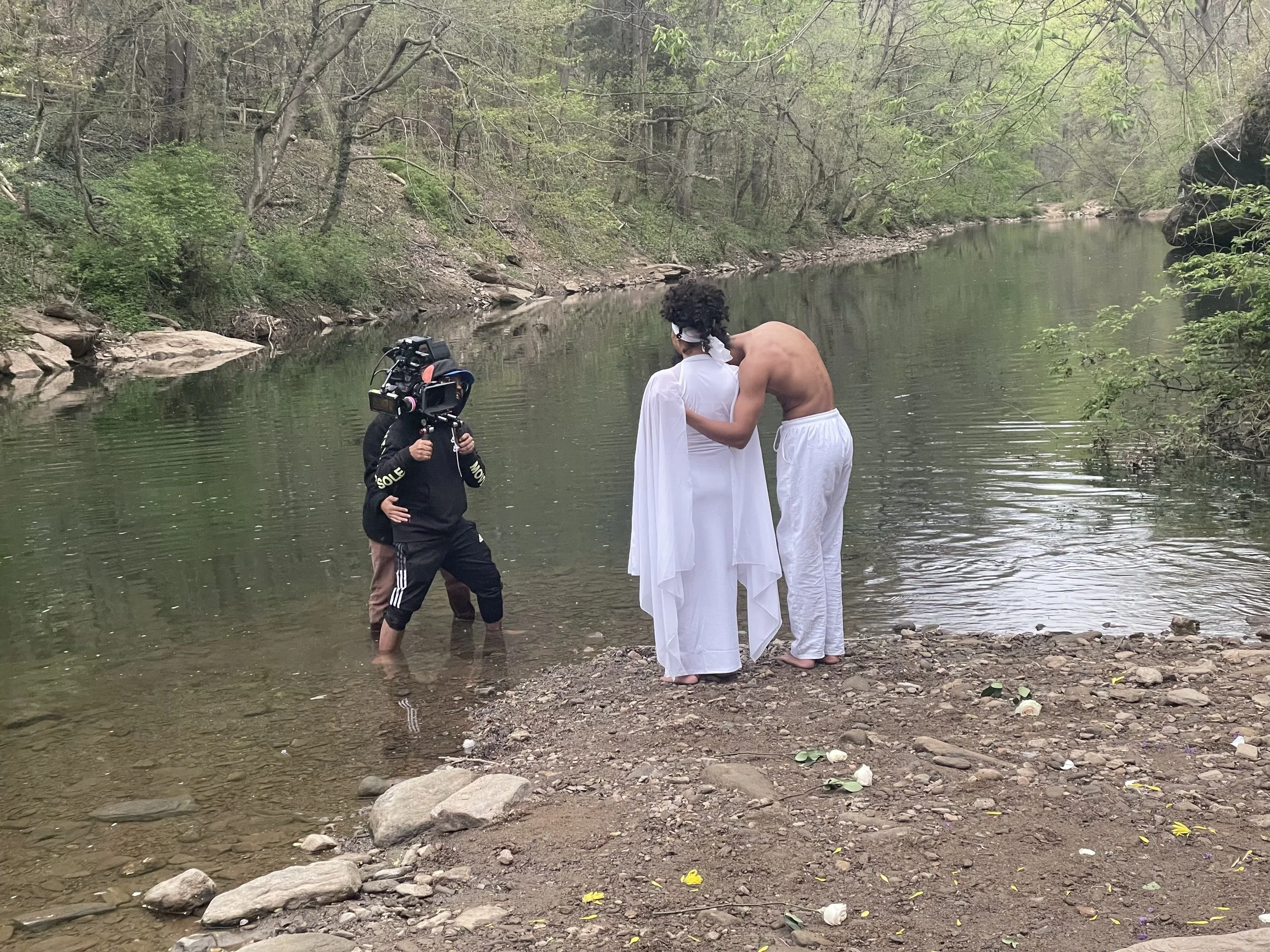
Behind the scenes of Ant Rivera shooting "The Birth of Soj," his thesis for NYU's Tisch School of the Arts. (Courtesy: Ant Rivera)
“Remember who you are, remember the power that you hold in your tongue. Remember who allows you to exist today for you to move to your own beat to the drum. Celebrate your Blackness, period. Choose joy, choose all those things that make you, and don't be afraid.”
The screening and concert event for “La Lengua del Tambor” will take place at Taller Puertorriqueño on Feb. 21 at 6 p.m. Buy tickets at this link.